Targeted drug shrinks tumors in 3 out of 4 patients with advanced breast cancer

There may be a promising new treatment on the horizon for advanced breast cancer patients, according to developing research.
Researchers are studying the cancer-killing drug trastuzmab rezetecan for those with ERBB2-low metastatic breast cancer, whose tumors have low levels of HER2, a protein that can help cancer cells grow.
A phase 3 clinical trial called HORIZON-Breast06 sought to determine whether the drug works better than standard chemotherapy for patients with this cancer type.
SHIFT IN CANCER SCREENING GUIDANCE HAS EXPERTS CLASHING OVER NEW GUIDANCE
The researchers analyzed 551 female patients across 73 hospitals in China who were randomly assigned to receive either the drug intravenously every three weeks, or the physician’s choice of chemotherapy. The study period lasted from June 2023 to August 2025.
The median time without tumor growth on the drug was 16.4 months compared to 6.8 months with chemo. (iStock)
The drug significantly delayed cancer progression compared with chemotherapy, giving patients more than a year before their cancer began growing again.
The median time without tumor growth was 16.4 months compared to 6.8 months with chemo.
FDA APPROVES ONCE-DAILY PILL FOR DEADLY CANCER AFTER PATIENTS' SURVIVAL RATES NEARLY DOUBLE
Patients who received trastuzumab rezetecan were 73% less likely to have their cancer worsen or die during the study than patients who received chemotherapy.
The drug appeared to delay cancer progression in patients with both hormone receptor-positive and hormone receptor-negative breast cancer.
The results were published in JAMA.
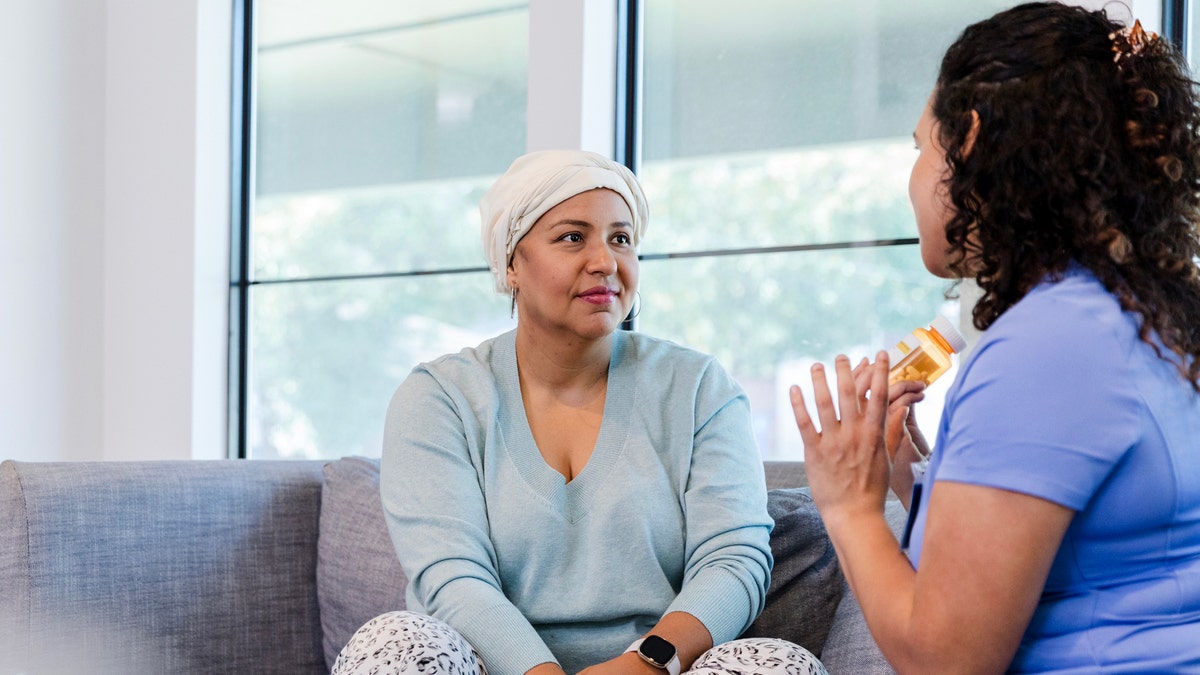
The drug appeared to delay cancer progression in patients with both hormone receptor-positive and hormone receptor-negative breast cancer. (iStock)
Tumors shrank in 75.5% of patients who received the drug, compared with 41.2% of those who received chemotherapy.
At the 12-month mark, 90.6% of trastuzmab rezetecan patients were alive, compared to 81.4% of chemo patients.
CLICK HERE TO SIGN UP FOR OUR HEALTH NEWSLETTER
The authors concluded that trastuzumab rezetecan provided "significant progression-free survival benefit over physician’s choice of chemotherapy in patients with ERBB2-low advanced breast cancer."
Loren Rourke, a Texas-based breast surgical oncologist and author in Texas, called the results "incredibly encouraging."

The researchers acknowledged that side effects occurred more frequently and "often required dose modification." (iStock)
"When you're talking about women living with advanced breast cancer, those months matter," Rourke, who was not involved in the study, told Fox News Digital. "They represent more time when the cancer is being held in check and potentially more opportunities to enjoy life without the disease getting worse."
What makes these findings especially exciting, according to the oncologist, is that the treatment showed benefits across different types of breast cancer.
CLICK HERE FOR MORE HEALTH STORIES
"It's another important step forward, and it gives us genuine reason to be hopeful," she said. "A treatment that can keep cancer from progressing for a longer period has the potential to make an enormous difference in a patient's life."
While the drug may cause fewer serious lung problems than similar treatments, it was linked to other side effects, including anemia and other blood-related problems.
"It's another important step forward, and it gives us genuine reason to be hopeful."
Serious side effects occurred in more than 84% of patients who received the new drug, compared with nearly 68% of those who received chemotherapy.
Rourke emphasized the importance of considering the side effects, "because more time without cancer progression doesn't automatically mean better quality of life."

The researchers acknowledged that toxicity occurred more frequently and often required dose modification, although they said these effects were "generally manageable." (iStock)
"We need to better understand the side effects, particularly the significant decreases in blood counts that can lead to fatigue, anemia and increased risk of infection," she said.
The researchers acknowledged that toxicity occurred more frequently and often required dose modification, although they said these effects were "generally manageable."
TEST YOURSELF WITH OUR LATEST LIFESTYLE QUIZ
The experts agreed that more research is needed.
"As exciting as these findings are, there are still important questions we need to answer," Rourke told Fox News Digital. "We know this treatment delayed cancer progression, but we don't yet know whether it will help patients live longer. That's an important distinction."
CLICK HERE TO DOWNLOAD THE FOX NEWS APP
"It's important to celebrate meaningful progress while making sure we're asking the right questions about what comes next."
Angelica Stabile is a lifestyle reporter for Fox News Digital.
KioskNews shows a cleaned-up reading view extracted from the publisher’s page — the original always lives on their site, not ours.