Analysis: How BJP Plans to Punch Holes in AAP's vote bank
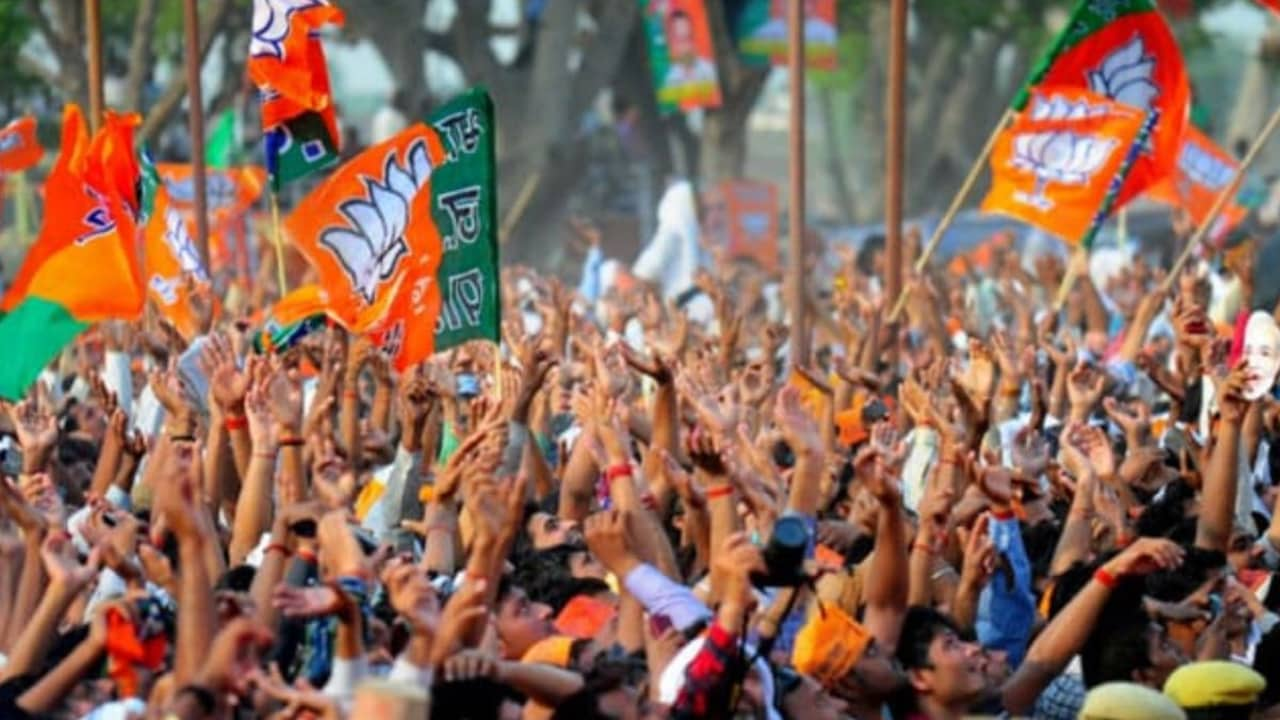
Arvind Kejriwal's Aam Aadmi Party swept Punjab with 42 per cent of the vote and 92 seats. Four years later, that majority looks less solid. The BJP has taken in three AAP legislators - Kunwar Vijay Pratap Singh, Chetan Singh Jouramajra and Harmeet Singh Pathanmajra - who bring local networks and a direct line into the rural and working-class voters who put AAP in power. At the same time, the BJP's own vote share has nearly tripled, and talks of a renewed alliance with the Shiromani Akali Dal are back on the table.
Together, these moves give the opposition something it lacked last time: A way to reach constituencies that once looked locked.
In 2022, the Congress finished second with 23 per cent votes and 18 seats. The Shiromani Akali Dal managed 18.4 per cent but only three seats. The BJP scraped 6.6 per cent and two seats.
Four years on, that map is fraying.
The AAP MLAs who quit can bring Amritsar North, Samana and Sanour, into the BJP fold. The additions also give the BJP something concrete: Organisers and faces who can speak to the same voters who delivered AAP its mandate.
The Arithmetic That Shapes The Fight
In the 2024 Lok Sabha polls, AAP's vote share fell fro, 42 to about 26 per cent. The Congress held roughly the same. The BJP nearly tripled its share to 18.6 per cent and led in 23 assembly segments. SAD dropped to 13.5 per cent.
No party dominated the way AAP had two years earlier.
Those numbers do not automatically translate into assembly seats, but they show that AAP's earlier support was not locked in.
The three defections sharpen that opening. When a government begins to lose its own MLAs, the damage is difficult to paper over with campaigns.
Jouramajra and Pathanmajra represent constituencies where AAP's working-class and rural pitch once worked. Their exit undercuts the image of internal discipline the party once claimed. It also signals to local workers that the ruling side is no longer the only place to stay. Political circles already talk of more names watching how this settles. If even a portion of those follow, the BJP gains ground organisers in places where it previously had little presence.
Kunwar Vijay Pratap And The Drug Question
Kunwar Vijay Pratap's switch carries extra weight. He is not a career politician. As a Superintendent of Police in Amritsar in 2007-09, he built a reputation for pursuing organised crime and drug networks without much regard for who protected them.
AAP used that record heavily in the 2022 campaign, presenting him as the man who would clean up the drug trade.
Voters have since learnt that he was kept out of key decisions and eventually suspended after he criticised governance failures by Bhagwant Mann and Arvind Kejriwal.
Whether every detail is accepted, the charge shows a familiar pattern - use the outsider's image to win, then sideline him when he becomes inconvenient.
With Kunwar bringing operational knowledge of how supply lines and local protection actually work, the BJP can now argue that it has both political will and a practical plan, with a clear timeline, to cut those networks.
The claim is still untested, but it is no longer abstract.
Why Tie-Up With SAD Would Change Scale
The BJP's position has improved, yet it remains limited on its own. Its 6.6 per cent in 2022 was concentrated in a handful of seats. The jump to 18.6 per cent in 2024 was real, especially in urban and semi-urban areas, and it led in 23 segments.
That is progress, but it is still short of the broad rural coverage, including the panthic votes.
The Shiromani Akali Dal, despite its lower share, keeps a residual rural vote that is hard to replicate in parts of Malwa and Majha.
The SAD and BJP were allies for more than two decades until the farm laws broke the arrangement in 2020. Recent signals point toward a possible return.
Amit Shah has spoken of an NDA government in Punjab after the next election. Sukhbir Singh Badal has said the Akali Dal is open to partners who share its basic outlook, while ruling out Congress and AAP.
Sources close to the talks describe seat-sharing discussions in which SAD may contest fewer seats compared to the earlier arrangement.
Nothing is sealed, yet the logic is clear. BJP will now play the big brother.
None of this guarantees a result. Anti-incumbency is real but not uniform. What has changed is the starting position. In 2022, the BJP was a marginal player. Today it has a higher vote share than SAD, urban momentum, a set of AAP defectors with local standing, and a plausible path to rural reinforcement through SAD.
The 2027 election is still some distance away, but the ground has already moved.
KioskNews shows a cleaned-up reading view extracted from the publisher’s page — the original always lives on their site, not ours.