All 10 Elf Types In The Lord Of The Rings Explained
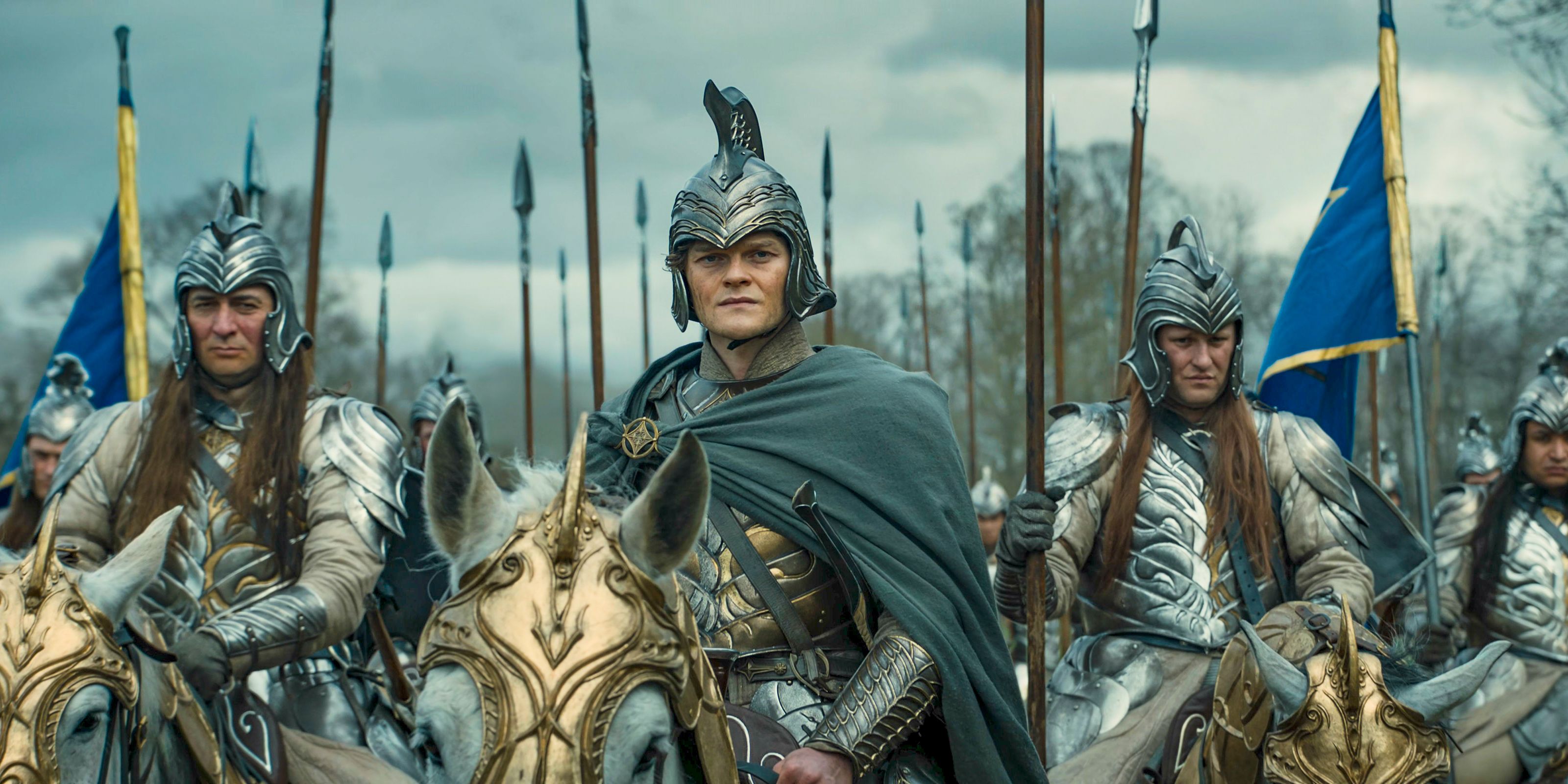
J.R.R. Tolkien was an incredibly world-builder, and that means the races in Lord of the Rings are perhaps more well-developed than in any other fantasy franchise. That's particularly true of the Elves; in Tolkien's lore, they were created by Eru Ilúvatar and awoken to spread across Middle-earth. They separated into different tribes as they spread out across the world, and became defined by their interaction with the Valar when these demi-gods invited them to leave Middle-earth and join them.
Viewers can be forgiven for not realizing quite how varied the Elves are in The Lord of the Rings. But The Rings of Power has revealed a lot more about Elven society in the Second Age, paying homage to Tolkien's many notes. So here's all you need to know about the various groups of Elves.
10 Eldar
The Eldar Was Further Divided Into The Vanyar, Noldor, & Teleri

The first Elves were the Eldar, but they were separated after the emergence of the Dark Lord Melkor. The Valar invited them to journey to Aman—the continent containing Valinor—to live in paradise with the Ainur. Those who chose to make the "Great Journey" to Valinor retained the name of the Eldar, while those who remained were called the Avari.
The Eldar, also called the West Elves, were further broken into three groups: the Vanyar, the Noldor, and the Teleri. All of the Vanyar and Noldor successfully traveled to Aman, but portions of the Teleri broke off during the migration and remained in Middle-earth. Centuries later, during the war with Morgoth and the conflict over the Silmarils, many of the Noldor traveled back to Middle-earth (against the will of the Valar).
9 Avari
The Avari Refused The Summons Of The Valar

The Avari, also called "the unwilling," were the Elves who refused to travel West to Valinor following the summons. Since Morgoth was the first of the Valar to interact with the newly awoken Elves in Middle-earth, it is believed he had begun to spread lies about his fellows, and the Avari were those who believed him. They may have come to fear the Valar and, therefore, chose to stay in Middle-earth. Or, it's possible they were simply happy staying where they were.
The Rings of Power adapted some of Tolkien's contradictory notes on the origins of the Orcs. In some of Tolkien's notes, Melkor captured some Avari Elves and corrupted them, turning them into the first Orcs. Whatever the truth may be, some of the Avari lived on; they continued to prefer isolated communities in forests and caves.
The Avari were also called the Moriquendi because they never saw the light of the Two Trees of Valinor.
8 Vanyar
Dominions: (Aman) Tirion, Oiolossë,

The Vanyar is a subgroup of the Eldar, previously called the Minyar. Commonly called the "fair Elves," the Vanyar were the most ethereal of their fellows, known for their tall stature, golden hair, and ivory skin. This group was founded by Imin, the first Elf to wake up in Middle-earth after the race's creation. Following the summons, they traveled with the rest of the Eldar to Valinor, and their King, Ingwë, was then made the High King of the Elves.
The Vanyar were content in Valinor, and very few, if any, ever traveled back to Middle-earth. However, one notable Vanya, Indis, married the Noldor Elf, Finwë, and gave birth to Fingolfin and Finarfin, the latter of which inherited her golden hair. Many of Finarfin's descendants, including Galadriel, also inherited this Vanyar trait.
7 Noldor
Dominions: (Aman) Tirion (Middle-Earth) Gondolin, East Beleriand, Lindon, Eregion, Lothlorien, Imladris
c

The second clan of the Eldar was the Noldor, also called the Deep Elves. They were known for their creativity and were incredibly close to the Vala Aulë the Smith. The Noldor took great pride in their art and would fight endlessly to protect it. They typically had dark hair, brown or black, and were known to be very tall. Notable Noldor include Fëanor, Galadriel, Gil-galad, Celebrimbor, and many more.
The Noldor played a prominent role in the history of Middle-earth. Fëanor famously created the coveted Silmarils and led his people to Middle-earth to wage war with Morgoth when the Dark Lord stole them. Since the Valar had forbidden this, the Noldor were banned from returning to Valinor until they were later pardoned following Morgoth's downfall. Still, some, like Galadriel, chose to stay in Middle-earth until after the events of The Lord of the Rings.
6 Teleri
Dominions: (Aman) Alqualondë (Middle-Earth) Ossiriand, Edhellond, Mithlond, Lothlorien, Mirkwood
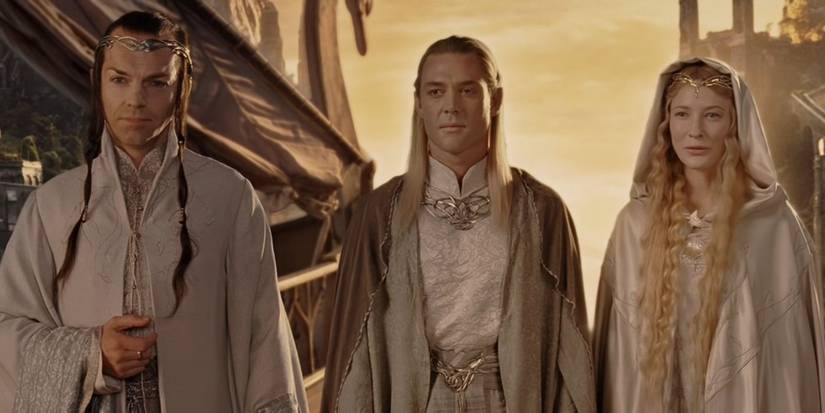
The Teleri, also called the Lindar, Nelyar, or "Singers," were the third group to travel to Valinor. They carried a deep love for the sea and were, therefore, skilled sailors. Some of their numbers also grew to love the forest. The Teleri, which included notable Lord of the Rings characters like Celeborn and Cirdan the Shipwright, were known to have either very dark or silver hair.
The Teleri were also passionate about music and often had beautiful voices, hence their being called the "Singers." Before the journey to Valinor, the Teleri were the largest clan of Elves, and they were ultimately further divided into groups called the Falmari, Sindar, Laiquendi, Silvan, and Nandor.
Though all the Teleri accepted the invitation of the Valar and set out on the Great Journey, not all actually made it to Valinor. Therefore, the Falmari, Sindar, Laiquendi, and Nandor settled in different places between Middle-earth and Aman.
5 Falmari
Dominions: (Aman) Alqualondë (Middle-Earth) Tol Eressëa

The Falmari were Teleri who made the Great Journey, arrived in Beleriand and continued to Ulmo's floating island, which would take them the rest of the way to Valinor. However, during the island's trip, these Elves asked Ulmo to stop offshore and secure the island there. The island then became known as Tol Eressëa.
Later, the Falmari began to long for their fellows who had traveled the rest of the way to Valinor. They learned the art of ship-building and used swans to pull their vessels the rest of the way to Valinor, where they finally saw the light of the Two Trees. The Falmari then built the city of Alqualondë and were ruled by Olwë.
4 Sindar
Dominions: Doriath, Falas, Lindon, Lothlorien, Mirkwood, Menegroth

The second subgroup within the Teleri is the Sindar, which means "Grey People." They had accepted the invitation of the Valar and made the Great Journey as far as Beleriand, never traveling to Valinor (and therefore never seeing the Two Trees before their destruction). This meant that the Sindar were considered Moriquendi. Still, the Sindar became known as the fairest and wisest of Middle-earth's Elves, sometimes called "Elves of the Twilight."
The Sindar Elves staying in Middle-earth came down to their king, Elu Thingol (also called Elwë), who had wandered into the forest while the Teleri were waiting to depart from Beleriand for Valinor. While in the forest, Elwë met and fell in love with Melian the Maia, and after some years, he rejoined his people in Beleriand, established a city there (Menegroth), and married her. Elu Thingol and Melian later gave birth to Lúthien Tinúviel.
Elrond and Arwen are descendants of Elu Thingol and Lúthien Tinúviel.
3 Nandor
Dominions: Ossiriand, Lindon, Lothlorien, Belfalas, Ithilien, Mouths of Anduin

The third subgroup of the Teleri was the Nandor, who made it as far as the Misty Mountains during the Great Journey before they decided to stop, establishing several Elvish cities in the Vales of Anduin. The Nandor loved water as much as their fellow Teleri, though, since most never made it to the sea, they preferred waterfalls, springs, and rivers. The Nandor were also known to have extensive knowledge of nature, with a deeper understanding of plants and animals than other Elves.
Since the Nandor spread across the Vales of Anduin, they were further divided into two subgroups: the Lequendi and the Silvan. The Leiquendi ultimately traveled to Beleriand and settled among King Thingol's people, while the Silvan Elves settled in the woodlands beyond the Misty Mountains.
2 Laiquendi
Dominions: Ossiriand, Arthorien, Lindon

The Laiquendi, also called the "Green Elves," were a clan of the Nandor. Years after the Nandor settled in the Vales of Anduin, the Elf Denethor led some back westward, where they settled in eastern Beleriand in a land called Ossiriand. However, this was around the time that Morgoth returned to Middle-earth after stealing the Silmarils. The Dark Lord invaded Beleriand, and Denethor joined forces with Thingol to defend the land.
Later, when the Noldor were exiled from Valinor, they came upon this group of Nandor Elves and called them Laiquendi—"Green Elves." The Laiquendi had little else to do with the events of The Lord of the Rings, and it is believed that they slowly spread out and assimilated with other Elf tribes.
1 Silvan
Dominions: Lothlorien, Greenwood The Great, Ithilien, Edhellond, Mirkwood

After the Nandor Elves settled in the Vales of Anduin, the Laiquendi departed west, but the Silvan were those who remained. They spread out across the land, becoming indistinguishable from the Avari. The various groups of Silvan Elves in the Woodland Realm were later ruled by Sindarin Elves, such as Oropher, father of Thranduil and Grandfather of The Lord of the Rings Legolas.
Over the years, the Silvan Elves migrated across the Woodlands, settling in notable locations like Mirkwood. Many also migrated to Lothlórien, where they were eventually ruled by Galadriel and Celeborn. The Silvans, who mixed in with the Eldar who had returned from Valinor, took part in many notable Lord of the Rings events, such as the Battle of Five Armies and the Last Alliance of Elves and Men, which saw the death of King Oropher and the crown passed to the Thranduil.
- Movie(s)
- The Lord of the Rings (1978), The Lord of the Rings: The Fellowship of the Ring, The Lord of the Rings: The Two Towers, The Lord of the Rings: The Return of the King, The Hobbit: An Unexpected Journey, The Hobbit: The Desolation of Smaug, The Hobbit: The Battle of the Five Armies, The Lord of the Rings: The War of the Rohirrim
- Created by
- J.R.R. Tolkien
- First Film
- The Lord of the Rings (1978)
- Cast
- Norman Bird, Anthony Daniels, Elijah Wood, Ian McKellen, Liv Tyler, Viggo Mortensen, Sean Astin, Cate Blanchett, John Rhys-Davies, Billy Boyd, Dominic Monaghan, Orlando Bloom, Christopher Lee, Hugo Weaving, Sean Bean, Ian Holm, Andy Serkis, Brad Dourif, Karl Urban, Martin Freeman, Richard Armitage, James Nesbitt, Ken Stott, Benedict Cumberbatch, Evangeline Lilly, Lee Pace, Luke Evans, Morfydd Clark, Mike Wood, Ismael Cruz Cordova, Charlie Vickers, Markella Kavenagh, Megan Richards, Sara Zwangobani, Daniel Weyman, Cynthia Addai-Robinson, Lenny Henry, Brian Cox, Shaun Dooley, Miranda Otto, Bilal Hasna, Benjamin Wainwright, Luke Pasqualino, Christopher Guard, William Squire, Michael Scholes, John Hurt
- TV Show(s)
- The Lord of the Rings: The Rings of Power
- Video Game(s)
- The Lord of the Rings Online (dupe), Middle-Earth: Shadow of War, The Lord Of The Rings: Gollum, The Lord of the Rings: Return to Moria
The Lord of the Rings is a multimedia franchise consisting of several movies and a TV show released by Amazon titled The Lord of the Rings: The Rings of Power. The franchise is based on J.R.R. Tolkien's book series that began in 1954 with The Fellowship of the Ring. The Lord of the Rings saw mainstream popularity with Peter Jackson's The Lord of the Rings and The Hobbit trilogies.
KioskNews shows a cleaned-up reading view extracted from the publisher’s page — the original always lives on their site, not ours.