Aceh's 180-year-old Quran manuscript undergoes digitization
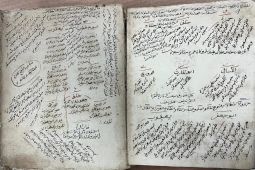
Banda Aceh, Aceh (ANTARA) - An estimated 180-year-old Quran manuscript from Aceh is being digitized to preserve its fragile pages and safeguard Islamic knowledge recorded in the historic document for future generations.
"Digitization is not merely converting a manuscript into digital form, but also preserving the knowledge it contains so it can be studied and passed down," said Nurrahmi, a doctoral student at UIN Ar-Raniry Banda Aceh.
She said digitization was needed because the manuscript's physical condition had deteriorated, with several fragile pages and fading text that had become difficult to read.
The handwritten manuscript belonged to Teungku Chik Lampaloh, an Acehnese scholar also known as Sheikh Abdurrahman Lampaloh. Besides Quranic text, it contains notes documenting Islamic knowledge and scholarly traditions of its era.
Nurrahmi said the digitization is part of her research, titled "From Manuscript to Digital Heritage: Preserving Nusantara Islamic Knowledge through the Digitalization of the Teungku Chik Lampaloh Manuscript," presented at the 10th I-LISS Conference in Malaysia.
The research was conducted with Prof. Mujiburrahman, Prof. Syamsul Rijal, Dr. Zubaidah and Fathin Zhafira Fauzi.
She said digitization would reduce the need for physical handling while keeping the manuscript's information accessible for study without repeatedly opening or touching the original.
The study uses a qualitative descriptive approach, with digitization conducted in three stages, pre-digitization, digitization and post-digitization.
The research proposes a framework combining preservation, metadata management and knowledge dissemination that could be adopted by libraries, archives, museums and cultural heritage institutions.
The Teungku Chik Lampaloh manuscript was previously studied by researchers from UIN Ar-Raniry and Al-Azhar University, focusing on paratextual elements such as marginal notes, colophons, annotations and other descriptions.
Related news: Kutai Kartanegara digitizes ancient manuscripts to preserve heritage
Related news: Perpusnas strives to realize single data of Nusantara manuscripts
Translator: M.Ifdhal, Rahmad Nasution
Editor: Primayanti
Copyright © ANTARA 2026
KioskNews shows a cleaned-up reading view extracted from the publisher’s page — the original always lives on their site, not ours.