The 15 Best Horror Trilogies, Ranked


Updated
Sign in to your Collider account
Horror trilogies have come and gone throughout the years, but rarely are they consistent in quality. Usually, this is because the original director abandons the franchise to work on other projects while other filmmakers scoop up their remains to try and profit off of them as much as possible. This isn't always the case, of course, and lots of horror trilogies out there are full of nothing but awful movies.
Every so often, a trilogy comes along that produces three horror movies with equal amounts of time and care. These trilogies may stand on their own or may be part of a larger franchise. Sometimes, they may even bomb with internet critics, but they still always find a place in the hearts of horror fans, who appreciate them immensely and likely always will. It's hard to nail three movies in a row, but on these rare occasions, horror filmmakers did just that.
15 'Terrifier' Trilogy (2016–2024)

The Terrifier movies are known for being shock-value splatter films and not much else. Yet, there's something that people find continually endearing about them. The series' cinematic inception began with the horror anthology film, All Hallows' Eve, which introduced the character of Art the Clown (David Howard Thornton), a killer clown with no ulterior motive other than finding murder to be enjoyable.
In 2016, Art received his first solo feature, where he didn't have to share the spotlight with any other horror monstrosities or killers. Terrifier is mostly dubbed as "torture porn" by critics, and the films have consistently garnered low review scores. However, they definitely have their dedicated fans who keep coming back for more. Likely, this is because it has all the cheesiness and practical effects of '80s and '90s slasher films, which makes them kind of nostalgic in a sick way. On top of that, people want to see how Art can outdo himself as he conceives of more gruesome and outlandish methods of murder.
14 'Re-Animator' Trilogy (1985–2003)

The Re-Animator movies weren't really received well by critics, but they have remained cult classics throughout their run. The movies consider themselves to be horror-comedy, intentionally playing into tropes of campy splatter films that are practically synonymous with 80s and 90s cinema. The movies are very loosely based on the short story Herbert West--Reanimator by H. P. Lovecraft, one of the most famed horror authors of all time.
However, the movies are much more cheesy and over-the-top than the original work by Lovecraft. The story is basically about a scientist using an experimental treatment to bring one of his colleagues back from the dead, which obviously has disastrous consequences. Critics might not have been very kind to these movies, but audiences have continued to love them, some with genuine adoration, and some with a "so-bad-it's-good" outlook.
13 'Sleepaway Camp' Trilogy (1983–1989)

Sleepaway Camp is a really underrated trilogy of slasher films that almost got lost in the tidal wave of similar films that came out in the '80s. The movie is about a lakeside summer camp overseen by a group of teenagers, one of them being a survivor of a tragic boating accident that occurred there eight years prior. It's the classic setup to a slasher film that leans heavily into tropes.
However, critics were actually impressed by the movie's plot twist, by its layers, and by its surprising depth. The first film was followed by a sequel which was perfectly satisfactory, albeit not quite as good as the original. Then the third film came out, and that was quite a travesty. Still, the third movie wasn't bad enough to detract from the quality of the two films that came before, so the trilogy as a whole remains entertaining.
12 'Firefly' Trilogy (2003–2019)

Critics panned Rob Zombie's dark comedy/horror movies that came as part of the Firefly trilogy. But for fans of the singer, or horror fans in general, all three were good, if not fantastic, entries in the genre. The trilogy might not rise above B-movie level, but one person's trash is another one's treasure. In spite of its critical reviews, The Firefly has found success with regular audiences and has developed a huge cult following over the years.
It begins with House of 1000 Corpses, which is then followed by The Devil's Rejects and 3 From Hell. If extreme gore and clumsy humor aren't your thing, it's not likely you'll enjoy the trilogy; those into cheesy slashers or kitschy horror will absolutely love these movies, and not in an ironic way. After all, they're exactly the kind of films expected from Rob Zombie, and they're glorious because of it.
11 'Saw' Trilogy (2005–2007)

Critics have never really been very kind to most of the Saw movies, even the first one, iconic as it is. And sure, maybe in a technical sense, they aren't the best, but in terms of enjoyment, they've developed quite a following and can easily be loved by casual filmgoers. Such is the case with Saw II, Saw III, and Saw IV, which are the three films in the franchise directed by Darren Lynn Bousman. While not as good as the original, they're still a fun time and a great part of Jigsaw's ongoing story.
As with the first film, all three movies feature elaborate death traps meant to be beaten with deadly consequences if failed, and they only get more and more creative and gruesome as the franchise goes on. Tobin Bell returns as the serial killer Jigsaw, who preys upon those who aren't living their lives to the fullest. Overall, these three films are still good in the eyes of Saw and horror fans alike and make for a good, if not amazing, horror trilogy.
10 'Halloween' Trilogy (2018–2022)

The Halloween franchise started on a high note but was really in a rough spot for a long time until the 2018 reboot, which brought back every bit of eerie charm that made the original great. It felt like a proper sequel and not just a quick cash grab that relied solely on shock value to get slasher fans to come and "enjoy" it. The director of the first entry, David Gordon, proved to be pretty adept and was tasked to tackle two more movies in the franchise.
He followed up with Halloween Kills, a movie that was not a hit with critics but was approved by long-time fans of the series. After that came Halloween Ends, which was similarly received by critics and fans even though it was a slight step down from the second film. Overall, these three Halloween movies are better than the series has been in a long time and helped breathe life into a tired and struggling franchise.
9 'The Conjuring' Trilogy (2013–2021)

The Conjuring spawned multiple movies connected in what is known as The Conjuring Cinematic Universe. Among these are the three main Conjuring films, comprising the first one, The Conjuring 2, and The Conjuring: The Devil Made Me Do It. All three movies center on Ed (Patrick Wilson) and Lorraine (Vera Farmiga) Warren, a real-life husband and wife duo who serve as paranormal investigators.
Each film follows them as they investigate claims of demonic possession across various locations. The first and the second Conjuring movies are masterpieces of horror, utilizing many creative techniques and a profound atmosphere of dread; sadly, the third film wasn't as good. It was good enough but not quite as daring as its predecessors. Regardless, this trilogy is the jewel in the crown of the Conjuring cinematic universe and a modern horror spectacle that is destined to become a legend.
Collider Exclusive · Horror Survival Quiz Which Horror Villain Do You Have the Best Chance of Surviving? Jason Voorhees · Michael Myers · Freddy Krueger · Pennywise · Chucky
Five killers. Five completely different ways to die — if you're not smart enough, fast enough, or self-aware enough to avoid it. Only one of them is the villain your particular set of instincts gives you a fighting chance against. Eight questions will figure out which one.
🏕️Jason
🔪Michael
💤Freddy
🎈Pennywise
🪆Chucky
01
Something feels wrong. You can't explain it — you just know. What do you do? First instincts are the difference between the survivor and the first act casualty.
02
Where are you most likely to find yourself when things go wrong? Setting is everything in horror. Where you are determines which rules apply.
03
What is your most reliable survival asset? Every survivor has a quality the villain didn't account for. What's yours?
04
What kind of fear is hardest for you to fight through? Knowing your weakness is the first step to not dying because of it.
05
You're with a group when things start going wrong. What's your role? Horror movies are brutally clear about who survives group situations and who doesn't.
06
What's the horror movie mistake you're most likely to make? Honest self-assessment is a survival skill. Denial is not.
07
What's your best weapon against something that can't be stopped by conventional means? Every horror villain has a weakness. The survivors are always the ones who find it.
08
It's the final scene. You're the last one standing. How did you make it? The final survivor always has a reason. What's yours?
Your Survival Odds Have Been Calculated Your Best Chance Is Against…
Your instincts, your strengths, and your particular way of thinking under pressure point to one villain you actually have a fighting chance against. Everyone else — good luck.
Jason Voorhees
Jason is relentless, but he is also predictable — and that is the gap you would exploit.
- He moves in straight lines toward his target. He doesn't strategise, doesn't adapt, doesn't outsmart. He simply pursues.
- Your ability to keep moving, use the environment, and resist the panic that freezes most victims gives you a genuine edge.
- The Crystal Lake survivors were always the ones who stopped running in circles and started thinking about terrain, water, and distance.
- You think like that. Which means Jason, for all his indestructibility, would face someone who simply refused to be where he expected.
Michael Myers
Michael watches before he moves. He is patient, methodical, and almost impossible to detect — until it's too late for anyone who isn't paying close enough attention.
- But you are paying attention. You notice the shape in the window, the car parked slightly wrong, the silence where there should be sound.
- Michael's power lies in the invisibility of ordinary suburbia — the fact that nothing ever looks wrong until it already is.
- Your spatial awareness and instinct to map every room, every exit, and every shadow before you need them is precisely the quality Laurie Strode had.
- You are not a victim waiting to happen. You are someone who already suspects something is wrong — and acts on it.
Freddy Krueger
Freddy wins by getting inside your head — using your own fears, your own memories, your own subconscious as weapons against you. That strategy requires a target who can be destabilised.
- You are harder to destabilise than most. You've faced uncomfortable truths about yourself and you haven't looked away.
- The survivors on Elm Street were always the ones who understood what was happening and chose to face it rather than flee from it.
- Freddy's greatest weakness is that his power evaporates in the presence of someone who refuses to give him the fear he feeds on.
- Your psychological resilience — the ability to stay grounded when reality itself becomes unreliable — is exactly the quality that keeps you alive here.
Pennywise
Pennywise is ancient, shapeshifting, and feeds on terror — but it has one critical vulnerability: it cannot function against someone who genuinely stops being afraid of it.
- The Losers Club didn't survive because they were braver than everyone else. They survived because they faced their fears together, and faced them honestly.
- You ask the questions others avoid. You look directly at what frightens you rather than turning away.
- That directness — the refusal to let fear fester in the dark — is Pennywise's worst nightmare.
- It chose the wrong target when it chose you. You are exactly the kind of person whose fear tastes like nothing at all.
Chucky
Chucky's greatest advantage is that nobody takes him seriously until it's already too late. He exploits the gap between how something looks and what it actually is.
- You don't have that gap. You take threats seriously regardless of how they present — and you never make the mistake of underestimating something because of its size or appearance.
- Chucky relies on surprise, on the delay between recognition and response. You close that delay faster than almost anyone.
- Your instinct to treat every unfamiliar thing with appropriate scepticism — rather than dismissing it because it seems absurd — is the exact quality that keeps you breathing.
- Against Chucky, not laughing is already winning. You are very good at not laughing.
8 'Fear Street' Trilogy (2021)

The entire Fear Street trilogy came out in the same year, which would, at first glance, imply that the filmmakers were just sort of rushing them out the door without any real care or effort. But this couldn't be further from the truth. Based on the original books by R. L. Stine, Fear Street is not only a great coming-of-age story but a unique spin on the horror genre, too.
It presents itself as three parts of one large story rather than just a movie with two sequels. This unique approach makes it the perfect trilogy to binge on Halloween night or a weekend, especially with its vast array of settings and periods and interesting cast of characters. There's nothing quite like the Fear Street trilogy — every horror fan should definitely check them out if they haven't already.
7 'A Quiet Place' Trilogy (2018–2024)
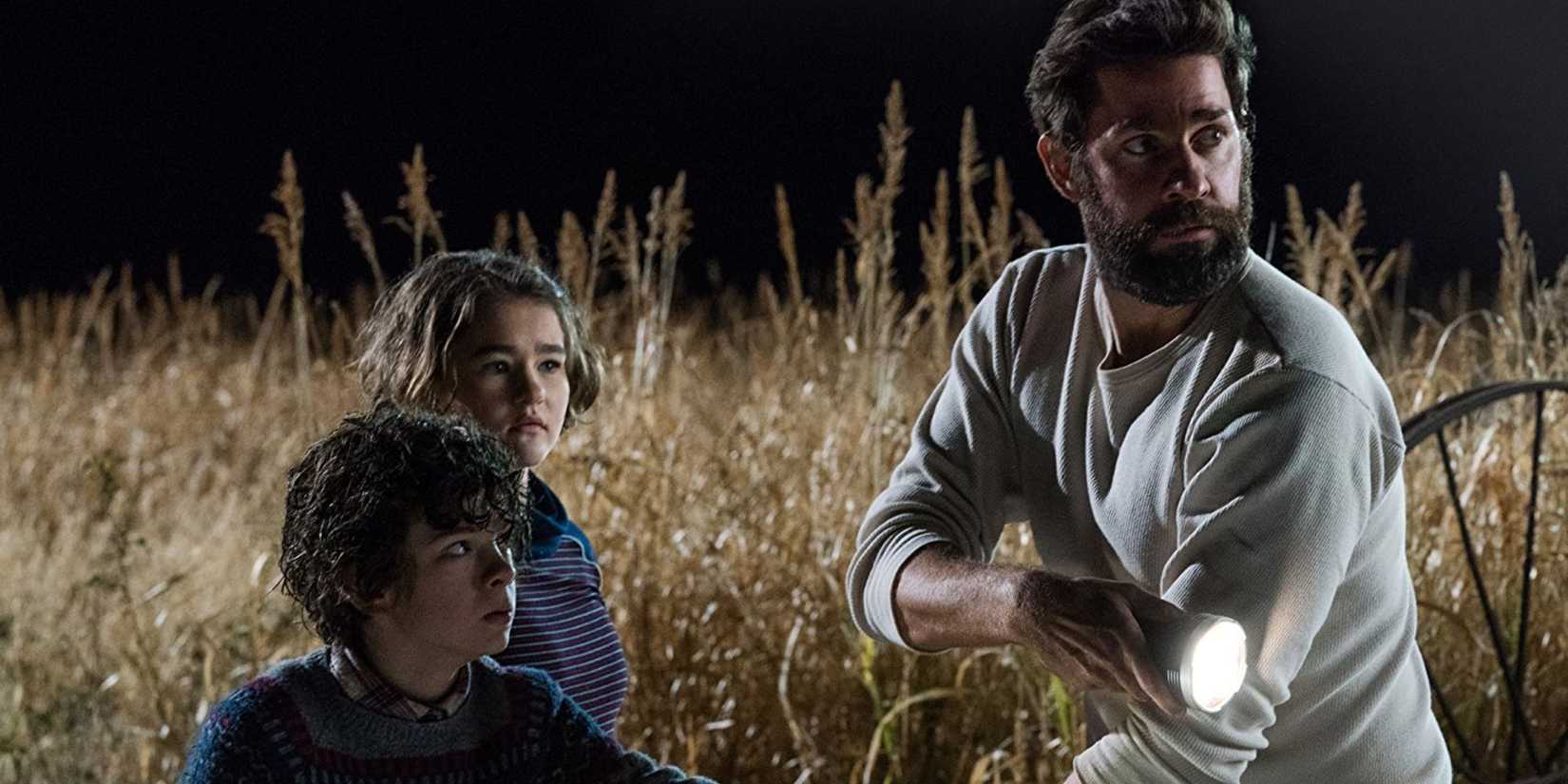
A Quiet Place was the horror debut of one of its stars, John Krasinski. The actor had directed some dramedy films before, but these were nothing to write home about for the most part. It's not that they were bad; they were just unremarkable. Then came A Quiet Place, followed by A Quiet Place Part II, and just recently by A Quiet Place: Day One. These three movies have been absolutely excellent and a triumph not just in horror but in all of cinema.
They're not super scary, but they don't need to be because they're extremely creative and even revolutionary. A Quiet Place is a departure from how loud horror films can be with all the screaming and shrill sound effects. The aliens in the films hunt through sound, which means much of the movie is silent as the characters try to survive. As a saga, A Quiet Place is ambitious but cleverly done. The unique schtick could have easily failed, but Krasinski executed it perfectly.
6 'Dead' Trilogy (1968–1985)
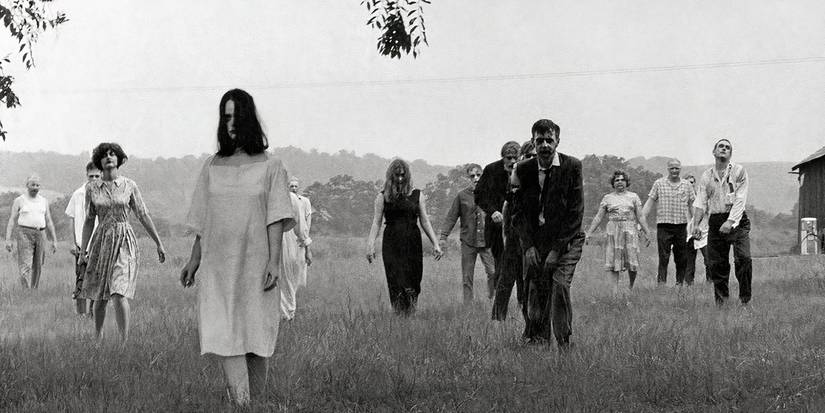
Director George Romero is known as the father of zombie cinema, and his Dead trilogy is exactly the reason why. It starts with Night of the Living Dead in 1968, which was one of the first movies to popularize zombie hordes. This genre-defining effort was subsequently followed by Dawn of the Dead and Day of the Dead. The three films were smash hits with both critics and audiences and are mostly responsible for why the zombie genre became so popular.
While it looks like these films are unconnected, Romero himself has confirmed that they are a trilogy, taking place in the same universe but following different sets of characters at different locations. Still, the spreading infection in all three is the same epidemic. Multiple films also occur within the same universe, but the best are the original three Dead horror masterpieces, which continue to be remembered fondly even after Romero's untimely death.
KioskNews shows a cleaned-up reading view extracted from the publisher’s page — the original always lives on their site, not ours.