Labor may be on the nose in inner Melbourne over public housing – but it’s taking the fight to the Greens

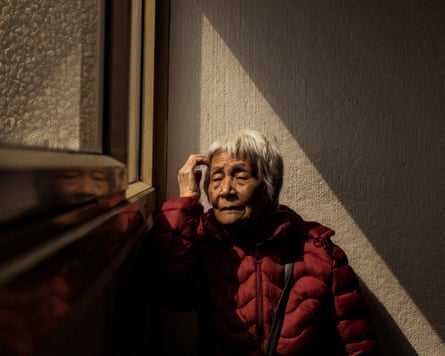
Pauline’s journey to Australia was long. Part of the Chinese Hakka minority targeted during Indonesia’s invasion of Timor-Leste, she went first to Jakarta, then Portugal, before finally making her way to Melbourne in 1984.
Since then, the 76-year-old has lived in one of North Richmond’s high-rise public housing towers, living what she describes as a “quiet, peaceful life”.
That changed last year, when a letter arrived telling her she would have to leave 139 Highett Street – the first unit in her block to be demolished under the Victorian Labor government’s plan to redevelop all the state’s public housing towers.
Pauline says she felt pressured to move into an apartment in another high-rise on the block – also eventually slated for demolition – or risk being removed from the housing waitlist.
“I don’t like it here but I had to pick it. I’m waiting and hoping I can move into a new one,” she says through a translator.
Twelve of the 44 public housing towers to be redeveloped are located in the state electorate of Richmond, held by Greens MP Gabrielle de Vietri.
For De Vietri, the towers have become an emblem of the government “turning its back” on things it once championed – and she says it’s not gone unnoticed.
“I’ve got staunch Labor voters who, in a five-minute conversation, will reconsider their vote. They’re really on the nose,” she says.
But as Labor faces backlash in the regions and outer suburbs ahead of the November election, it sees an opportunity to regain ground in the city. It points to the 2025 federal election, where the Greens failed to capture target electorates and leader Adam Bandt lost his seat, which overlaps with the state seats of Richmond and Melbourne, held by the party’s Victorian leader, Ellen Sandell.
Monash University’s senior lecturer in politics, Zareh Ghazarian, says the federal result defied the “sense of inevitability that Labor would continue to cede seats” to the Greens in the inner city.
“Labor is on the offensive, emboldened and they think these seats are ripe for regaining,” he says. “There’s a lot riding on the inner city for them because it could be the difference between holding on to or losing government.”
For more than a decade, the Greens have made major advances against Labor in inner-city electorates once considered its strongholds. The Greens currently hold Melbourne, Richmond and Brunswick and have repeatedly attempted to reclaim Northcote, making it the most marginal electorate in the state.
They are also seeking to win back Prahran after losing it to the Liberals at a 2025 byelection and are targeting the Labor-held seats of Footscray, Pascoe Vale, Preston and Albert Park. Across the nine electorates, the party says its already knocked on more than 70,000 doors and spoken to 24,000 voters.
Sandell says there’s been a “big surge” in their vote, particularly since Ben Carroll took over the Labor leadership from Jacinta Allan, making the Greens “genuinely competitive in seats we’ve never held before”.
The party says polling backs its confidence, with Demos tracking the Greens at 14%, up from 11.5% in 2022. YouGov and Roy Morgan’s September federal polls put their Victorian primary vote at 18% and 16%, respectively.
“The political landscape has changed so much since the federal election and in Victoria,” Sandell says.
“To be frank, Labor are more likely to go even further backwards here because of the poor decisions they’ve made over the last few years.”
But the Victorian Socialists argue the Greens are part of the problem. Jordan van den Lamb, known online as “purplepingers”, is running against Sandell in Melbourne after a federal Senate bid in 2025.
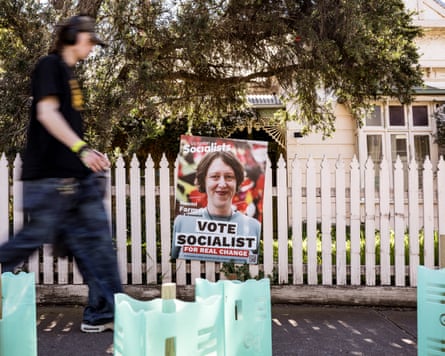
He argues the Greens have become a professional-class party, made up of “landlords” and “CEOs of NGOs” rather than working-class people, and are more focused on “negotiating” than “fighting” inequity.
“The Greens have held every single level of government in my area and nothing’s changed,” he says.
He says the socialists are running “easily our biggest campaign yet” with a candidate in every lower and upper house seat. Ultimately, though, they will preference the Greens above Labor.
Ghazarian says the Liberals’ preferences will also be “major factor” in who wins the inner city. In 2022, the Liberals’ decision to preference the Greens above Labor helped De Vietri in Richmond. But after criticising the minor party’s response to Israel’s war in Gaza, the Liberals preferenced Labor ahead of the Greens in 2025.
Labor pushes back
Labor isn’t ceding the inner city. The Victorian premier, Ben Carroll, made a string of announcements this month targeting the seats, including a commitment to overturn a ban on drinking in a popular Carlton median strip, the redevelopment of cohealth’s Collingwood site, allowing dogs in pubs and expanding trading hours to 3am and major walkback of datacentre plans.
Labor has also been tactical in its candidate selection, choosing councillors with established profiles to run in Melbourne, Richmond and Prahran. Its Richmond candidate, Sarah McKenzie, a City of Yarra councillor, has consistently knocked on more doors than its other candidates or MPs.
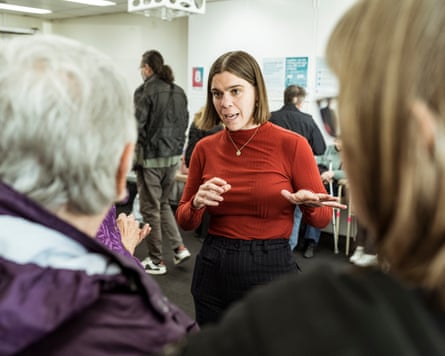
“People here are really switched on,” she says. “They have come to expect a knock on the door at election time.”
McKenzie supports the government’s plan for the towers, saying she visited Highett Street with the council and saw “serious issues” with the building’s condition. But she says others might have “another 20 to 30 years” before they require redevelopment.
She is also definitive about the need to increase public housing in the process, saying the “best way” she can advocate for that is to “make the case inside a Labor caucus”, guided by residents.
But De Vietri says the government has been “ploughing ahead” with “no thought” for residents. She points to a recent state government briefing to the City of Yarra, which showed plans to quadruple the Highett Street site from 200 to 800 homes. Just 150 are earmarked for social – not public – housing, while 650 would operate under a build-to-rent model.
During Guardian Australia’s visit to the electorate, she doorknocked residents in neighbouring towers, warning them of the plans and urging them to use people power to fight back.
Nineteen-year-old Leonie, who has lived in public housing her whole life, felt residents had little choice but to accept it.
KioskNews shows a cleaned-up reading view extracted from the publisher’s page — the original always lives on their site, not ours.