AI threatens to destroy so much of our culture. Our greatest loss might be our ability to listen | Shirleene Robinson
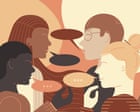
We talk a lot about losing our ability to write as a result of AI. I’m convinced our greatest loss might be our ability to listen. Listening to different views and entering into different worlds is integral to our humanity.
But Australians are conversing less every year. While rapidly evolving AI tools and chatbots promise faster responses and so-called “empathetic” listening, a recent study showed we lost an average of 338 spoken words each day between 2005 and 2019. That adds up to a staggering loss of 120,000 spoken words per person, compared with the year before.
This matters immensely. Language is culture. It tells us who we are.
As an oral historian, I’ve spent much of my career studying the power of human speech and storytelling. Between 2018 and early 2024, I led a team at the National Library of Australia responsible for the largest oral history collection in the southern hemisphere, which began in 1957 and now consists of more than 58,000 hours of recording. More recently, I’ve immersed myself in listening to hundreds more hours of this collection, working on a new book and an accompanying podcast.
The depth of the library’s collection, much of which is available online through Trove, is extraordinary. It holds accounts of First Nations Australians speaking about deep history and first-person memories reaching back into the 19th century.
All up, I’ve now listened to thousands of Australians from different eras, places and backgrounds tell their stories in their own words.
This has helped me understand exactly what we lose when we stop listening. When I listen to an oral history, I immerse myself in the life of someone I mostly likely will never meet. In a world where our social circles are reducing due to distance, remote work and increasing time online, the gift of hearing from someone different is precious.
Dame Mary Gilmore, born in 1865, speaks of tallow candles and life before electricity. An Australian prime minister recalls being elected after their party spent 23 years in opposition. A mother who risked everything shares how she sought refuge here, crossing pirate-infested seas after the Vietnam war. A pioneer stationed in Antarctica reflects on challenges of distance. The next voice may be Dr Ella Stack, a Darwin doctor who survived Cyclone Tracy, stayed to help, recorded survivor memories, then ensured Darwin was rebuilt as mayor.
I often hear Australian accents from the past or words no longer spoken, along with many professions described that no longer exist. As I listen, I’ve sometimes cried with laughter because of the ability of some people to share memories with humour.
I’ve listened to people remembering times of great social disruption, such as the 1891 Queensland shearers’ strikes or the conscription debates of the first world war. I’ve been deeply moved by the courage of First Nations Australians who shared testimonies of being part of the Stolen Generations.
Listening to other people from diverse backgrounds and perspectives who may not hold the same views as us can improve our mental and physical wellbeing, foster the exchange of information, grow understanding and spark new ideas. It is also deeply linked to building empathy.
Empathy is the richest gift listening offers. That will be our greatest loss if we speak and hear less. By engaging with experiences of others without requiring instant gratification and artificial agreement, we enter into other’s lives. We grow to be patient and appreciate difference. We learn we can disagree but in ways not unnecessarily destructive.
Mostly we learn that, although a century or more of time may separate us as well as our diverse backgrounds and experiences, we can still connect through moments of shared humanity and experiences of love, loss, change, challenge, joy and resilience. These voices from the past can resonate as powerfully as ever in our present.
KioskNews shows a cleaned-up reading view extracted from the publisher’s page — the original always lives on their site, not ours.