Tricky time for lunchboxes: banana shortage hits supermarket shelves after cool weather in Queensland
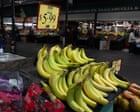
A shortage of Australia’s most popular fruit, bananas, has hit supermarket shelves at a tricky time for lunchboxes, right as apple season winds down after tough growing conditions and summer stone fruit is yet to arrive en masse.
Cool weather in key Queensland growing regions has severely slowed banana production, leaving major supermarkets Coles, Woolworths and Aldi with sparse displays or very green stock.
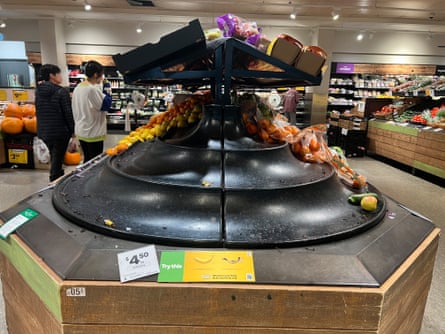
Anton van den Berg, co-founder of the grocery delivery service Box Divvy, said demand for bananas has not fallen as significantly as it typically does for produce when supply drops.
“Many people will buy bananas no matter what, and so the demand is not adjusting, leading to shortages,” he said.
Van den Berg said major supermarkets have kept demand elevated because they rarely charge more than $5 a kilo to avoid putting off shoppers, and instead rely on thousands of other grocery lines to maintain profits.
In a note to shoppers, Woolworths said: “Recent weather in far north Queensland has slowed the growth of bananas. Stock may be limited this week, but fresh stock is arriving daily.”
Coles was contacted for comment.
Bananas are the most frequently bought fruit in Australia, according to produce data company Freshlogic, with almost nine in 10 households regularly buying them.
Apples are the next most popular fruit.
While cool weather has slowed banana growth just as the tropical fruit needs heat, unseasonably hot conditions have disrupted the temperate climates required by apple orchards, compounding the squeeze on favoured fruit.
Many countries are experiencing strains on their banana supplies, but for very different reasons.
The US has reported supply strains caused by high transport fuel costs from the war with Iran, which has affected the long-distance, refrigerated shipping required to import bananas.
after newsletter promotion
While the US relies on imports, Australia grows all of its own bananas across the northern areas of Queensland, Northern Territory and Western Australia.
The Australian lunchbox conundrum may prove short-lived, with expectations banana supplies will promptly rebound.
The Australian Banana Growers’ Council said “any shortage should soon correct itself” because temperatures across affected growing regions were beginning to rise.
In the meantime, prices for stone fruit, including peaches and nectarines, are expected to drop in the coming weeks as they come into season.
Fruit sellers are still reporting healthy stock levels of navel oranges and mandarins, both of which typically start to reduce in late spring, while mango quantities are rising.
Van den Berg said mango prices were already reducing quickly and may be a suitable, albeit messier, lunchbox alternative to bananas.
“There are some kids who only eat bananas, or will only eat pink lady apples, and parents don’t have much of a choice,” he said.
“But if you do, then mangoes are definitely a better option at the moment.”
KioskNews shows a cleaned-up reading view extracted from the publisher’s page — the original always lives on their site, not ours.