Adani wants to move international flights to Navi Mumbai airport: Why are Air France, Emirates, others resisting?
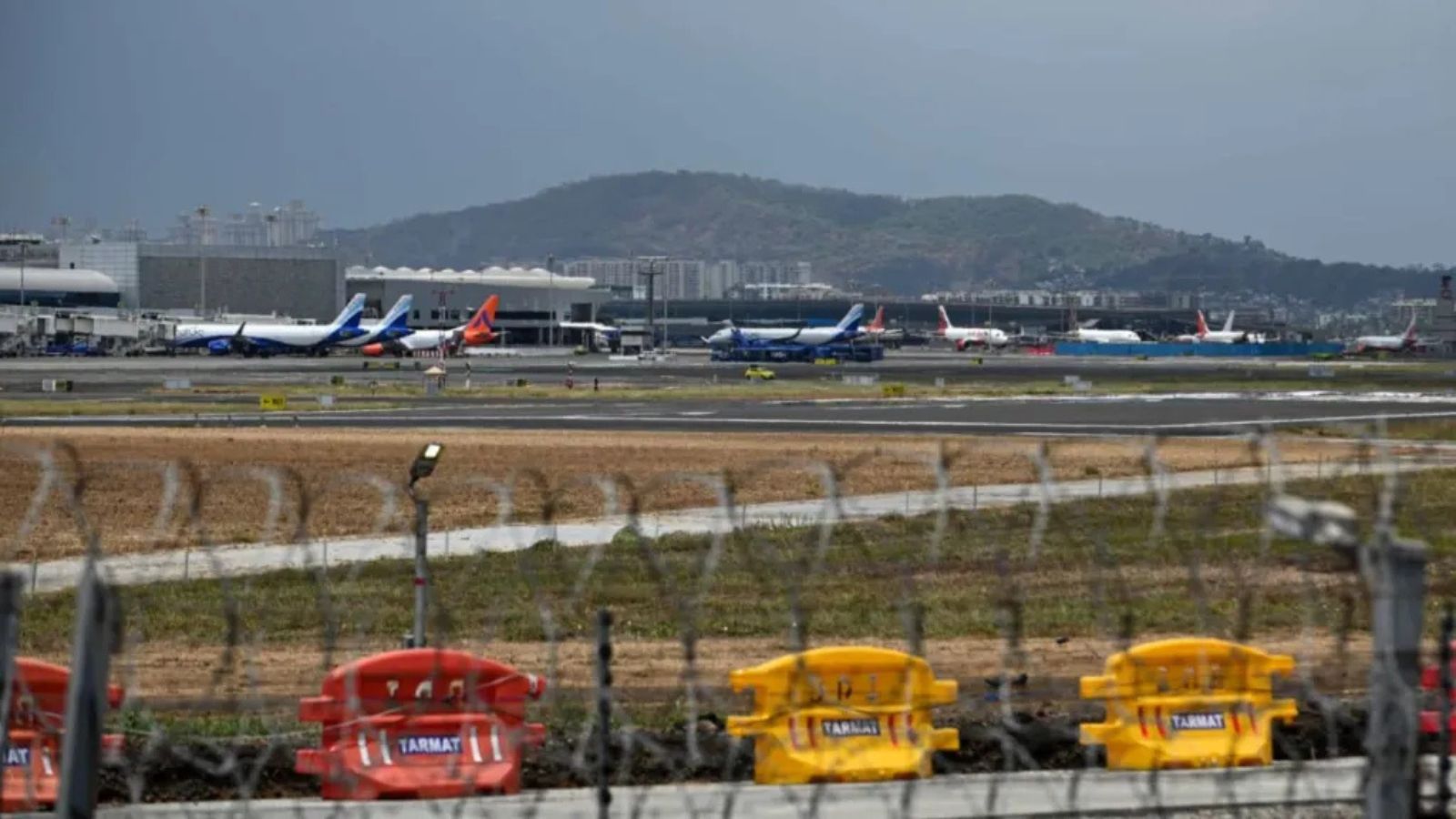
As a standoff between airlines and Adani Group over shifting international flights to Navi Mumbai airport continues, foreign airlines such as Air France and Emirates have approached the Union Ministry of Civil Aviation (MoCA), opposing a proposal by Adani-owned Mumbai International Airport Limited (MIAL) to reduce capacity at Chhatrapati Shivaji Maharaj International Airport (CSMIA) and make the shift.
In an email to MoCA Secretary Sameer Sinha earlier this week, the Airport Operators’ Committee (AOC)-Mumbai termed MIAL’s proposal to reduce Terminal 1’s (T1) capacity by five million passengers per annum (mppa) a “unilateral decision” without adequate justification.
It also questioned the operator’s assessment of T1’s operational capacity, claiming it was less than 10 mppa against the projected capacity of 15 mppa.
Amid this, MIAL has proposed temporarily shifting international flights to 14 international destinations out of the Mumbai airport, citing airlines’ failure to submit voluntary transition plans for these routes.
Meanwhile, the AOC has urged the Centre to direct MIAL and the CSMIA slot coordinator to confirm the historical slots of all existing airlines for the Summer 2027 schedule, beginning in late March.
The request comes before November 5 – the deadline to communicate slot allocation decisions under the International Air Transport Association (IATA) Slot Calendar and the 2013 MoCA slot allocation guidelines.
Why does Adani want capacity reduction?
The dispute stems from MIAL’s plan to demolish and redevelop T1-B – the redevelopment of which is expected to continue until 2029-30.
Story continues below this ad
To accommodate passengers displaced by the redevelopment, Adani’s MIAL initially proposed reducing 33 per cent (265) of weekly international operations (770) at Terminal 2 (T2) from October 25.
The airport operator asked airlines to voluntarily submit transition plans and surrender some existing slots by October 6.
It also warned that if airlines failed to meet the deadline, it would proceed based on available operational data and planning assumptions.
MIAL had earlier asked airlines to either shift some operations to NMIA or temporarily suspend them until the redeveloped T1 became operational.
Story continues below this ad
Why are airlines opposing Adani’s proposal?
Airlines objected to the proposal, citing the potential disruption to existing operations.
IATA also sought an independent assessment of NMIA’s readiness, including its ground-handling arrangements, cargo facilities, crew accommodation and connectivity.
Following the opposition, MoCA intervened and deferred the capacity reduction, directing MIAL and airlines to develop a mutually agreeable transition plan.
On October 14, the AOC and airport authorities agreed to defer the proposal to the Summer 2027 schedule, which begins in late March.
Story continues below this ad
Adani Airports Holding Limited (AAHL) Director Jeet Adani and CEO Arun Bansal assured airlines that disruptions would be minimal and historical slots honoured.
Meanwhile, domestic carriers began announcing their own transition plans. IndiGo, Air India Express and Akasa Air indicated that they would partially shift international operations to NMIA from December 2026 onwards. The proposed transfers include flights to West Asian destinations such as Jeddah, Muscat, Riyadh, Dammam, Doha and Sharjah, among others.
At a meeting on October 28, MIAL reiterated its requirement to reduce capacity to five million passengers. According to the operator, Indian carriers had already agreed to shift operations accounting for three million passengers, leaving the remaining capacity to be addressed.
Air France, Emirates resist Adani: Here’s why
Foreign airlines have remained hesitant about shifting existing international operations to NMIA, seeking greater clarity on the airport’s operational readiness and the costs involved.
Story continues below this ad
Industry sources say splitting operations between two airports nearly 40 kilometres apart could be economically and operationally challenging. Airlines may have to duplicate ground-handling teams, crew arrangements and other infrastructure.
“The move would be much simpler for an airline launching new international flights from NMIA. However, for an airline already operating international flights at CSMIA, splitting operations between two airports nearly 40 kilometres away is inconvenient and an operational hassle,” an individual familiar with the discussions said.
Emirates had previously expressed a preference for retaining its existing operations at CSMIA. In October, Essa Sulaiman Ahmad, the airline’s senior vice-president for West Asia and Indian Ocean Commercial Operations, questioned NMIA’s readiness, particularly its cargo warehousing, catering and other facilities required for international operations. Emirates currently operates 28 weekly flights from Mumbai.
Air France-KLM has also previously opposed splitting operations between the two airports, describing the arrangement as operationally inefficient.
Story continues below this ad
The proposed capacity reduction also comes amid pressure on international passenger traffic. In March 2026, CSMIA handled 11.46 lakh international passengers, compared with 12.68 lakh in March 2025. The decline came amid disruptions caused by the West Asia conflict, higher aviation turbine fuel (ATF) prices and rising airfares.
Amid resistance, the Adani Group stands its ground
Adani maintains that the redevelopment cannot be delayed indefinitely, citing structural concerns at T1. An audit by IIT Bombay had identified corrosion, spalling concrete and cracks in several parts of the terminal.
A 2020 tariff consultation paper by the Airports Economic Regulatory Authority (AERA) also highlighted structural weaknesses and the need for redevelopment. The project, however, was deferred amid the Covid-19 pandemic.
The operator argues that the proposed transition would affect only around nine per cent of CSMIA’s total capacity of 55 mppa, leaving the remaining passenger traffic unaffected. According to MIAL, redevelopment would increase T1’s annual passenger-handling capacity by 33 per cent, from 15 mppa to 20 mppa.
Story continues below this ad
At the October 28 meeting, MIAL set November 3 as the deadline for airlines to submit their transition plans for the Summer 2027 schedule. On the sidelines of the Aviation India Summit 2026, Bansal remarked that carriers could either vacate slots at CSMIA from April by shifting operations to NMIA or temporarily suspending services.
Airlines poke holes in the consultation process
Beyond operational concerns, airlines have questioned whether MIAL followed the prescribed consultation process before announcing the capacity reduction.
According to airline sources, the possibility of shifting operations to NMIA first emerged this year. However, those familiar with the meeting said the agenda did not include discussions on relocating international operations.
MIAL subsequently invited airlines to a meeting on September 16 to discuss T1’s redevelopment.
Story continues below this ad
Several airlines reportedly skipped it amid concerns over the proposed relocation. On October 1, AAHL formally informed carriers of its plan to reduce 33 per cent of weekly international capacity at CSMIA.
Airlines argue that the process did not follow the 2013 MoCA slot allocation guidelines. Under these guidelines, proposed changes to airport capacity management must be communicated to stakeholders, including airlines, IATA, airport operators and government representatives.
For the Summer 2027 schedule, the airport operator was required to communicate proposed capacity changes by September 1 and inform airlines about their historical slots by September 4. Airlines were required to submit their slot requests by October 8, following which the operator would communicate its allocation decisions through the Slot Allocation List (SAL) by November 5.
Requested slots can be approved, rejected, or placed on hold.
The AOC and IATA are now awaiting formal communication on the allocation of slots. Foreign airlines have indicated that if their historical slots are denied, they could approach aviation regulators in their home countries, including the UK Civil Aviation Authority, Dubai Civil Aviation Authority, the Civil Aviation Authority of Oman and Saudi Arabia’s General Authority of Civil Aviation, among others.
Cost, time – How will the move impact passengers?
For passengers, the biggest concern is the inconvenience of having international and domestic flights operate from two airports nearly 40 kilometres apart.
Travellers connecting between domestic and international flights could face longer journeys, higher transfer costs, and the risk of missing onward flights.
Concerns have also emerged over NMIA’s connectivity and the cost of last-mile connectivity, including taxis and cabs. To address these, airport authorities have announced hourly complimentary shuttle services between NMIA and CSMIA, Chalo bus services to Andheri, Bandra, Dadar and Colaba, and Maharashtra State Road Transport Corporation’s E-Shivai services from Dadar, Borivali and Pune.
The cost of flying from NMIA is another consideration. Its user development fee (UDF) currently ranges from Rs 620 to Rs 738, around 3.5 times the corresponding charge at CSMIA. AAHL has planned cash vouchers for international passengers arriving at NMIA to offset some of these costs. The airport is also waiving landing fees for new international flights to encourage airlines to begin operations there.
Ultimately, the dispute goes beyond the redevelopment of an aging terminal. While MIAL argues that the transition is essential for Mumbai’s long-term aviation infrastructure, airlines want clarity on NMIA’s readiness, the financial implications of splitting operations, and the protection of their historical slots.
KioskNews shows a cleaned-up reading view extracted from the publisher’s page — the original always lives on their site, not ours.