How Florida turned toy rabbits into robots to lure pythons & protect Everglades
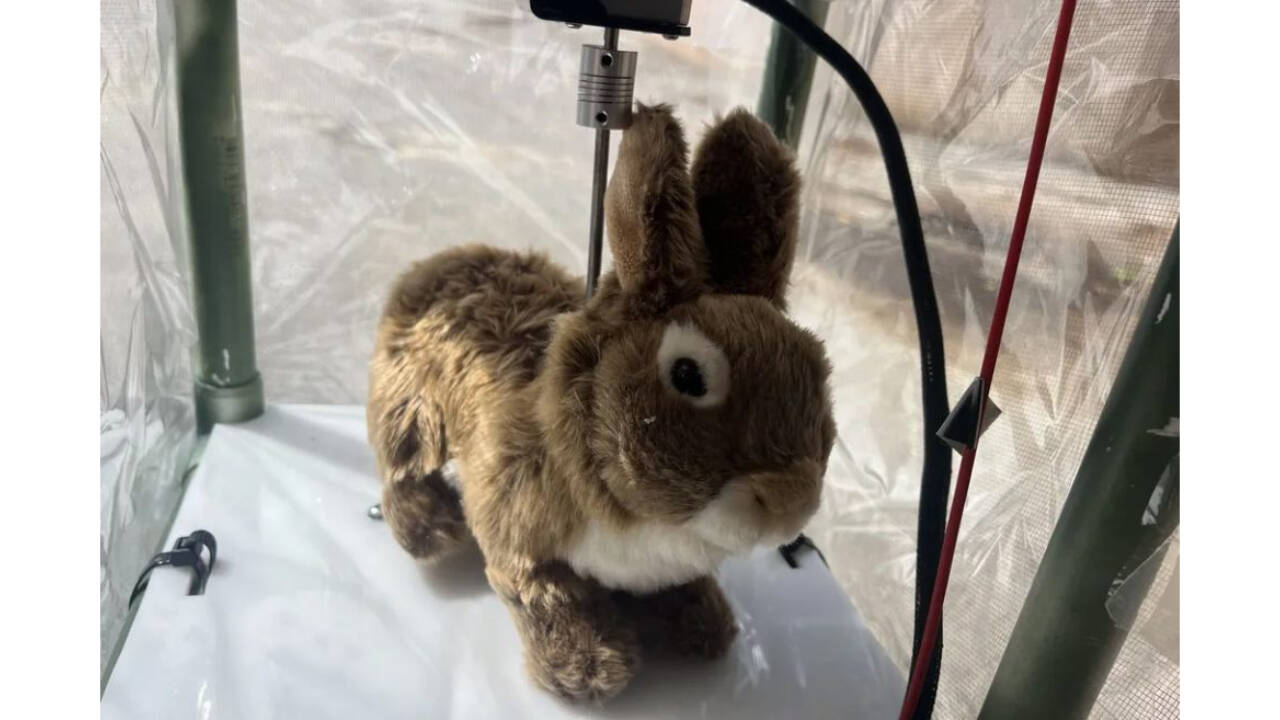
Image credit: University of Florida
In 2025, Florida researchers turned toy rabbits into python lures. The South Florida Water Management District and University of Florida tested robotic decoys to help locate invasive Burmese pythons in the Everglades.
Fitted with motors, heaters and solar-powered electronics, the rabbits imitate the movement and warmth of real prey, drawing snakes towards camera-monitored pens where researchers can detect them and send contractors to remove them.The project addresses a problem that has complicated Florida’s python-control efforts: finding snakes hidden in dense vegetation. Rather than relying entirely on hunters to spot camouflaged pythons, researchers hope to bring the reptiles to monitored locations.
The experiment is intended to protect native wildlife, although its effectiveness has yet to be established.
How stuffed rabbits became robotic decoys for Burnese Pythons in Florida’s Everglades
University of Florida researcher Chris Dutton removed the stuffing from a toy rabbit and replaced it with electronic components. Motors make the decoy shake, turn and move at intervals, while small heaters reproduce a rabbit’s body temperature.Solar power supports the system, and researchers can switch the devices on and off remotely.
Waterproofing was one engineering challenge, as the rabbits needed to withstand wet conditions while still emitting heat. The research is led by wildlife ecology and conservation professor Robert McCleery, whose earlier work examined how pythons respond to live rabbits.“We want to capture all of the processes that an actual rabbit would give off,” McCleery said. “But I’m an ecologist. I’m not someone who sits around making robots.”
How the rabbits helped hunters find pythons
The decoys sit inside small pens watched by cameras. When a python approaches, the monitoring system alerts researchers, allowing the water district to arrange its removal.“Removing them is fairly simple. It's detection. We're having a really hard time finding them,” said Mike Kirkland, the district’s lead invasive animal biologist. “They're so well camouflaged in the field.”Previous experiments used live rabbits to lure snakes, but caring for animals in remote locations was a lot of work and required a lot of manpower.
Robotic substitutes could ease that load. Field-deployment of these robot rabbits started in July 2025. If movement and heat aren't enough to attract pythons, researchers even plan to add scent to these rabbits later.
Why the Everglades needs python control
Burmese pythons are not native to Florida. Introduced through the pet trade, they became established in the Everglades and prey on animals including rabbits, raccoons, and birds. Research has linked their spread to declines in several native mammal populations.
Their camouflage and the wetland terrain make them hard to detect and remove.The robot rabbits are being tested alongside existing measures, including paid python hunters and the annual Florida Python Challenge. Officials have shown optimism about the decoys, but the reports provided do not indicate how many snakes the project has helped remove.“This part of the project is in its infancy,” Kirkland said. “We are confident, though, that this will work once we are given enough time to work out some of these details.”
KioskNews shows a cleaned-up reading view extracted from the publisher’s page — the original always lives on their site, not ours.