Unitree reports 70% surge in quarterly revenue, though AI investment weighs on net profit
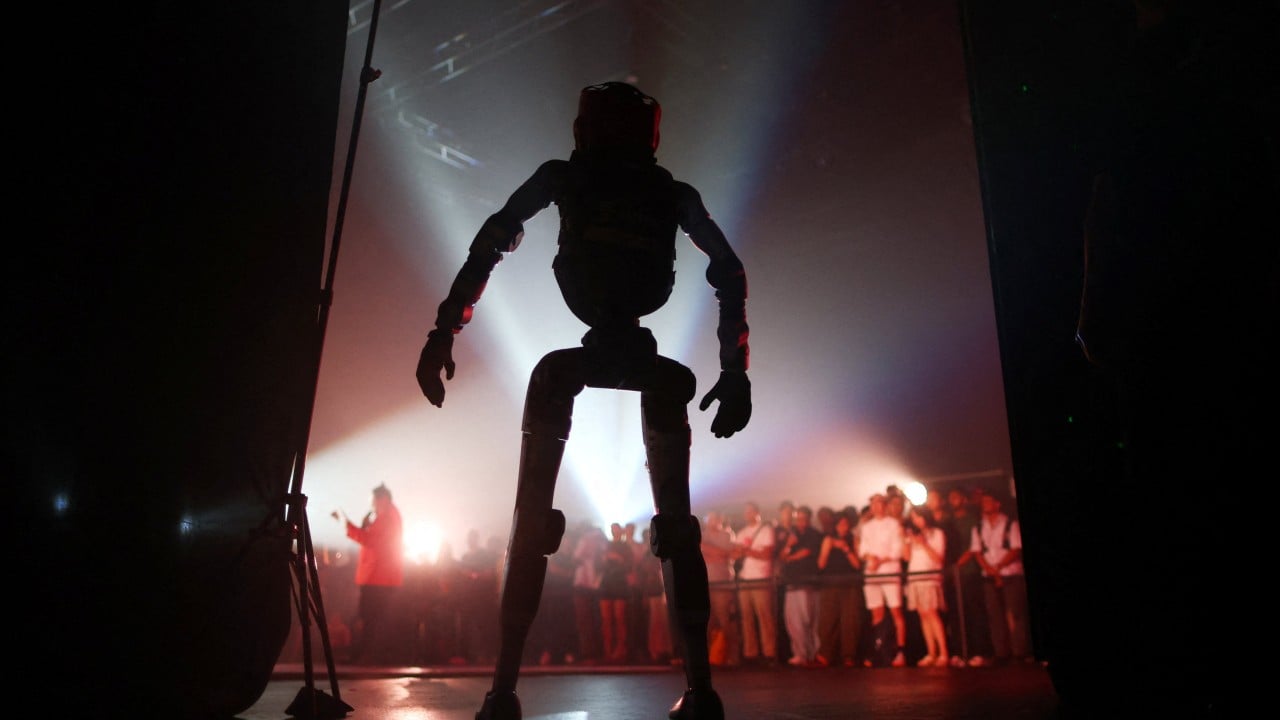
Leading Chinese robotics company Unitree Robotics on Wednesday reported a 69.93 per cent year-on-year increase in quarterly revenue to 665 million yuan (US$99.7 million), though net profits excluding non-recurring items fell 17.42 per cent to 105 million yuan, as the company released its first earnings since going public.
The results for the three months ending September 30 showed a continued surge in research and development spending by the Hangzhou-based company, which jumped 249.58 per cent year-on-year to 127.04 million yuan, or around 19 per cent of revenue, as it ramps up investments in the software “brains” of its industry-leading robotic bodies.
According to the filing with the Shanghai Stock Exchange, Unitree Robotics posted a net profit attributable to shareholders of 387 million yuan, a 270.54 per cent jump, for the first three quarters of the year.
The company said that the significant increase in net profit was due to revenue growth as well as “significant” one-off expenses incurred in the same period last year.
Excluding such non-recurring items, the company reported a year-on-year decrease in net profit of 18.78 per cent in the first three quarters of the year.
Unitree shares in Shanghai rose 8.74 per cent to 695.90 yuan on Wednesday before the earnings release, as part of a recent rally in Chinese robotics stocks on the back of expectations about imminent industry breakthroughs.
The company saw its stock plummet more than 60 per cent from its peak in the weeks after its Shanghai trading debut in August, though recent technical breakthroughs in AI models such as OpenAI’s GPT-6 Astra, which demonstrated surprising robotics manipulation capabilities, have helped the stock recover some gains this month.
Last week, Unitree CEO Wang Xingxing said that the industry could see fundamental breakthroughs in as little as two years, faster than what he had previously estimated, amid wider optimism that AI models could help boost the “intelligence” of robotic hardware.
Still, Unitree’s latest earnings are being closely watched by investors as questions swirl over the commercial prospects of Chinese humanoid robot businesses, most of which remain unprofitable.
The company is backed by major institutional investors including HSG, Meituan and Citic Securities.
According to its filing, Unitree’s cost of sales is growing faster than its revenue, with costs for the first three quarters of the year increasing around 78 per cent to 836 million yuan.
The cumulative research and development expenses for the first three quarters reached 263 million yuan, a year-on-year increase of 191.48 per cent, primarily due to a rise in investment in the development of “large-scale” AI models and the associated computing power, Unitree said.
However, the company said that its August initial public offering helped provide a massive injection of cash and cash equivalents, which jumped from 1.419 billion yuan at the end of 2025 to 7.354 billion yuan as of September 30.
KioskNews shows a cleaned-up reading view extracted from the publisher’s page — the original always lives on their site, not ours.