World Bank’s poverty in India estimate does not pass the thali test
The latest poverty estimates could create complacency in economic policymaking — if extreme poverty is almost nonexistent, policies are needed to remedy it. But our finding of a low level of food consumption for a significant section of Indians imparts an urgency to it.
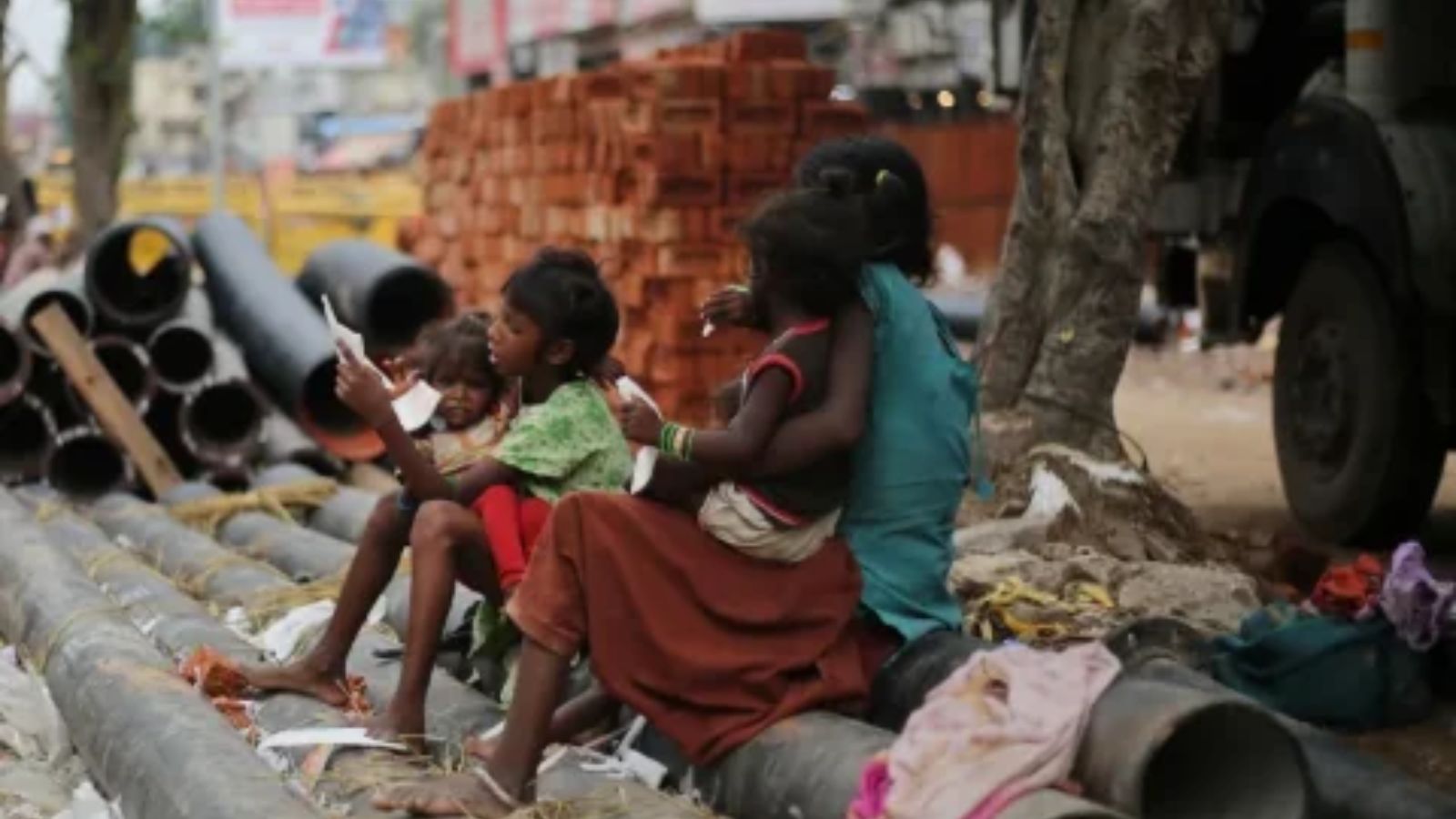
World Bank’s poverty estimate is a headcount ratio — the ratio of the number of poor to the population.(Representative Image)
5 min readNov 11, 2026 06:22 AM IST First published on: Nov 11, 2026 at 06:22 AM IST
The World Bank recently released estimates of poverty in India, pegging “extreme poverty” at 2.6 per cent. If true, that would be good news, as it would imply that high levels of economic deprivation are now a thing of the past. We argue that such a conclusion would be premature.
The WB’s poverty estimate is a headcount ratio — the ratio of the number of poor to the population. It estimates the number of poor by applying a poverty line to data reported in the NSS’s Household Consumption Expenditure Survey for 2023-24 (HCES). The poverty line translated into goods represents the minimum acceptable level of consumption, below which an individual is deemed poor. The report does not mention the set of goods and their prices that the World Bank used to construct its poverty line for India. The Survey is a rich source of consumption across the population and reveals granular information on the standard of living, which can be used to assess a headcount poverty estimate, as we demonstrate.
In 2025, we proposed a simple measure of the standard of living in India (‘The Thali Index’, IE, July 1, 2025). Termed the “thali index”, it measures the number of thalis an individual can afford to buy based on the monthly per capita expenditure on food reported in the HCES. Why did we choose this metric? The thali is a metaphor for a complete meal, combining protein, carbohydrates and minerals. It is a unit of food consumption that Indians culturally relate to and is both nutritious and satisfying. To measure the standard of living of Indians based on the thali index, we would need to apply a price to the consumption expenditure reported. We have adopted Rs 30 as the price of a thali, being the cost of a home-cooked vegetarian thali as estimated by CRISIL for the year 2023-24. We chose a home-cooked vegetarian thali as it is the cheapest. Applying the thali index to the data on consumption across expenditure groups, we found that up to 50 per cent of rural Indians and 20 per cent of urban Indians cannot afford two thali meals a day. Imputing the value of the subsidised food, which the WB report refers to as a factor affecting poverty, lowers this percentage to 40 per cent and 10 per cent, respectively. This implies that approximately 30 per cent of the Indian population cannot afford two square meals a day, making it difficult to stomach an estimate of less than 3 per cent for poverty in India.
Note that the Bank’s estimate and ours come from the same source, namely, the HCES. The difference is that the Bank uses a poverty line to measure income poverty while we are going by the directly observable data on the food consumption level. If two thali meals per day are considered the minimum acceptable food consumption, our findings imply levels of extreme poverty higher than the Bank’s estimate. The implication of our finding is that it must rethink the poverty line that it uses for India. The point is that even if the income at its currently used poverty line is more than sufficient to enable two thalis a day per person, there are several items of expenditure that must be met by a household to earn a livelihood, maintain good health and educate their young. We can think of rent, medicines and school fees. It is likely that these expenses are met first, so as to ensure survival, reducing food to the status of a residual item of consumption. If we accept the criterion of a minimum level of food consumption for an individual to be counted as non-poor, then the chosen poverty line must reflect this feature. If 30 per cent of the population does not have access to two square meals a day, surely we cannot hold that less than 3 percent of the population is poor. Our argument has been made with respect to the World Bank’s measure of income poverty but carries over to the Multidimensional Poverty Index of the UNDP to the extent that it relies on the Bank’s poverty line.
The latest poverty estimates could create complacency in economic policymaking — if extreme poverty is almost non-existent, policies are needed to remedy it. But our finding of a low level of food consumption for a significant section of Indians imparts an urgency to it. The level of food consumption is directly affected by food prices, and controlling the price of food is central to safeguarding the well-being of the population. Right now, we are experiencing a surge in food price inflation. Quite unusually, between January and September, it has risen every month, trebling over this period. This means that prices are not just continuously rising but the rise in prices is accelerating. An urgent review of the policies to control food price inflation is warranted. Food price inflation can only be controlled by managing food supply, in particular by producing more food at a steady price. This requires increasing agricultural productivity.
Balakrishnan is honorary visiting professor, Centre for Development Studies, Thiruvananthapuram, and Raj is a PhD student at Shiv Nadar University, Delhi NCR
KioskNews shows a cleaned-up reading view extracted from the publisher’s page — the original always lives on their site, not ours.