Forget Switzerland – the world’s best chocolate isn’t found in Europe
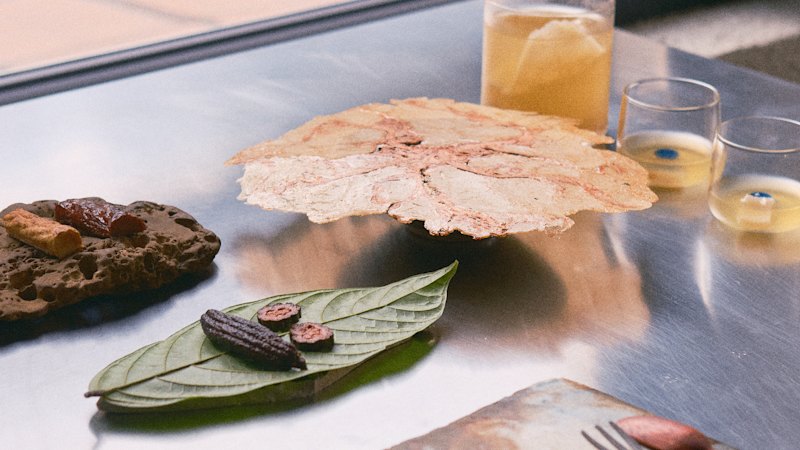
Rafael Urbina places a board of four elegantly arranged edible squares in front of me, each one representing a different flavour of Theobroma, the cacao-producing tree species native to the upper Amazon.
As each morsel slowly melts on my tongue, I’m not just experiencing the “food of the gods” – I’m tasting Peruvian history, culture and terroir one small nibble at a time. From a dark chocolate made with alpaca milk to a square with the grassy herbal flavour of cacao leaf and unique combinations of little-known cacao species, Urbina is on a mission to find and celebrate the flavour compounds unique to Peru, one of the world’s most biodiverse countries and its eighth-largest cacao producer.
I’m at the Theobromas Lab, the high-tech, high-spec laboratory at Casa Tupac in Barranco, Lima, that produces chocolates for four of the country’s world-renowned fine-dining restaurants – Central, Kjolle, Mil and Masi, where Urbina is the director. While securing a table at any of those restaurants can mean booking weeks or months in advance, the Theobromas experience, launched in 2025, is a more affordable and accessible way to connect with the philosophy behind the food.
A two-hour sensory immersion exploring cacao from seed to bar, it’s also a chance to see the science behind Urbina’s unique flavours. Before anything touches my mouth, I’ve observed, touched and smelled every part of the cacao plant and watched the lab’s state-of-the-art machinery transform ingredients into fermentations, emulsions, powders, oils, syrups, pulp, nut and seed butters, and even bread. All of these are being tested for the restaurants, and you can also now buy a small range of chocolates at Casa Tupac.
Peru is known for its high-quality cacao – it’s often referred to as the finest in the world – but most of the country’s production is exported unprocessed to global brands. We may be eating it in Australia, but we probably wouldn’t know it. And while there are plenty of mass-produced chocolate brands in Peru’s supermarkets too, outside and even within the country its artisanal producers aren’t well known. That’s something Urbina is hoping will change.
Sign up for the Traveller Deals newsletter
Get exclusive travel deals delivered straight to your inbox. Sign up now.
“When I started working with cacao more than 10 years ago, [the industry] almost didn’t exist,” he says.
Peru-based American anthropologist Amanda Jo Wildey is also on a mission to change that perception. Her passion is tree-to-bar chocolate – the chocolate produced by the farmers who grow the cacao. At her chocolate studio El Cacaotal, just a short walk from Urbina’s laboratory, chocolates are displayed on open shelves, each producer in their own section. Wildey likes to call it an “edible library”.
“When you go to a bookstore or a library you have a bunch of books, but by different authors,” she said. “That’s the same philosophy that we manage here. We have a bunch of different chocolate bars by a bunch of different chocolate makers, each with their own style, each with their own story.”
While the minimum requirement at El Cacaotal is bean-to-bar, half of the collection is actually tree to bar and it’s this level of quality control that she believes makes this chocolate some of the best in Peru today. As well as selling chocolate, El Cacaotal offers curated tastings of 45 minutes, or 90 minutes for a complete Peruvian experience.
Wildey recommends I taste chocolate from a wide range of regions: I buy a block of dark Paytiti chocolate, made by third-generation cacao and coffee farmers in the Cuzco province, Miroshnik milk chocolate from Ayacucho province, and an Elemento white chocolate and pistachio bar from the Amazon.
Wildey says although the tree to bar movement is very small, it’s important.
“They are the farmers that really are taking care of the ecosystem where the cacao is growing,” she says. “And the cacao tastes better when it’s in this multi-species ecosystem.”
Urbina agrees. “It’s still a small, niche thing that a lot of people consume very high-quality chocolate, but that is changing every year,” he says. That makes sense: once you start exploring Peruvian cacao it seems it’s impossible to stop. “It’s like, ‘Oh, there are 10 different cacaos in this region’, so every time you go deeper, it just gets more complex.”
DETAILS
The Theobromas Lab is at Casa Tupac, Avenue Pedro de Osma 301, Barranco, Lima. A group booking at the Theobromas Lab is Pen 1360 (AU$580). El Cacaotal is at Jr. Colina 111, Barranco, Lima. Chocolate tasting experiences from Pen 130 (AU$55) per person. See centralrestaurante.com.pe/en/theobroma; elcacaotal.com; peru.travel
The writer travelled to Peru as a guest of TravelMarvel, but visited Theobromas and El Cacaotal independently.

KioskNews shows a cleaned-up reading view extracted from the publisher’s page — the original always lives on their site, not ours.