How much will the end of triple lock cost pensioners – and save the government?

The state pension triple lock will be scrapped from 2030 by the next Labour government under plans announced by Andy Burnham in his first conference speech as leader.
The prime minister said the mechanism would be “adjusted” to help pay for his ambitious plans for a new, free social care system.
Under the triple lock, the state pension increases every year to keep up with rising costs and other financial pressures. The rate increases year-on-year by whichever is highest: inflation, average earnings, or 2.5 per cent.
Mr Burnham’s proposal would take average earnings – usually the highest of the three measures – out of the equation. This would instead make it more of a ‘double lock’, still increasing by the highest of the remaining two measures.
The state pension will also “hold its value relative to earnings over time”, the prime minister specified. This opens the door to ad hoc uprating above the double lock level, which would keep the payment at around 30 per cent of average earnings.
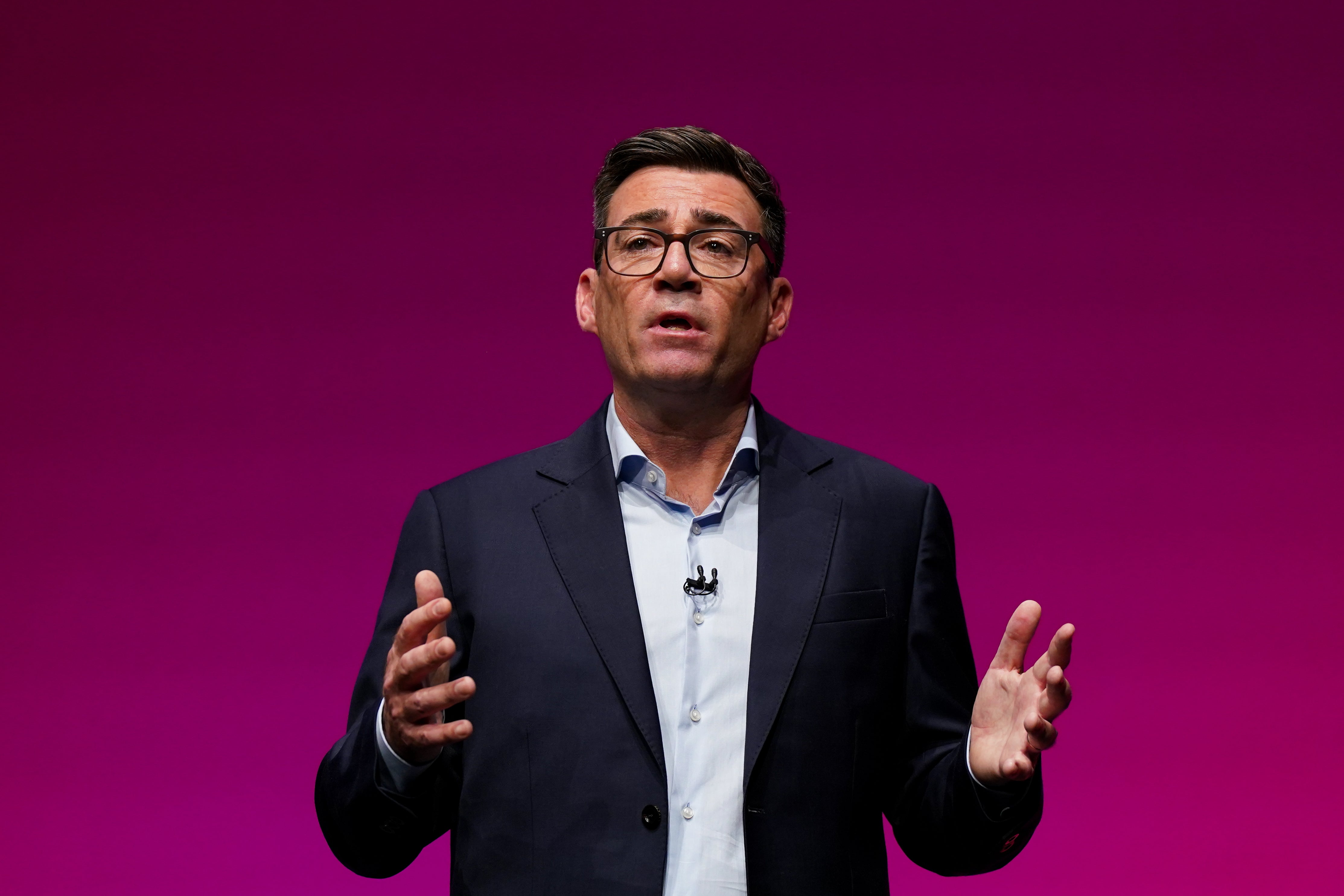
Mr Burnham said: “I’ll be honest, we promised in our manifesto to keep the triple lock unchanged throughout this Parliament. I will honour that promise. I will honour that promise and I will do more. That will take the state pension to a record high.
“From there, in April 2030, we will adjust it. The state pension will continue to rise every year at least by prices or 2.5 per cent. And it will hold its value relative to earnings over time so that pensioners will always share in the rising prosperity of the nation.”
What is the ‘pension triple lock’?
The triple lock policy ensures those on the state pension see their income from the payment rise at the same rate as workers, price increases, or at least a baseline percentage.

Get a free fractional share worth up to £100.
Capital at risk.
Terms and conditions apply.
Go to websiteADVERTISEMENT
Get a free fractional share worth up to £100.
Capital at risk.
Terms and conditions apply.
Go to websiteADVERTISEMENT
Policy dictates that it rises at whichever is the highest each year, out of annual salary growth, CPI inflation or a flat 2.5 per cent.
This year, for example, salary growth was 3.9 per cent in the month used for calculations, so unless inflation unexpectedly rockets when September readings come through – it was 3.1 per cent for August – that is the figure which will be used to uplift the state pension from April 2027 onwards.
That will be equivalent to almost a £500 annual increase to someone on a full state pension.
The state pension is the largest single driver of welfare spending this parliament at £138bn in 2024/25. Forecasting by the Office for Budget Responsibility (OBR) finds this will increase to £15.5bn a year by 2030.
The changes are expected to save £15bn per year by 2040, the government has said.
The current weekly rate for the full new state pension is £241.30, up £85.65 from when it was introduced in 2016. This is equal to around £12,547.60 a year.
It is provisionally set to rise by 3.9 per cent to £250.71 a week, or £13,036.92 a year, in line with earnings growth in 2026.
Under the model proposed by Mr Burnham, the value of the state pension will generally increase by a lower percentage year-on-year. This could make it worth around £5,400-a-year lower in 20 years than it would have been under the triple lock.
However, the prime minister’s pledge to ensure the payment holds its value relative to earnings means that ad hoc changes will likely reduce this amount.
For this reason, the government has said it is still effectively a ‘triple lock’, as there remains three factors for uprating.
From 2030 – the first year the new mechanism could take effect – the state pension would be just around £170 a year lower, modelling of the double lock shows.
KioskNews shows a cleaned-up reading view extracted from the publisher’s page — the original always lives on their site, not ours.