Ten indicted for smuggling chips, fraud
STAYING AHEAD: Taiwan needs more sophisticated mechanisms that emphasize prevention rather than relying on punishments after the crime, a source said
By Wang Ting-chuan and Jonathan Chin / Staff reporter, with staff writer


The New Taipei District Prosecutors’ Office has indicted 10 people for allegedly using forged documents and bogus ties to National Chungshan Institute of Science and Technology (NCSIST) to procure controlled chips for military applications and smuggle them to China and Hong Kong.
The suspects were indicted on charges including aggravated fraud for potentially helping enhance China’s military capabilities, threatening national security and damaging Taiwan’s international reputation, prosecutors said.
They allegedly disguised the chips’ country of origin and their status as controlled products to smuggle them abroad, making about NT$360 million (US$11.33 million) in illicit profits, the indictment says.
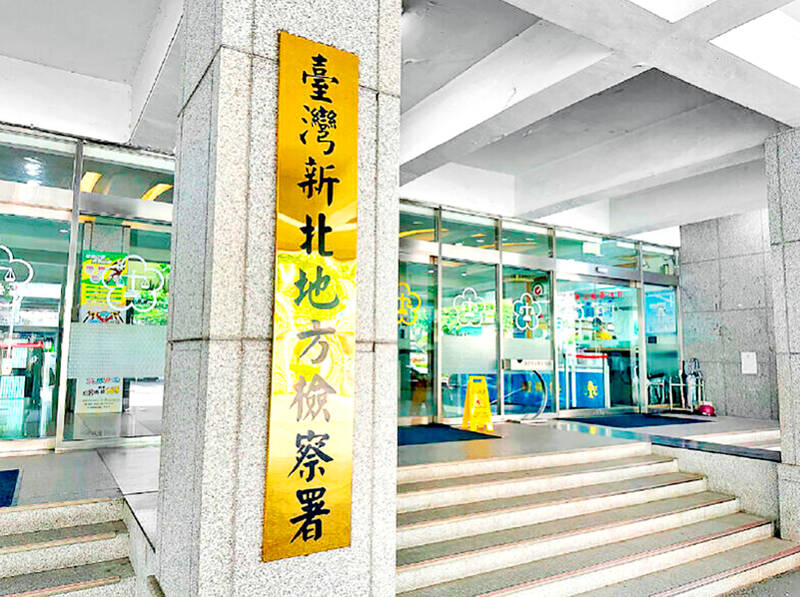
The New Taipei District Prosecutors’ Office is pictured in an undated photograph.
Photo: Taipei Times
Beginning in 2017, ADWELL Technology Inc (優活創意科技) head Chen Chien-hsiung (陳建雄) and other codefendants allegedly imported semiconductors from abroad using forged NCSIST documents, while providing assurances that the products would not be exported or resold to entities subject to US sanctions, prosecutors said.
Once in Taiwan, they repackaged and relabeled the chips as made in Taiwan and used other methods to disguise their origin so they would not be subject to export restrictions before selling them to entities in China and Hong Kong, including shell companies they had established, prosecutors said.
That scheme generated about NT$120 million in illicit profits, they said.
The defendants illegally exported more than 10 types of controlled chips manufactured by Texas Instruments and Analog Devices from the US, the Philippines, Malaysia and South Korea, prosecutors said, adding that the chips could be used in military applications involving radar, electronics, ultrasound systems, antenna arrays and uncrewed military aircraft.
Under export-control regulations, buyers must provide an end-user statement verifying the ultimate recipient, intended use and destination of the products.
Manufacturers and authorized distributors will refuse transactions involving overseas customers, including those in China, prosecutors said.
Another group, allegedly led by Hygge Investment Ltd (享得投資) head Lai Chin-lan (賴金蘭), used similar methods, starting in 2019, to sell controlled chips certified for US military specifications to entities in Hong Kong, generating about NT$130 million in illicit profits, the indictment said.
A third person, Hui Chung Telecommunications (匯眾通信) and ZhanKai Technology Co (展開科技) head Yuan Tung-tai (袁同台), allegedly placed orders through the companies he controlled in Taiwan, and similarly submitted false declarations and disguised the products’ origins before shipping them to a company he had established in Hong Kong, prosecutors said.
The company then resold the chips to buyers in China and Hong Kong, they said.
One type of chip Yuan sold was intended for use in uncrewed military aircraft, they said, adding that he earned more than NT$100 million in illicit profits.
Prosecutors are seeking a 10-year prison sentence for Chen, eight years for Yuan and six years for Lai.
They are also seeking a six-year prison sentence for Zkey Technology Inc (華謚科技) head Chiang Kun-cheng (蔣昆成), and sentences ranging from one to three years for the remaining six defendants: Chen’s brother, Chen Chien-hui (陳建輝); former ADWELL head Chen Chien-wei (陳健偉); Stone Engine Technology Co (石擎科技) and WTG Technology Co (睿虎科技) head Wang We-feng (王維鋒); Kplus Technology Ltd (凱盟資通) head Tsen-Tien-chi (曾恬綺); EcoLumina Technologies Inc (晟明科技) head Tsai Yu-shu (蔡玉書); and HGT Application Inc (洪巨科技) head Hung Chun-min (洪俊民).
A source familiar with the investigation said the types of chips smuggled by Chen Chien-hsiung could be used in radar, missile guidance, uncrewed aerial vehicle flight-control and electronic warfare systems.
Despite the national security implications, the illegal trafficking of semiconductors and advanced electronic equipment, including artificial intelligence (AI) servers and dual-use chips, does not currently contravene the National Security Act (國家安全法), the source said, speaking on condition of anonymity.
Authorities can deter entities only when they illegally transfer military or advanced technologies to hostile foreign powers or countries subject to export restrictions, they said.
Taiwan urgently needs more sophisticated mechanisms that emphasize prevention rather than relying on punishment after violations have occurred, the source said.
KioskNews shows a cleaned-up reading view extracted from the publisher’s page — the original always lives on their site, not ours.