Quintana Roo passes ‘Nicole’s Law,’ banning cosmetic surgery for minors
The southeastern Mexican state of Quintana Roo this week passed a ban on invasive cosmetic surgery for minors, joining Durango in approving reforms known as “Nicole’s Law.”
The initiative takes its name from Paloma Nicole Arellano, a 14-year-old who died in Durango last September after cosmetic surgery. Her death exposed gaps in rules governing elective procedures for minors and intensified calls for state-level restrictions.
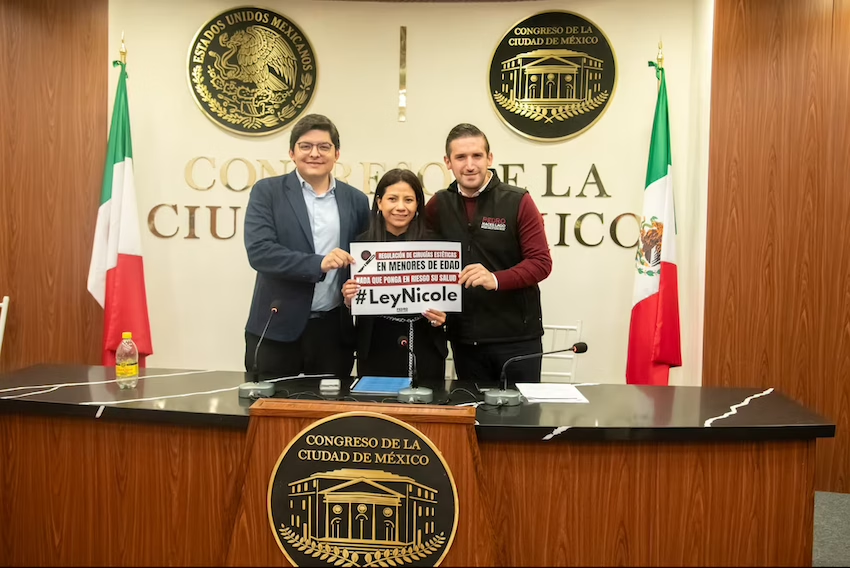
Two months later, Durango became the first Mexican state to enact a version of the law, with its legislators approving the measure 23-0.
The Durango law prohibits cosmetic surgery for minors except for reconstructive or medically necessary care It also strengthens penalties for people who practice medicine without proper credentials.
The federal entity of Mexico City followed suit in May, approving changes to Article 172 of its Health Law that invalidate authorizations for clinics to perform aesthetic surgery on minors.
The changes are state and city measures, not a single nationwide Mexican law.
The Quintana Roo Congress approved the reform on Monday, adding a provision to the state penal code that bars plastic, aesthetic and cosmetic surgeries on people younger than 18 when the purpose is solely to alter appearance.

The measure exempts reconstructive procedures with medical justification, including treatment for congenital malformations, cleft lip and palate, and other conditions requiring specialized care, such as accident-related injuries.
Doctors who perform prohibited procedures face six months to three years in prison, fines and suspensions from professional practice.
A congressional committee in Jalisco approved a similar package in August, though it has not yet received a final vote from the full legislature.
Coahuila could be the next state to approve a similar law. Deputy Jorge Valdés said his fellow members of Congress will debate and vote on a proposed Nicole’s Law during the current session.
Internationally, similar restrictions are uneven. The state of Queensland, Australia, has barred unnecessary cosmetic procedures for minors since 2008, and Norway also prohibits health professionals from providing higher-risk, nonmedical cosmetic procedures on minors, even with parental consent.
Comparable broad bans appear uncommon in the United States and Canada, where regulation generally centers on consent, medical judgment and procedure-specific age limits.
KioskNews shows a cleaned-up reading view extracted from the publisher’s page — the original always lives on their site, not ours.