7 'Gilmore Girls' Episodes That Don't Hold Up Today

Remus is a writer, editor, journalist, and author with an eye for detail and an extremely active imagination. He is an enthusiast of everything to do with the graphic medium, whether it's Western comics and their adaptations or manga and anime. Remus is also the author of the sci-fantasy novel Once Upon a Time in Hyperspace and several works of short fiction in the mystery, comedy, and horror genres.
Sign in to your Collider account
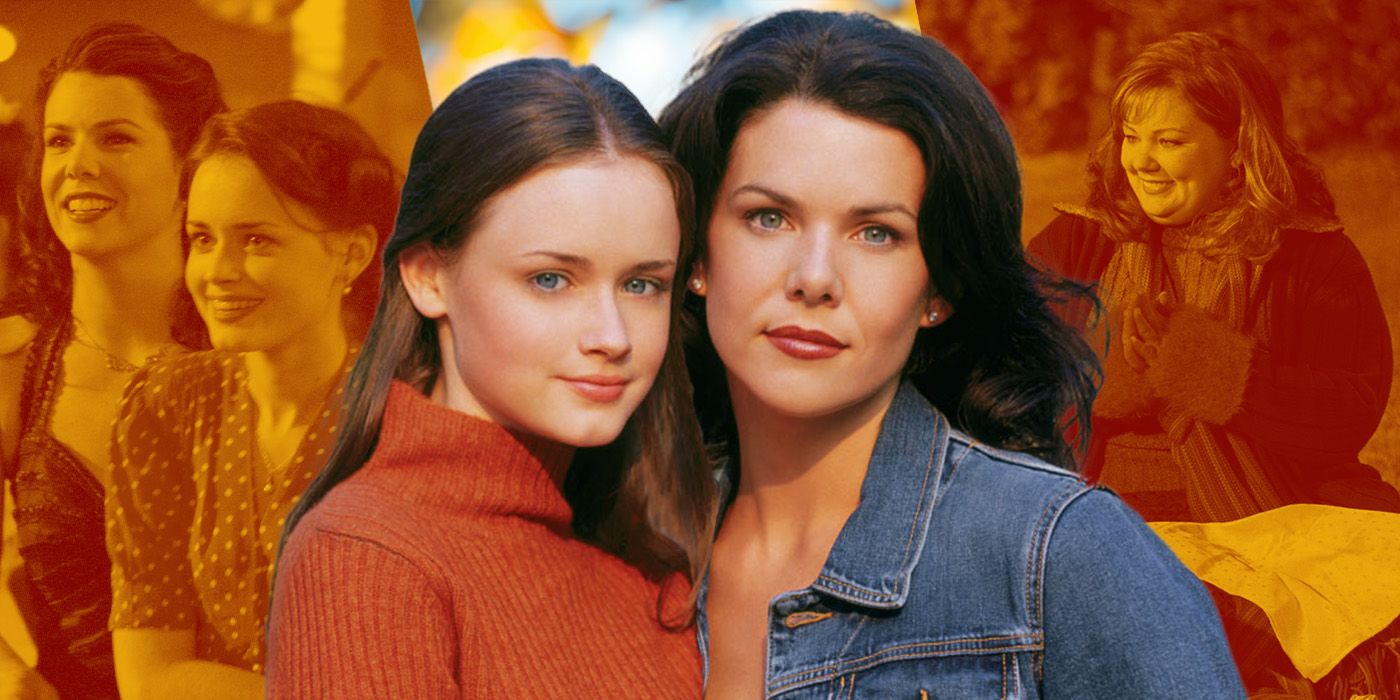
There is no denying that Gilmore Girls is an iconic teen drama of the 2000s and was immensely influential for its generation. Packed with quirky characters, witty banter, fun romance, and the endearing dynamic between Lorelai (Lauren Graham) and Rory Gilmore (Alexis Bledel), the bold, progressive series has been a comfort show for an entire generation. Amy Sherman-Palladino’s cozy mother-daughter drama was a cult hit during its broadcast and became massively popular in the streaming era, which also exposed fans to some of the more dated aspects of the storytelling.
The comedy-drama does feature several key arcs and gags that may feel outdated when seen through today’s lens, particularly by a younger audience. Several episodes of Gilmore Girls take questionable stances on gender roles, body image, social sensitivity, representation, personal identity, and relationship dynamics, and these have become problematic in the modern context and brought the show some retrospective criticism, though that hasn’t in any way diminished the popularity of the series. With that in mind, here’s a look at some of the Gilmore Girls episodes that simply don’t hold up today, including episodes from both the original run and the 2016 revival.
1 “A-Tisket, A-Tasket”
Season 2, Episode 13

As has been the tradition of this show, Gilmore Girls features various quirky events to fuel its cozy, small-town energy, and the annual Stars Hollow charity picnic basket auction is an iconic one. In the second season, during the annual Bid-on-a-Basket, Lorelai and Rory find themselves in a stiff competition for their baskets, while Jackson (Jackson Douglas) and Sookie (Melissa McCarthy) work through a conflict. The episode also explores tensions between Rory and her boyfriend, Dean (Jared Padalecki), after Jess (Milo Ventimiglia) wins Rory’s basket.
“A-Tisket, A-Tasket” is considered problematic today because it is seen as normalizing toxic male behavior and unhealthy relationship dynamics. While it is not unnatural to explore jealousy or passiveness in teen romances, this particular episode of Gilmore Girls also serves as a dark foreshadowing of Dean’s troubling behavior in the future.
2 “Here Comes the Son”
Season 3, Episode 21

In this penultimate episode of the third season of Gilmore Girls, Rory is worried about her final exams and gets ready for graduation from her prep school. Meanwhile, Lorelai faces difficulty paying Rory’s tuition at Yale and ends up in a feud with her mother, Emily (Kelly Bishop). Outside the Gilmores, the episode also follows Jess traveling across the country to Venice, California, to meet his estranged father, which ends up causing further complications.
“Here Comes the Son” is not problematic in the way some other episodes of Gilmore Girls are, in terms of bad jokes or inappropriate arcs or character behavior. Rather, it's a storytelling problem. The conflict between Jess, his father Jimmy, and Jimmy’s girlfriend brings an unnecessary shift in the narrative tone of the show, which is otherwise mostly a nuanced, heartwarming drama. The episode was meant to be a potential backdoor pilot for a planned spin-off show, which never materialized and feels out of place, distracting from the main character’s major life event.
3 “Girls In Bikinis, Boys Doin' The Twist”
Season 4, Episode 17

In this Season 4 episode, Rory and her friend Paris (Liza Weil) head to Florida for their first spring break, which is the key plotline of the episode. Meanwhile, back home, chaos unfolds for Lorelai and Luke (Scott Patterson), as Lorelai struggles with her new romance and Luke gets in trouble with the law. This episode also sees Rory getting drunk and calling Dean.
“Girls In Bikinis, Boys Doin' The Twist” is quite a divisive chapter of Gilmore Girls and one of the most poorly aged episodes of the comedy drama. On the one hand, this episode has some hilarious fish-out-of-water gags as Rory and Paris experience spring break and Florida for the first time. But on the other hand, the episode is rife with 2000s college tropes and spring break clichés, and takes an unnecessary “cool-girl” stance toward the intellectual Rory and Paris, who constantly judge other girls enjoying their vacation.
Collider Exclusive · Oscar Best Picture Quiz
Which Oscar Best Picture
Is Your Perfect Movie?
Parasite · Everything Everywhere · Oppenheimer · Birdman · No Country
Five Oscar Best Picture winners. Five completely different visions of what cinema can be — and what it can do to you. One of them is the film that was made for the way your mind works. Ten questions will figure out which one.
🪜Parasite
🌀Everything Everywhere
☢️Oppenheimer
🐦Birdman
🪙No Country for Old Men
01
What kind of film experience do you actually want? The best movies don't just entertain — they leave something behind.
02
Which idea grabs you most in a film? Great films are driven by a central obsession. What's yours?
03
How do you like your story told? Form is content. The way a story is shaped changes what it means.
04
What makes a truly great antagonist? The opposition defines the protagonist. What kind of opposition fascinates you?
05
What do you want from a film's ending? The final note is the one that lingers. What do you want it to sound like?
06
Which setting pulls you in most? Where a film takes place shapes everything — mood, stakes, what's even possible.
07
What cinematic craft impresses you most? Every great film has a signature — a technical or artistic element that makes it unmistakable.
08
What kind of main character do you root for? The protagonist is the lens. Who you choose to follow says something about you.
09
How do you feel about a film that takes its time? Pace is a choice. Some films sprint; others let tension accumulate slowly, deliberately.
10
What do you want to feel walking out of the cinema? The best films leave a mark. What kind of mark do you want?
The Academy Has Decided Your Perfect Film Is…
Your answers have pointed to one Oscar Best Picture winner above all others. This is the film that was made for the way your mind works.
Parasite
You are drawn to films that operate on multiple levels simultaneously — that begin in one genre and quietly, brilliantly migrate into another. Bong Joon-ho's Parasite is a film about class, desire, and the architecture of inequality that manages to be darkly funny, deeply suspenseful, and genuinely shocking across a single extraordinary running time. Your instinct is for cinema that hides its true intentions until the moment it's ready to reveal them. Parasite is exactly that — a film that rewards close attention and punishes assumptions, right up to its devastating final image.
Everything Everywhere All at Once
You want it all — and this film gives you all of it. The Daniels' Everything Everywhere All at Once is one of the most maximalist films ever made: action comedy, multiverse sci-fi, family drama, existential crisis, and a genuinely earned emotional core that sneaks up on you amid the chaos. You are someone who responds to ambition, who doesn't want cinema to choose between being entertaining and being meaningful. This film refuses that choice entirely. It is overwhelming by design, and its overwhelming nature is precisely the point — because the feeling of being crushed by infinite possibility is exactly what it's about.
Oppenheimer
You are drawn to cinema on a grand scale — films that understand history not as a backdrop but as a force, and that place their characters inside that force and watch what happens. Christopher Nolan's Oppenheimer is a film about the terrifying gap between what we can do and what we should do, told with the full weight of one of the most consequential moments in human history behind it. You want your films to feel important without feeling self-important — to earn their ambition through sheer craft and the gravity of their subject. Oppenheimer does exactly that. It is enormous, complicated, and refuses easy comfort.
Birdman
You are drawn to films that foreground their own construction — that make the how of the filmmaking part of the what it's about. Alejandro González Iñárritu's Birdman, shot to appear as a single continuous take, is cinema examining itself through the cracked mirror of a fading actor's ego. You respond to formal daring, to the feeling that a film is doing something that probably shouldn't be possible. Michael Keaton's performance and Emmanuel Lubezki's restless camera create something genuinely unlike anything else — a film that is simultaneously about creativity, relevance, self-destruction, and the impossibility of ever truly knowing if your work means anything at all.
No Country for Old Men
You are drawn to cinema that trusts silence, that refuses to explain itself, and that treats dread as a form of meaning. The Coen Brothers' No Country for Old Men is a film about the arrival of a new kind of evil — implacable, arbitrary, and utterly indifferent to the moral frameworks we use to make sense of the world. It is one of the most formally controlled films ever made, and its controlled restraint is what makes it so terrifying. You want your films to haunt you, not comfort you. You are not interested in resolution if resolution would be dishonest. No Country for Old Men is honest in a way that most cinema never dares to be.
4 “That's What You Get, Folks, For Makin' Whoopee”
Season 7, Episode 2

In the second episode of Gilmore Girls Season 7, Lorelai deals with the aftermath of sleeping with Christopher (David Sutcliffe), Rory’s biological father, which angers her daughter. Rory is also upset about her long-planned Asia trip with Logan getting canceled, and Lorelai tries to cheer her up by creating an Asia-themed “wonderland” at home. Meanwhile, Rory’s best friend, Lane (Keiko Agena), returns from a disastrous honeymoon with shocking news.
The seventh and final season of Gilmore Girls is widely considered one of the most controversial seasons, with its character arcs, plotlines, and tropes dividing fans in their opinions. And the very second episode, "That's What You Get, Folks, For Makin' Whoopee,” proves that. One of the worst elements of this episode is Lorelai’s feeble attempt to bring an Asian experience to Rory, with a cartoonish, inappropriate aesthetic, which depicts cultural stereotyping and insensitivity to outdated tropes. The episode is also criticized for writing off Lane’s arc with a sudden pregnancy instead of giving her character positive closure.
5 “Summer”
'Gilmore Girls: A Year in the Life', Episode 3

In the third episode of the Gilmore Girls revival series, A Year in the Life, Rory takes up an unpaid editor job at the town’s local newspaper, the Star Hollow Gazette, in an attempt to keep it from shutting down. She is also offered an opportunity to write a book about her and Lorelai, which Lorelai instantly shuts down, leading to a huge mother-daughter fight. With the added chaos of the town’s bizarre musical, Lorelai decides to go on a journey of self-discovery.
When A Year in the Life was released, it certainly brought back the nostalgia that the show had come to be known for, but the four-episode revival also features the most uncomfortable element of the entire show. In the opening scene of the third episode, "Summer," Lorelai and Rory sit fully clothed by a public pool and make fun of other people wearing swimsuits, body-shaming everyday people and making harsh jokes. To some viewers at least, this kind of commentary appears to be in poor taste and mean-spirited, and fails to hold up in the context of modern perceptions of TV tropes.
6 “To Live and Let Diorama”
Season 5, Episode 18

In this Season 5 episode of Gilmore Girls, an old resident of the town dies and leaves his house to the town to be run as a museum for the first two months, and Luke volunteers to help. Meanwhile, Rory, Paris, and Lane deal with relationship troubles while getting drunk on the punch at the Founder’s Day celebration. On the other side of the episode, Lorelai makes some unfiltered comments in a magazine interview.
Another episode of Gilmore Girls that has not aged well, “To Live and Let Diorama,” is not problematic today because of any offensive commentary or interpretations. Rather, the relationship dynamics and character tropes explored in the episode feel completely out of touch with today’s reality and have not aged well. Additionally, the museum gags don’t quite communicate small-town charm the way they used to and have been criticized for being fairly cringey now.
7 “That Damn Donna Reed”
Season 1, Episode 14

This episode from the very first season of the show explores Rory and Dean’s budding romance as they begin their relationship and have their first fight. When Lorelai invites him to participate in the mother-daughter ritual of making fun of the titular hit television show from the '50s, Dean reveals that he supports traditional gender roles. Rory fights with Dean about his patriarchal views, but ends the evening by dressing up like Donna Reed and cooking him dinner.
"That Damn Donna Reed" has been criticized for its mixed signals on feminism and foreshadowing Dean’s toxic control. It mocks conventions of ‘50s lifestyles, while also romanticizing the same for its characters and ultimately reinforces the gender norms it initially set out to criticize. The episode also lays the early groundwork for Dean’s controlling behavior, which is explored later in the show, and to modern audiences, it all comes across as somewhat toxic.
Gilmore Girls
- Release Date
- 2000 - 2007-00-00
- Network
- The WB, The CW
- Directors
- Jamie Babbit, Amy Sherman-Palladino, Lee Shallat Chemel, Kenny Ortega, Michael Katleman, Matthew Diamond, Michael Zinberg, Gail Mancuso, Lesli Linka Glatter, Steve Clancy, Bethany Rooney, Jackson Douglas, Robert Berlinger, Steven Robman, Alan Myerson, Lev L. Spiro, Rodman Flender, Adam Nimoy, Arlene Sanford, Bruce Seth Green, Danny Leiner, David Paymer, David Petrarca, Eric Laneuville
- Writers
- Rebecca Rand Kirshner, David S. Rosenthal, Sheila R. Lawrence, Jennie Snyder Urman, Joan Binder Weiss, David Babcock, Bill Prady, Gayle Abrams, Gina Fattore, Jane Espenson, Jenji Kohan, Keith Eisner, James Berg, Stan Zimmerman, Allan Heinberg, Jed Seidel, Jessica Queller, Lisa Randolph, David Grae, Rina Mimoun, Jordon Nardino, Scott Kaufer, Joanne Waters
KioskNews shows a cleaned-up reading view extracted from the publisher’s page — the original always lives on their site, not ours.