Best of Both Sides: Each player in its own separate groove
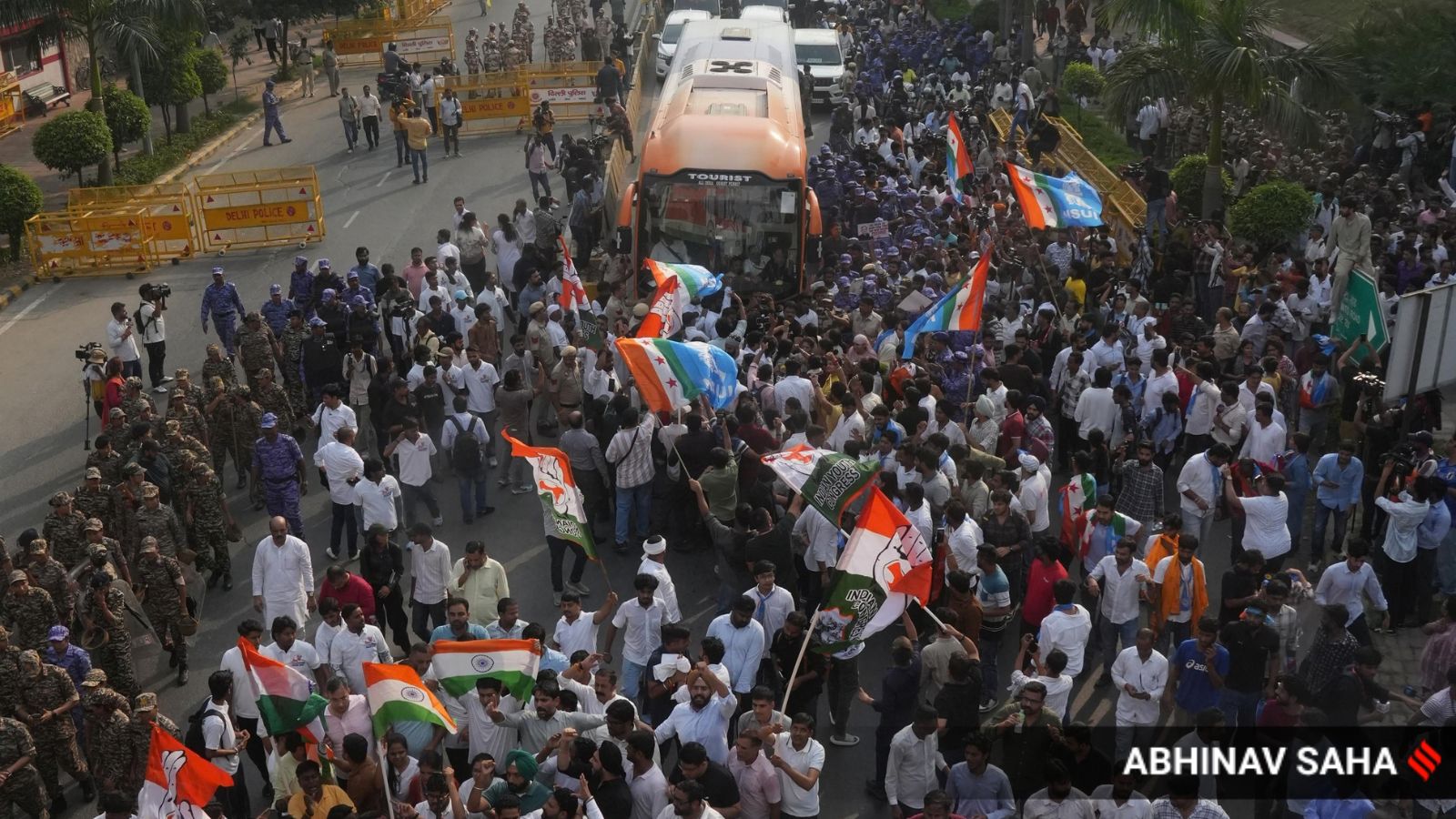
Opposition parties and civil-society groups are raising the same issue. Can they do it together?
5 min readOct 9, 2026 06:32 AM IST First published on: Oct 9, 2026 at 06:32 AM IST
A Congress protest video emerging from Delhi’s Chhatrasal Stadium on Wednesday, October 7, showed something that was both an imitation and a pointer to an involuntary absorption. When a group of Congress leaders, including Priyanka Gandhi, performed the rock-a-bye action to their sloganeering, it seemed like raw plagiarism. They had borrowed the action from a video that had gone viral during the Jantar Mantar protests of the Cockroach Janta Party (CJP) in July, but had wrapped it in their own unimaginative shrillness. In the original video, a young woman from the Left student movement was seen acting out the rocking of “Bal Narendra” as a dafli-playing comrade chanted alongside.
If imitation is a sign of acknowledgment, then it could be argued that the grand old Congress party, which has not extended its support either formally or informally to the CJP-led protests so far, appears to secretly envy its effectiveness and impact.
Why can’t the seemingly organised and the ostensibly unorganised opposition fuse to create a wider movement and a bigger force? Why is Congress keen to furrow its own path with half-hearted and sometimes disloyal alliance partners? As a political party with the best of history on its side, there is nothing wrong if it desires to be the singular alternative to the BJP-led regime. But can it do so given its own chequered past? That is the question that has drifted around in public consciousness for a dozen years now.
Each of the players in the space occupied by those opposing the Narendra Modi regime has a different motive to be in the fight, with varying levels of competence and conviction. Among them, Congress has the largest footprint, one that spans India, but it also carries the maximum amount of dead weight, not excluding its own dynastic leadership model.
While the narrative that Congress has built since 2014 seeks the restoration of the “glorious years” of liberal values and compassionate governance, others in the opposition space seem to have other ideas. They clearly operate outside Congress’s liberal nostalgia.
If the CJP advocates a clean break from the past, mobilising a younger demographic and weaponising impatience, Congress’s regional and ideological allies have a more cautious approach. They are often seen gerrymandering the boundaries of their opposition to the Modi regime, often appearing more suspicious of Congress than the BJP. As a result, they prefer to maintain a certain status quo of engagement with the ruling establishment despite the Congress proposal of a complete rupture.
The reason for this, perhaps, lies in their own genesis. Many of the regional outfits either grew in opposition to Congress or broke away from it. They know well that if Congress recovers and expands electorally, it would do so solely at their expense. That insecurity is real, and existential in nature.
Also, while Rahul Gandhi’s Congress tries to make ideological considerations paramount in the opposition space, putting forward a deracinated secular argument, its allies are still dependent on Mandal and minority politics. This aspect, which has too many local variables to be manageable, does not always make for ideological unity or unity of action. In this regard, the Left parties may be an exception, but their blind paradigms of class theory or their paradoxically constrained pragmatism no longer have the pull factor. Therefore each of the Opposition parties is in its own unpredictable groove.
The question of nationalism too only finds diffident arguments in the Opposition space. Not all use the same language against the BJP. Rahul Gandhi used the word “treason” a few days ago, but that seemed borrowed, too — this time from the virulent parlance of the ruling party itself. Long before Rahul Gandhi could arrive at the discourse of treason, the BJP had crucified him with the label, leaving him little room in which to fling it back. The common sense among Congress allies seems to suggest that aggressive “vote chori” allegations will only consolidate the majority vote in favour of the BJP. That is because all attempts to disenfranchise the minority, and even a whisper around it, will further abet hyper-nationalist emotions.
The JP movement of the 1970s struggled with similarly disparate Opposition concerns. It fired imaginations with the idea of unity for a short, distracted period before permanently deepening divisions in Indian politics.
Srinivasaraju is a senior journalist and author of The Conscious Network: A Chronicle of Resistance to a Dictatorship
KioskNews shows a cleaned-up reading view extracted from the publisher’s page — the original always lives on their site, not ours.