Australia ‘took over’ in pre-COP visit, Tuvalu official
A Tuvalu government adviser yesterday said it felt like Australia had “taken over” the tiny country’s sovereignty during a visit by leaders to the Pacific island.
The official — a senior government adviser who asked to remain anonymous because they were not authorized to speak to the media — said they were disappointed in Australia’s handling of the visit.
The comments came during a visit by Australian Prime Minister Anthony Albanese and other leaders to Tuvalu, which has become a symbol of the existential threat posed by rising seas and is a key partner in Canberra’s Pacific strategy.
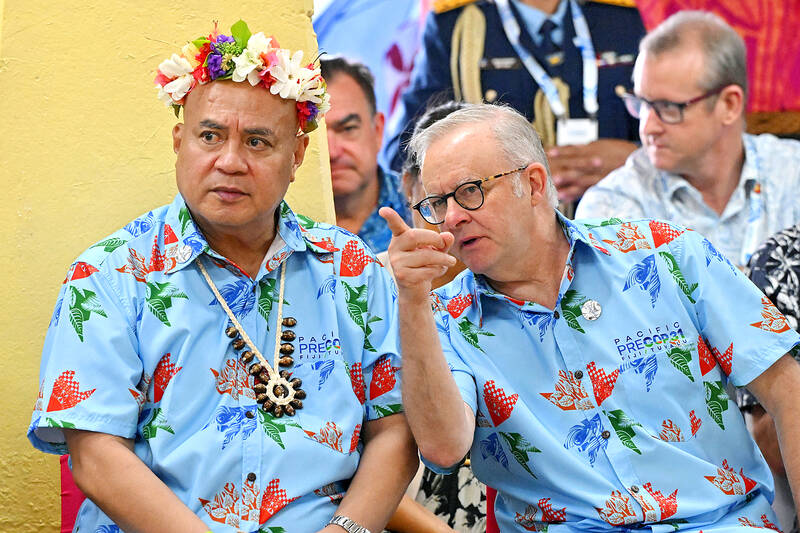
Tuvaluan Prime Minister Feleti Teo, left, and Australian Prime Minister Anthony Albanese attend a traditional welcome ceremony at an event in Funafuti yesterday.
Photo: EPA
“Just because we signed the treaty doesn’t mean they can take over our country and our sovereignty,” the aide said. “That’s how it feels like.”
Australia and Tuvalu signed the groundbreaking Falepili Union in 2023, part of Canberra’s efforts to blunt China’s expanding reach in the region. Under that pact, Australia opened a new visa category specially set aside for adult citizens of Tuvalu.
The official also accused Albanese of disrespect in not wearing a traditional fau floral headpiece during a welcome ceremony.
“Why didn’t he wear the fau? That is so disrespectful to our culture,” they said. “Every other person wore the fau.”
Albanese’s office declined to comment on the record.
The trip took place on the sidelines of a gathering hosted by Fiji aimed at drawing the world’s attention to life on the front line of global warming. It comes ahead of the UN Framework Convention on Climate Change’s Conference of the Parties (COP) in Turkey next month.
The South Pacific is among the regions of the world most vulnerable to global warming — from rising seas jeopardizing homes to increasing temperatures causing coral bleaching.
Tuvalu is deeply affected, already laying plans to relocate its population of 10,600 if the country is consumed by the ocean.
A marine heat wave in 2024 wiped out an estimated 99.9 percent of the coral that built the remote Tuvalu islands.
“The objective of this Tuvalu event is for you, leaders, to experience and feel climate change firsthand, from being in the front line of the impact of climate change,” Tuvaluan Prime Minister Feleti Teo told visiting officials.
KioskNews shows a cleaned-up reading view extracted from the publisher’s page — the original always lives on their site, not ours.