UNLAWFUL AMMUNITION: Former top cop Mphego’s path, from Selebi and Zuma scandals to ammo accused
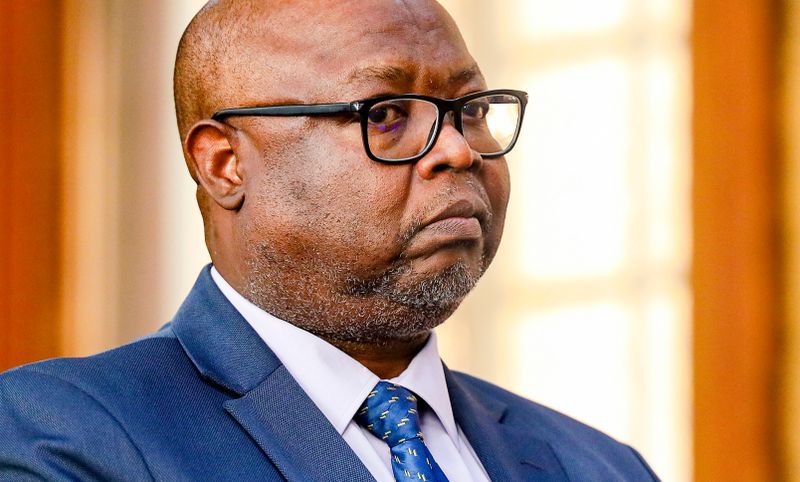
Former high-ranking police officer Mulangi Mphego has been released on bail after his arrest in a case of unlawful possession of ammunition, adding to several controversies over the years.
The South African Police Service (SAPS) announced his arrest on Tuesday, 20 October 2026, and a few hours later, Mphego appeared in the Johannesburg Magistrates’ Court, where he was released on R5,000 bail.
He was accused of unlawfully possessing more than 100 rounds of ammunition, found when his home was searched earlier this year.
[WATCH] Former SAPS Crime Intelligence head Mulangi Mphego has been granted R5000 bail. He appeared in the Johannesburg Magistrate's Court, facing a charge of unlawful possession of ammunition seized during a July 2026 raid at his Centurion home. #Newzroom405 https://t.co/fVZvoSY2vQ
— Newzroom Afrika (@Newzroom405) October 20, 2026
According to a National Prosecuting Authority (NPA) statement also issued on Tuesday, “Further investigation revealed that the ammunition recovered during the search allegedly belonged to the State and was manufactured specifically for use by the SAPS.
“Mphego is alleged to have owned the ammunition without the required permit or authorisation.”
During his appearance, the court heard that he had no previous convictions or pending criminal cases.
The State did not oppose Mphego’s bail and the case was postponed to 3 November 2026.
Beyond this developing saga, Mphego’s name is linked to other notable matters spanning many years and involving high-profile law enforcers and presidential figures.
One of those issues also led to him appearing in a courtroom dock.
Mfazi murder investigation
The SAPS statement about Mphego’s arrest on Tuesday did not initially name him — it named another police officer.
The statement said that the arrest of a 56-year-old former police general “follows a search and seizure operation conducted at his home in Centurion on 6 July 2026”.
It added: “During the operation, investigators also seized documents and electronic devices believed to be relevant to the investigation into the murder of Lieutenant General Sindile Mfazi.”
Mfazi was the deputy national police commissioner for crime detection, who died in 2021.
Curious timing
Deputy national commissioner of crime detection Sindile Mfazi died on 8 July 2021, the day before cocaine, worth about R286-million, was intercepted in Aeroton, Johannesburg.
Businessman Tumelo Nku, a witness at the Madlanga Commission of Inquiry that is investigating whether a cartel has infiltrated the state, testified at its hearings.
Nku said that he informed Mfazi about the huge cocaine consignment before it landed in South Africa. Nku was among four people arrested in 2021 in connection with the interception – two others were police officers, and another was a traffic official.
The case against them was withdrawn. On the day the cocaine was intercepted – the day after Mfazi died – violence broke out in KwaZulu-Natal in reaction to former president Jacob Zuma’s temporary imprisonment.
Daily Maverick has reported that the government attributed Mfazi’s death to Covid-19 complications.
But it was later alleged that Mfazi had uncovered extreme corruption involving police and was the target of professional murderers who poisoned him.
A Parliamentary hearing heard an allegation that Mfazi had been “poisoned with liquid casting resin, a synthetic chemical commonly used in plastics and industrial materials, but utterly foreign to human consumption”.
Phala Phala files denial and ‘a suspect’
In July 2026 (the month Mphego’s home was raided, according to the police), TimesLive reported that Mphego had denied claims doing the rounds that after Mfazi’s death, he had removed files from Mfazi’s home relating to the Phala Phala investigation into the controversial burglary at President Cyril Ramaphosa’s Limpopo farm in February 2020.
According to the TimesLive article, Mphego had described Mfazi as his “best friend” and wanted a rigorous investigation into his alleged murder.
On Tuesday, the NPA, in its statement about Mphego’s court appearance in the ammunition case, also referred to the search at his home in July 2026.
It said the search was “part of an ongoing investigation into the death of General Mfazi” and that “Mphego is a suspect in that investigation.”
Selebi and the drug dealer
Mphego was once the acting head of the police’s beleaguered Crime Intelligence unit.
He seemed supportive of certain people, including Jackie Selebi, South Africa’s police commissioner from 2000 to 2008.
Selebi had also headed the international police organisation Interpol.
But Selebi went on to become a crime suspect and then a convict for taking bribes from drug dealer Glenn Agliotti.
While that saga was still developing, Mphego appeared in the Randburg Magistrates’ Court in 2009 in a case of defeating the ends of justice.
That year, the Mail & Guardian reported that Mphego was accused of being involved in producing an affidavit by Agliotti which absolved Selebi.
Mphego left the police service that year – 2009.
In 2010, the defeating the ends of justice matter against Mphego was struck off the court roll, while Selebi was sentenced to 15 years in jail (Selebi died in 2015).
Zuma emerges
Before all that, things were not looking great for Jacob Zuma, who was yet to become South Africa’s president.
He was under investigation for allegedly trying to secure a bribe from a French defence company, and in 2005 it emerged he would face charges.
In 2009, though, it became clear that the corruption prosecution against Zuma would be dropped – that year, he was inaugurated as South Africa’s president.
The following year, the Mail & Guardian reported that Mphego was being eyed “as the main culprit in leaking the top-secret recordings that scuttled President Jacob Zuma’s corruption trial”.
The article stated: “Two independent sources say Mphego is the spy who provided the classified material to Zuma. It included conversations between Leonard McCarthy, the former Scorpions boss, and Bulelani Ngcuka, the former national director of public prosecutions.
“The recordings were leaked to Zuma’s attorney, Michael Hulley, and provided the basis for Hulley’s representations to the National Prosecuting Authority (NPA) that the Zuma investigation had been tainted.”
At the time, Mphego’s legal representative said he had never spoken to or met Hulley.
Zuma, meanwhile, was president from 2009 to 2018, when State Capture surged in South Africa.
Mabuza’s special adviser
The year that Zuma stepped down as president, Mphego’s name appeared in another news article.
In August 2018, the Mail & Guardian reported he was appointed special adviser to then deputy president David Mabuza.
Indeed, Mphego’s name features in one of the Presidency’s annual reports.

The 2019 to 2020 report listed Mphego as a special adviser to the deputy president, Mabuza.
Mabuza also courted controversy. His name has featured in a land claims scam in Mpumalanga.
Mabuza died in 2025.
Nearly a decade before that, he claimed to a journalist that he had been poisoned.
Zuma has also previously claimed to have been poisoned.
Poisoning has coincidentally surfaced in allegations around Sindile Mfazi’s 2021 death, the focus of an investigation in which the NPA has said Mphego is now a suspect. DM
KioskNews shows a cleaned-up reading view extracted from the publisher’s page — the original always lives on their site, not ours.