Made a mistake? Own it, don’t replay it
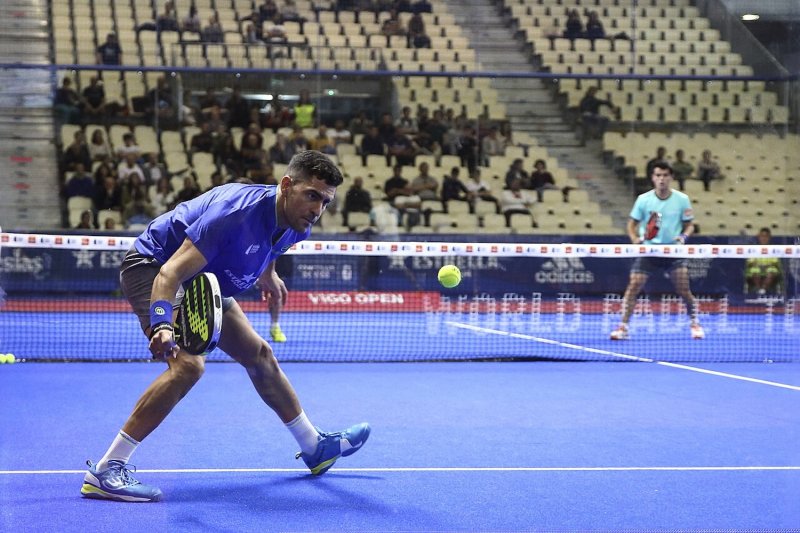
My son plays padel professionally, and I have watched enough of his matches now to know that the real contest is rarely the one on the scoreboard.
A few months ago, in a tight third set, he missed an easy smash — the kind of shot he puts away nine times out of ten. He lost the next point too. And the one after that. Not because his opponents suddenly improved, but because he was still standing on the previous point, replaying a shot that had already been decided.
Three weeks later, in another match, he missed an almost identical smash — and the very next rally, he was already somewhere else entirely: low stance, eyes on the ball, no trace of the shot before. Same mistake. Same player. Completely different cost, and the only variable that moved was how long he let the error keep playing in his head.
The mistake after the mistake
Watch enough competitive sport and the pattern is impossible to miss: the missed shot is rarely what costs an athlete the match. The three points that follow it are. A player who is technically still on court is often, for those next few seconds, not really there — he is refereeing an argument with himself about whose fault the last point was, while the next ball is already in the air.
Sports scientists have a name for the opposite skill. Joan Vickers, who pioneered what is now called “quiet eye” research, found that elite performers fix their gaze on the relevant target for measurably longer than amateurs do before they act — a meta-analysis puts the gap at roughly 62% — and that this attentional control can be trained.
In one study, video feedback on gaze behaviour alone lifted basketball free-throw accuracy from 63% to 77%. The skill that separates levels of performance is not reaction speed. It is the ability to keep the eyes, and the mind, entirely on the ball that is coming, rather than the one that already passed.
The discipline has a clock on it
The point is confirmed by athletes who study this deliberately rather than leave it to temperament. The sports psychologist Jim Loehr built an entire method around what he called, memorably, the “16-second cure”: a trained sequence professional tennis players run between points — a deliberate physical reset, a few seconds of controlled breathing, a moment of tactical preparation for what comes next, and a small physical ritual, like bouncing the ball, that signals the reset is complete and the point can begin.
None of this is instinctive. It is rehearsed as rigorously as a serve, precisely because the alternative — carrying the last point’s emotion into the next one — is measurably worse for the next point, not just the mood.
A 2023 study of 250 National Collegiate Athletic Association (NCAA) athletes in the United States found something a lot of coaches already suspected but few had proven: training athletes to respond to mistakes with self-compassion rather than rumination produced, over time, higher coach-rated performance — the first study to show it directly. Letting go of the last mistake is not a soft skill. It is, by the data, a harder-working one than talent.
Three ways to handle a mistake, and only one of them works
There are only three things a competitor — or a leader — can do with an error the moment after it happens. Cover it up, and hope nobody notices; justify it, and build the case for why it was really the wind, the referee or someone else’s fault; or own it, briefly and without ceremony, and move to the next decision.
The first two feel safer in the moment and cost more later, because both of them spend the next few seconds defending a version of events instead of preparing for what is actually in front of you. Owning it is the only one of the three that is actually finished the moment you do it.
The boardroom plays the same rally
Organisations run this exact test every time something goes wrong, and most of them fail it in the same two ways athletes do. Amy Edmondson’s landmark 1996 study of hospital nursing units found something that still unsettles people when they first hear it: the units whose staff rated their team as psychologically safer reported more medication errors, not fewer — not because they made more mistakes, but because reporting one did not carry the same career cost it carried on the units that scored lowest on trust.
The units covering it up were not making fewer errors. They were simply the last to find out about their own. The leader who spends a results meeting explaining why a bad quarter was really the market, the client or the previous regime is doing precisely what the amateur player does after a missed volley: replaying a point that is already over, while the business’s next decision sits unattended.
Does your sales team own the lost deal, or keep replaying it?
The same test runs in any sales organisation. A team that has just lost a competitive pitch has exactly two ways to walk into tomorrow’s discovery call: having spent the evening defending what went wrong — the pricing, the timeline, a decision-maker who “never really got it” — or having spent ten honest minutes on it and then closed the file.
The first team brings yesterday’s argument into today’s meeting, and the prospect sitting across the table can feel it: a rep who is still half-negotiating with the client who already said no is not fully listening to the one who hasn’t decided yet. The second team shows up with nothing to prove, which is precisely why it closes more of what is actually in front of it. Losing the deal rarely costs the quarter. Replaying it in the next room does.
There is a time for the slow-motion replay. It is never mid-rally
Here is the part that sounds contradictory until you watch it happen: the same athletes who erase a mistake in three seconds will spend three hours the next morning taking it apart on film, frame by frame, with a coach, in cold blood. This is referred to as “next play” mentality — an explicit, drilled order to move to the next possession immediately, with every ounce of the analysis saved for a room that does not exist until the game is over.
Forgetting and reviewing are not opposites here. They are the same discipline, split across two different rooms, at two different times. The best-run organisations enforce the identical split: a blameless post-mortem, scheduled deliberately once the incident has passed, is how aviation crews and the best engineering teams turn errors into institutional learning without ever letting a live crisis meeting double as a trial.
Three questions worth asking
- When something goes visibly wrong on your watch this week, how many minutes pass before your next clear decision — and what fills that gap: a fix, or a defence?
- Think of the last mistake someone on your team owned in front of you without being asked twice. What happened to them afterwards — and would everyone else on the team have predicted the same outcome?
- Do you have an actual scheduled moment for the post-mortem, or does every mistake get re-litigated live, in the middle of whatever crisis comes next?
On the court my son plays on, the rule is unwritten but absolute: the point that is over cannot be replayed. It can only be allowed to cost you the next one. Most organisations have no such rule, which is why so many of them are still losing the point that ended three weeks ago.
Dr Philios Andreou Sphika is the Deputy CEO and President of the Other Markets Unit, including Thailand and Asia, at BTS Group, a leading global strategy execution consulting firm specialising in the people side of strategy. For executives who are interested in connecting, Dr Philios can be reached at philios.andreou@bts.com or visit his LinkedIn profile.
KioskNews shows a cleaned-up reading view extracted from the publisher’s page — the original always lives on their site, not ours.