‘We tried to levitate the Pentagon’: the almost unbelievable life of Ed Sanders, trickster god of the US counterculture
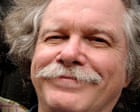
“Charles Manson once wrote me a letter saying, ‘If I was as powerful as you claim then you wouldn’t be here,’” Ed Sanders tells me over a video call, savouring the menace in that sentence.
Sanders is an American maverick; a musician, poet, activist, journalist and author whose greatest hit remains his bestselling 1971 book The Family, in which he chronicled the lives, crimes and trials of Manson and his followers. Sanders was well placed to report on crazed hippies, having played a pivotal role in launching the US counterculture – though he very much espoused peace, love and consciousness-raising, rather than Manson’s apocalyptic worldview.
“I’ve always been a peacenik,” says Sanders. “I got locked in a cell in 1961 for protesting against nuclear armed submarines, and today I’m protesting against the Trumpster. I don’t subscribe to apathy and nihilism.”
Aged 87, Sanders is speaking with me as Fugs Film!, a feature-length documentary about the Fugs, the offbeat folk-garage-psych band Sanders initially led from 1964-69, and re-formed in the 1980s, gets its UK premiere this week. “I don’t do many interviews,” he notes. “I’m constantly approached by people requesting them. And often they are wanting access only because I knew Jimi Hendrix and Allen Ginsberg and Andy Warhol and Janis Joplin and …” He shakes his head. “Everybody now wants to make a documentary about someone I once knew.”
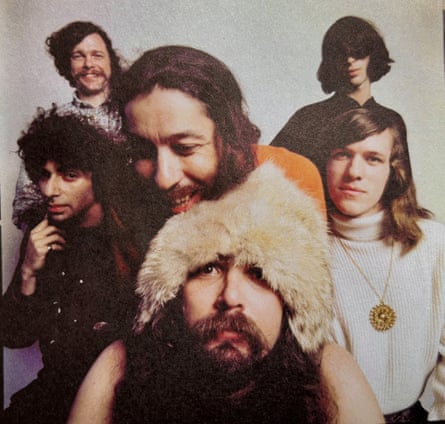
Indeed, Sanders was a Zelig of the Lower East Side, friendly with Ginsberg (“A great man”), William Burroughs (“Unnerving, brilliant”), a then unknown Jimi Hendrix (“He was trading as Jimmy James. We gave him his first wah-wah pedal. Nice, talented guy”), to name just a few of his associates. In concert, the Fugs shared bills with the Velvet Underground, the Stooges and the Grateful Dead, but the biggest impression was made by a then unknown band who opened for the Fugs in Detroit’s Grande Ballroom in March 1968. “I’d never heard of Sly and the Family Stone,” Sanders recalls. “They came on and aroused the audience to ecstasy. When we came on, everyone was limp, worn out by how high Sly had taken them.”
Sanders and his bandmates Tuli Kupferberg and Ken Weaver were rudimentary musicians who fused street theatre and dadaist spectacle with poetry and ramshackle songs. Long-haired, anti-war, pro-drugs and articulate, the Fugs attracted plenty of media attention but never troubled the Top 40 and are relatively little known today, so Fugs Film! allows a fresh look at a band at the heart of a nascent counterculture. Blending archive footage with contemporary interviews, director Chuck Smith’s film focuses on New York when it was a cheap city to live in, and many artists shared the absurdist mentality of the west coast’s “merry prankster” dropout hippie-artists.
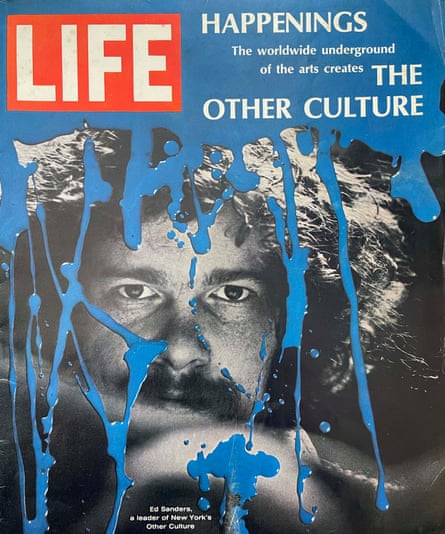
Inspired by Ginsberg’s epic poem Howl, Sanders had hitchhiked from Kansas to New York City as a teenager. “I wanted to meet ‘the best minds of my generation’, as Allen put it – and I did,” he says. “Both Tuli and I came from the beat poetry scene. We formed the Fugs to blend poetry with rock’n’roll after seeing beat poets dancing to a jukebox playing Martha Reeves and the Vandellas and the Beatles. It seemed an obvious thing to do.”
Sanders’ literary leanings meant he also ran the city’s Peace Eye Bookstore and published the cheaply mimeographed zine Fuck You/A Magazine of the Arts, which featured writing by Burroughs, Norman Mailer, Ginsberg and other beat poets such as Gregory Corso.
“Fuck You’s motto was ‘total assault on the culture,’” recalls Sanders. “We thought we could change the world with words. I sent copies to Picasso, Beckett, Sartre, Castro and Khrushchev inviting contributions, but none of them replied.” He laughs at his youthful audacity, adding that he did get attention from the NYPD, who attempted to prosecute Sanders for obscenity: Fuck You was frequently, cartoonishly sexual. Sanders was “fighting for free speech alongside the beats and Lenny Bruce,” he says.
The musicologist Harry Smith produced the Fugs’ eponymous 1965 debut album for the Folkways label. The band shifted to ESP-Disk, home to free jazz pioneers Albert Ayler and Sun Ra, but neither label had any commercial heft, so Sanders was overjoyed when Jerry Wexler of Atlantic Records – who had helped make Ray Charles a star and was about to do the same with Aretha Franklin and Led Zeppelin – signed the band.
Yet on hearing the finished masters, Atlantic dropped them. “Wexler told me the Ertegun brothers [co-founders of Atlantic] found a song called Coca Cola Douche offensive,” Sanders says. “I should have said ‘OK, we’ll leave it off’ but I got all pious about it. A mistake, as it meant we didn’t release an album in 1967, so we missed out on all the attention those Summer of Love albums got.”
Given Sanders continually faced censorship, I ask him about Macklemore: shortly before we speak, the rapper was booted from Ed Sheeran’s US tour due to his onstage calls for a free Palestine. “There are always people wanting to censor you,” Sanders replies, “and when its a very rich guy who owns the stadiums and doesn’t want people to hear your opinion then, yeah, he can order such. For me, being older, it’s inspiring to see young musicians putting their shoulder to the wheel.”
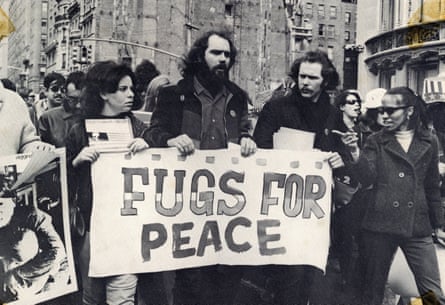
The Fugs survived their spat with Atlantic, joining the roster of Frank Sinatra’s Reprise Records in 1968. Label head Mo Ostin had to play Fugs demos to Sinatra before he could sign them. “Apparently Frank said: ‘I guess you know what you’re doing.’” The label released the terrific Fugs album Tenderness Junction, which includes Exorcising the Evil Spirits from the Pentagon Oct 21, 1967, a recording made at the Fugs-led mass protest at which thousands formed a human chain around the Pentagon and chanted “Out, demons, out!”
“The Fugs existed to protest against the American war machine, as much as we did to make music,” says Sanders, “and we understood that spectacle draws attention. So to suggest we were going to try and levitate the Pentagon, well, it might sound ridiculous but it gave a focus to our protest and attracted a lot of attention.”
Mailer, who attended the protest, wrote about it in his Pulitzer prize-winning book The Armies of the Night, and the Pentagon protests are now regarded as high points in the anti-Vietnam war movement. “We celebrated the 50th anniversary of the protest in 2017 by forming a human chain around the White House and attempting to levitate it,” says Sanders. “Again, we shouted ‘out, demons, out!’ and, again, nothing happened. Just as the Vietnam war continued for another nine years, Trump is back in the White House.”
Did that make Sanders feel defeated? “No,” he replies firmly. “I’m an optimist. We must keep pushing, we can’t give in to despair. While things are terrible in the US right now, I do believe the American people will come to their senses and vote out the Republicans.”
Alongside public exorcisms and psychedelic hymns, Fugs albums featured a mishmash of satirical skits, choral music, protest folk, mock country, Hare Krishna chants, Yiddish songs from Kupferberg’s heritage and poems by William Blake, Matthew Arnold and Ginsberg read to music. Their eclecticism can be maddening, though the band’s first two albums are very elemental, more akin to US punk bands such as the Dead Kennedys and the Dead Milkmen in their broad humour and anti-establishment fervour than to their 60s contemporaries. Songs such as Kill for Peace remain relevant today, though I’m Gonna Kill Myself Over Your Dead Body (“if you fuck anybody but me”) leaves a nasty taste.
“Some of the songs we wrote then we probably wouldn’t write now,” says Sanders, today more professorial than hippie in appearance and speech. Other songs celebrated marijuana, amphetamine and LSD: “We advocated for mellow drugs, never hard drugs. We had a guitarist who was a junkie and it messed him up. And we avoided cocaine. Today pot is legal in New York, so that’s one of the battles we fought that we actually won.”
In 1968, the Fugs visited Britain for the first time, where they were championed by John Peel, played the Roundhouse in London and visited Stonehenge, not returning until 2011 when Ray Davies invited them to play the Meltdown festival he curated. In between those visits, Sanders, tiring of the workload that leading a band involves, disbanded the Fugs in 1969, released two underwhelming mock-country solo albums, then focused on writing.
“I couldn’t believe it when I first heard of these hippies driving stolen dune buggies murdering this famous actress,” says Sanders as to why he determined to investigate Manson’s cult. “So I went to LA and attended the trials and looked at how this guy, fresh out of prison, had managed to have these teenage runaways believe he was some kind of messiah.”
He reformed the band in 1984 with Kupferberg (who died in 2010 aged 86), occasionally performing and recording. Today, Sanders, long resident in leafy Woodstock, keeps the Fugs going with younger musicians. “I still like to jump about on stage,” he says, “and working with young musicians means they all have other bands, so its not like I have to keep them busy”.
Sanders hopes Fugs Film! can inspire others to continue the noble tradition of kicking against the pricks. Fighting that American war machine, he says, “is a constant struggle. A holy struggle. A brilliant struggle. To let the human spirit struggle against the warrior caste.”
KioskNews shows a cleaned-up reading view extracted from the publisher’s page — the original always lives on their site, not ours.