Could Taipei’s unexpectedly tight mayoral race add to cross-strait tensions?
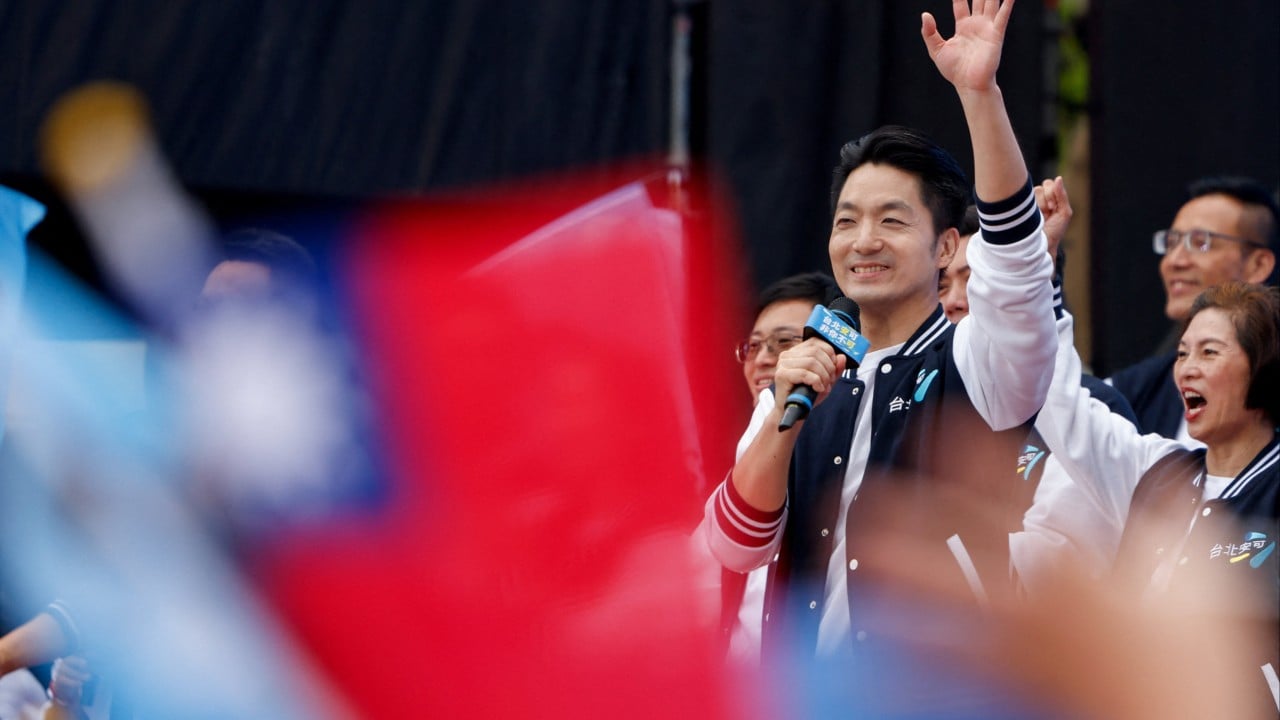
Another poll by digital news outlet ETtoday last week produced a different result, putting Chiang at 48.6 per cent against Shen’s 41.1 per cent. Taken together, however, the surveys point to a far more competitive contest than anticipated earlier this year.
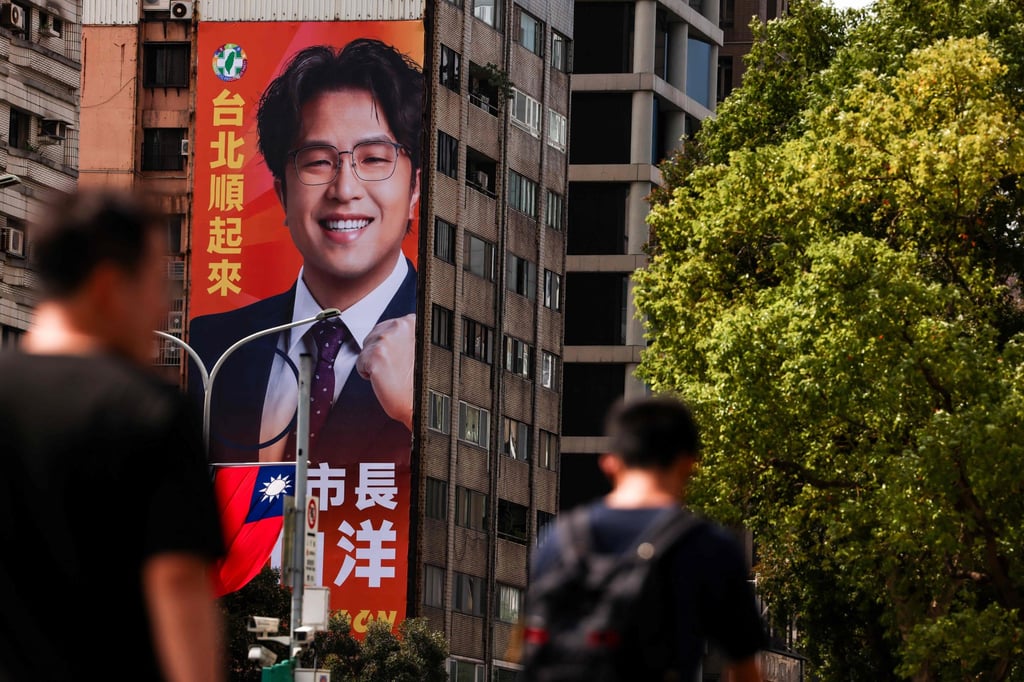
The mayoral race is part of Taiwan’s November 28 “nine-in-one” midterm elections – island-wide contests in which voters cast ballots simultaneously across nine distinct tiers of local government offices.
The stakes are high for cross-strait relations: Beijing placed Shen on its sanctions list over what it termed his pro-independence stance. The lawmaker is a vocal advocate for Taiwan’s civil defence against the mainland.
Beijing regards Taiwan as part of China to be reunited by force if necessary. Most countries, including the United States, do not recognise Taiwan as an independent state, but Washington is opposed to any attempt to take the self-ruled island by force and is committed to supplying it with weapons.
According to Chang Yuan-hsiang, a professor of political science at Soochow University in Taipei, Chiang has gone from being seen as an almost certain winner to facing a campaign on the scale and intensity of an island-wide leadership race.
Chang attributed the reversal in part to a succession of municipal controversies since May, ranging from flooding and school lunch food-safety concerns to cases involving childcare and other city services.
None individually amounted to a major scandal, he said, but their accumulation had chipped away at Chiang’s reputation for steady, relatively trouble-free governance.
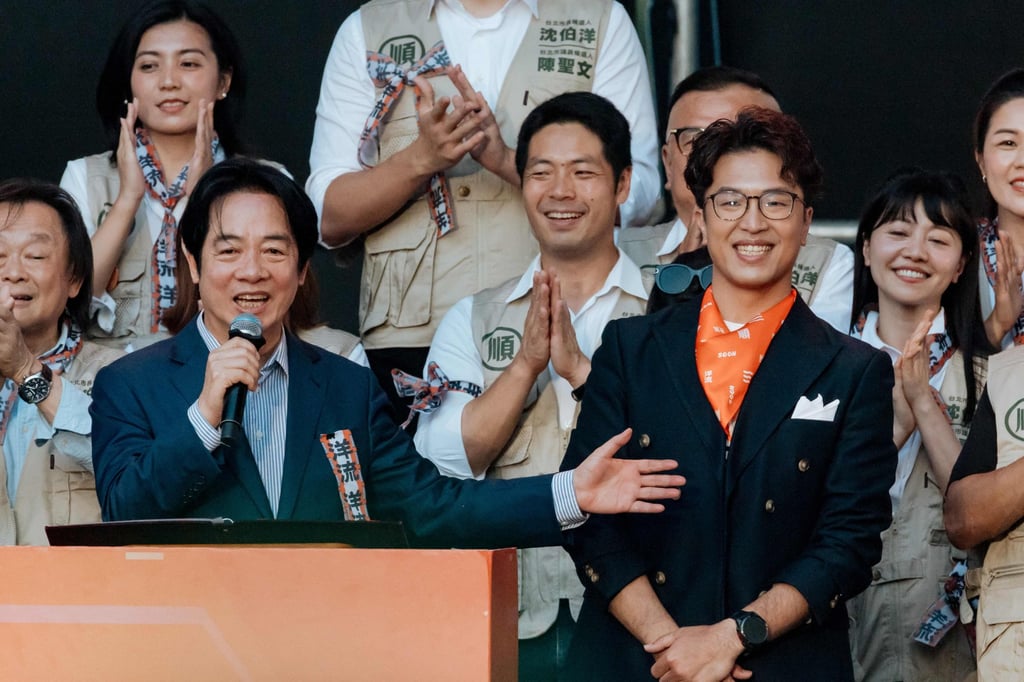
More consequential is the phenomenon Shen’s supporters call “yangliu”, or “ocean current”: throngs tailing the candidate through night markets and scooter convoys, with the packed appearances captured and amplified on social media.
Shen’s team has used the imagery from various Taipei neighbourhoods to create highly visual campaign events that have spread rapidly online and projected a sense of grass-roots enthusiasm.
Chang said what had begun as a deliberately constructed campaign device had ended up attracting wider attention, particularly among younger and centrist voters.
TVBS polling illustrated the shift, he said. In late May, Chiang led Shen among centrist voters by 57 per cent to 14 per cent. By early October, the advantage had narrowed to 40 per cent against 36 per cent.
“The large-scale loss of centrist voters is the main reason Chiang has fallen into difficulty,” Chang said.
The phenomenon has energised DPP supporters in the traditionally KMT-leaning capital.
Johnny Chiang Chi-chen, the KMT’s candidate for Taichung mayor and deputy speaker of the island’s legislature, said the “ocean current” had produced a spillover effect and had been effective in consolidating the DPP’s core support.
He warned that KMT supporters appeared to have become quieter or less willing to voice their preferences publicly and that the party needed to generate momentum of its own in the final month.
Shen’s rise has also involved a striking change in political presentation.
Previously best known as a Taiwan security specialist, founder of the civil-defence organisation Black Bear Academy and a combative legislator focused on Beijing’s cognitive warfare, Shen, 44, has recast himself as a warmer, more approachable mayoral candidate focusing on municipal and livelihood issues.
The transformation has become a major KMT line of attack, with Chiang and other party figures questioning whether Shen has moderated long-held positions to broaden his electoral appeal.
Hu Yu-wei, a journalism professor at Chinese Culture University in Taipei, said an important question was whether voters saw Shen’s current presentation as a natural evolution of the politician they previously knew.
“Which is the real Puma Shen – the one they saw before or the one they see today?” Hu said.
As for Chiang, he has been forced to rethink a campaign initially centred on incumbency and his municipal record.
His first term has included the opening of the Taipei Dome and Nvidia’s decision to establish its Taiwan headquarters in the city. All the while, Chiang has cultivated a moderate, low-conflict political image.
But analysts said those strengths could become limitations if Shen succeeded in transforming the election from an assessment of municipal competence into a broader contest over political identity, values and generational change.
The implications extend well beyond Taipei City Hall.
“Taipei and neighbouring New Taipei together account for more than a quarter of Taiwan’s population,” according to international relations and strategic studies scholar James Yifan Chen, who said this made both cities’ mayoral races crucial to the KMT’s hopes of returning to power in 2028.
Conversely, a DPP breakthrough in northern Taiwan would strengthen Taiwanese leader William Lai Ching-te’s position ahead of his expected re-election bid, Chen said.
KMT chairwoman Cheng Li-wun has mostly kept her distance from the highly competitive metropolitan races, he added, with the candidates largely operating independently of the party leadership.

A loss in either Taipei or New Taipei could expose Cheng to criticism over the absence of a comprehensive party-wide electoral strategy and weaken her own political standing, he said.
For Chiang, 47, defeat would interrupt the trajectory of one of the KMT’s most prominent younger politicians.
Wang Kung-yi, director of the Taiwan International Strategic Study Society, a Taipei-based think tank, said Chiang combined island-wide recognition, central-level political experience, governance of the capital and an ability to appeal beyond the party’s traditional deep KMT base.
“A second term would strengthen his standing as a leading KMT figure, while defeat would cost the party more than control of [Taipei].”
Meanwhile, a Shen victory could further complicate already strained cross-strait relations, Wang said.
Beijing placed Shen on its list of “diehard Taiwan independence separatists” in 2024 and imposed sanctions barring him and his family from entering mainland China, Hong Kong and Macau.
Wang said Shen becoming mayor would immediately raise questions about the Taipei-Shanghai Twin-City Forum, one of the few remaining institutionalised channels of local-level dialogue across the Taiwan Strait.
“If the Twin-City Forum is hosted by Shanghai next year and Shen goes to Shanghai to attend, are they going to arrest him?” he asked.
There would also be questions about whether exchanges between Taipei and Shanghai and other mainland cities could continue, presenting “a major test for both sides”, Wang said.
More broadly, a KMT defeat in Taipei could prompt Beijing to reassess political trends on the island and whether its policies aimed at winning Taiwanese support were having the desired effect, he added.
If a Shen victory boosted DPP momentum towards 2028, Wang questioned whether Beijing might respond by taking a tougher approach.
“Would cross-strait relations become even worse? These are all questions that need to be considered,” he said.
Analysts noted that for an incumbent once expected to glide to re-election on his record, the campaign’s final month is poised to be an uphill fight, with stakes reaching far beyond Taipei City Hall to the KMT’s future and possibly across the Taiwan Strait.
KioskNews shows a cleaned-up reading view extracted from the publisher’s page — the original always lives on their site, not ours.