Bombay is the only city in India which is cosmopolitan: Sooni Taraporevala
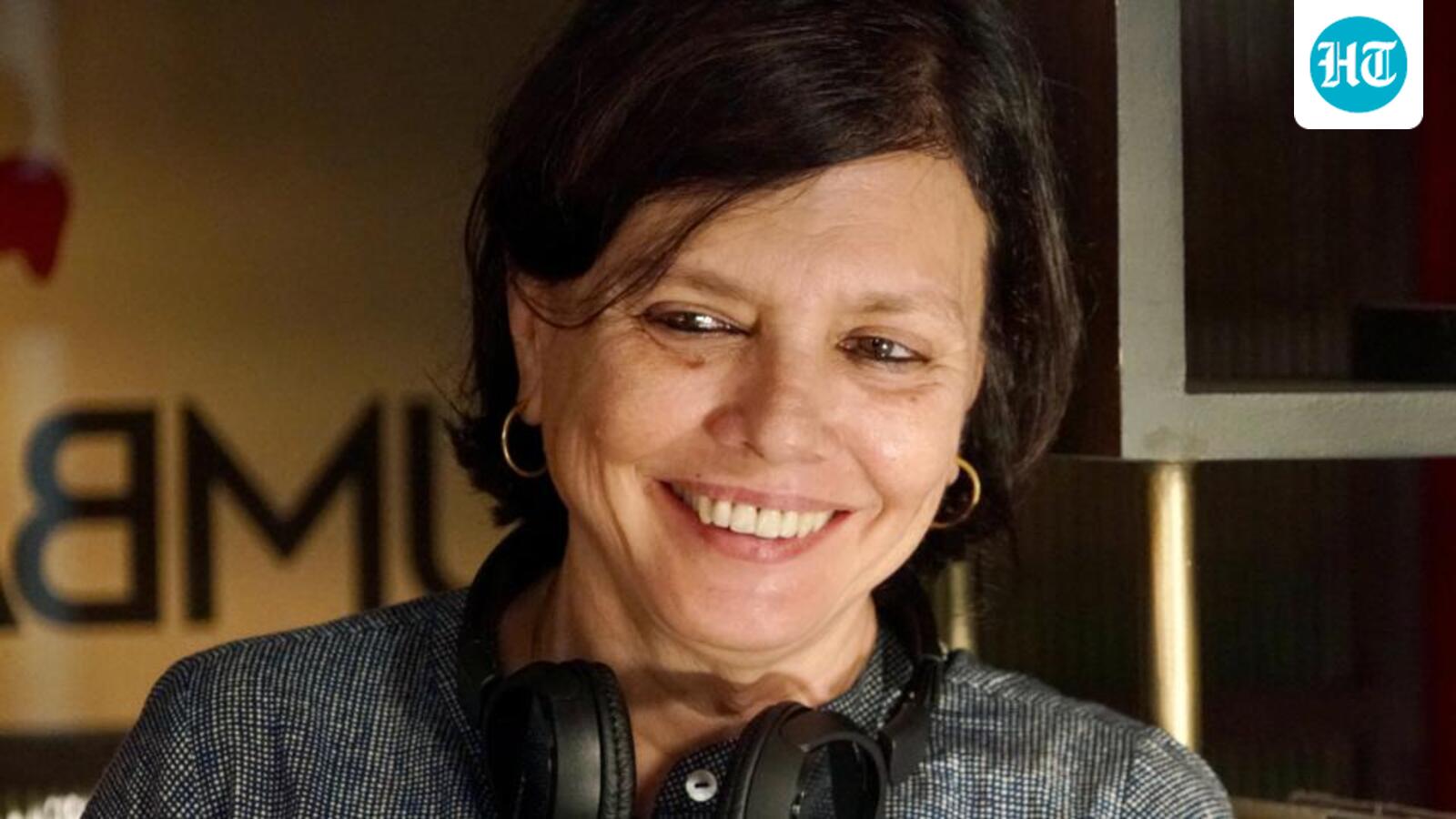
MUMBAI: Sooni Taraporevala refers to Mumbai as Bombay. The nomenclature was altered three decades ago but the insistence by the multi-hyphenate artiste — filmmaker, screenwriter and photographer — is less of a nostalgic yearning. It is her way of alluding to a space she is infinitely familiar with and reckoning with the possibilities that eroded with time.
Her Career and Mumbai as a Muse
In Taraporevala’s rich career, spanning close to 40 years and comprising writing screenplays adapted from novels, Mumbai has been the beating heart. It hasn’t, however, recurred as a muse, immune to censure. But as something more vital that has shapeshifted with time and the writer’s gaze has evolved with it. In Mira Nair’s ‘Salaam Bombay!’ (1988), she dug out the specks of hope that lie underneath the grime of the city; in ‘Little Zizou’ (2009), her directorial debut, the charm of Mumbai took the centre stage and her other directorial work, Yeh Ballet (2020) was anchored to the city’s cosmopolitanism that keeps bringing people to it.
Adaptation of 'Last Man in Tower'
All this comes full circle with ‘Last Man in Tower’ (2011), the Aravind Adiga novel that she adapted for the screen. Directed by Ben Rekhi, the film is an intrinsic Mumbai story where an old housing society is threatened with redevelopment and while all the other residents give in, a lone man resists. The remarkable bit about Taraporevala’s writing is how an underdog story translates as a morally ambivalent tale – no one is right or wrong.
Interview Excerpts
She spoke HT about adapting the novel, the role cities -- particularly Mumbai -- play in her writing and the many ways her vocation as a photographer has shaped her recognition of spaces in writing. Excerpts.
How did the collaboration take place between Arvind Adiga, Ben Rekhi and you?
I only collaborated with Ben Rekhi, and not Arvind Adiga. I have adapted three major books (Rohinton Mistry’s ‘Such A Long Journey’, Jhumpa Lahiri’s ‘The Namesake’ and Aravind Adiga’s ‘Last Man in Tower’) and in all three cases, there has been no involvement with the authors. They understand that screenplays are a different kettle of fish from the novel and once they give permission, you have the freedom to adapt it. I was always open to getting their suggestions and bringing them on board. But they were happy to wait and see the final result.
When did you get involved with the project?
In 2013, shortly after the book came out. I read it multiple times, and made copious notes. Ben is a fantastic collaborator. We worked together for 13 years and we didn’t want to kill each other. That says something (laughs). I am so happy that the film is finally out and people are loving it. Hats off to him for sticking with the project for all these years.
Mumbai recurs in your work both as a writer and a photographer.
I grew up in Bombay which is now Mumbai. It has always been my home. Later, I got a scholarship to study in America. But even then, I was desperately homesick and missed it terribly. I took a loan from my roommate to buy my first camera, took a leave of absence for a semester from college to return and ostensibly shoot the city, but really because I was just missing home too much.
I have always had a great love for Bombay, both creatively as well as a feeling. My entire family is from here. Unlike most people, we have no other village that we go back to. Bombay is my village where generations of my family have lived. It is a great source of comfort that my father still lives in the building where I grew up. He is 96 now. When I climb those stairs and walk down the gully, there is a feeling of familiarity. I get flashbacks of jumping down the same stairs when I was still in school uniform. I drive by Marine Drive and remember which building a school friend stayed in. For me, several lifetimes are encapsulated in Bombay where I can remember things from the past.
Bombay is the only city in India which is cosmopolitan. Parsis don’t feel like a minority because everyone is here. I went to school with girls who were Jewish, Jains, Sikhs, Muslims, Sunni and Shia, and Bohris. We have always been a melting pot of cultures, much like New York. I love this about the city and always want to convey that, always.
In ‘Yeh Ballet’ (2020), the film I directed, the two central characters are Hindu and Muslim – a fact I did not invent. During shooting, we found a location near Mount Mary where this character Nishu (Manish Chauhan) lives. It is amazing because there is this a small shrine of Jesus right next to a Hindu shrine adjoining a mosque. All three are side by side, living harmoniously. I have Asif (Achintya Bose) the Muslim character passing by Worli Koliwada and he stops to join his hands in silent prayer at Sai Baba mandir.
None of this is fabricated. People I know, Parsis including my parents, who would go to Sai Baba mandir on Thursdays. Many, and not necessarily Christians, visit Mahim Church. This faith and harmony is what I love about my city.
In ‘Last Man in Tower’, Mumbai looks sterile. The city is wrapped in construction dust, the skyline dotted with unfinished buildings fated to blindly rise up. Since you have lived here and witnessed first-hand the rapid alteration due to redevelopment, has there been love lost?
Absolutely. It breaks my heart to see what is happening. The government-builder nexus is destroying the city with greed with no thought for infrastructure or the future. We are neglecting warnings about sea level rising. We are indiscriminately allowing builders to build towers for billionaires.
A narrow road goes up to Kemps Corner from Gowalia Tank, where I grew up and where my father still lives. It is clogged with heavy traffic, bumper to bumper, every day. Another small road called Raghavji Road goes off it, with charming three storey buildings, old but in good condition. A builder has demolished three of them and is building a huge tower, 20 or 30 storeys maybe more. Yes, there will be parking space in the building but when those cars descend to the road, where will they go? Will they start flying? They have not left an inch of open space untouched, including the small spaces that have miraculously survived like the Neville D’Souza football ground. They are cutting mangroves, building on salt pans, and all this to make mega bucks with not a thought for the city.
As much as this reflects in the film, your adaptation also doesn’t villainise the middle-class who aspires to live in these towers. Their greed is repackaged as hope.
Look, a screenplay goes through many iterations. It is interpreted by actors and directors. Sometimes, what I intended can be different from what comes out finally. At the end of the day, it is a collaboration with many people. Sometimes you get credit for something you didn’t intend and sometimes you get brickbats for something that you don’t deserve.
My love for Adiga’s book is its exploration of how a loving community of neighbours can transform with greed. You do understand why they are doing it but it is ultimately about greed.
Cities continue playing pivotal roles in your work. ‘Waack Girls’ (2024), the Amazon Prime series you directed and co-wrote, is based in Kolkata. Has your vocation as a photographer shaped the way spaces frame the storytelling?
Absolutely. Looking for locations is one of my favourite things. I love Calcutta because I think it is the closest city we have to Bombay. Except in Calcutta many old houses survive, like the magnificent one we shot in. Locations are very much written into the script. I don’t imagine actors or characters when I write but I do imagine the spaces they are in. Same for ‘Salaam Bombay!’; I imagined and we shot in the neighbourhoods I knew.
In an interview you said being a screenwriter afforded you to buy photographic equipment. Have both these professions leaked into one another?
There is a connection. I was a photographer before I became a screenwriter so when I wrote my first script, it was deeply visual. As a writer, I am thinking of stories and as a photographer the moment I capture something, it lends itself to wondering what the story behind the image could be.
You divide your time between Mumbai and Alibag – a village that is in the cusp of redevelopment.
Yeah (laughs). There is no part of the city that is untouched. The Coastal Road was supposed to be an urban forest. It has turned into paid attractions. It feels really hopeless. There have been incursions into Borivali National Park. Everything is up for grabs. Nothing is sacrosanct except money. The greed is endless. Adiga was so prescient. Even though the book was published in 2011 it’s even more relevant today.
KioskNews shows a cleaned-up reading view extracted from the publisher’s page — the original always lives on their site, not ours.