SC mulls house arrest, compassionate release to ease jail congestion
Make this your preferred source to get more updates from this publisher on Google.
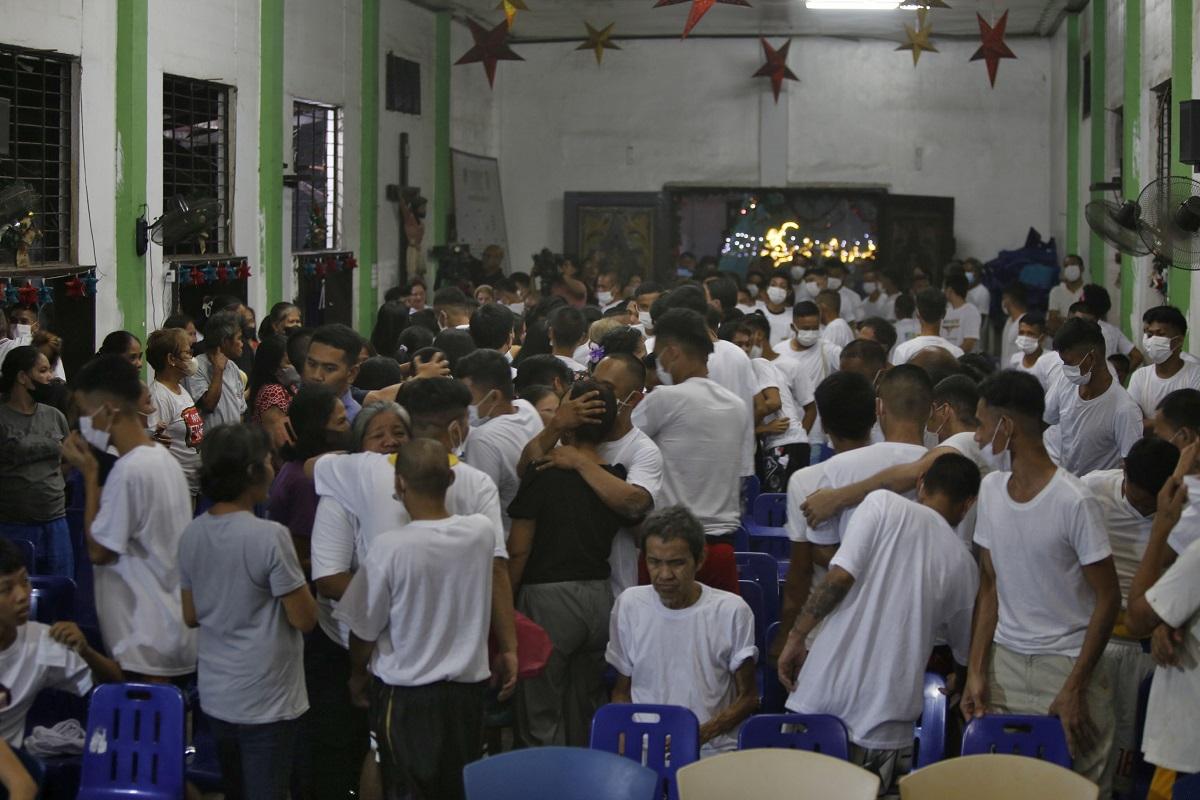
The Supreme Court (SC) said Monday that it is considering measures including house arrest and compassionate release to address the congestion problem in jails across the country.
In his keynote address at the Justice Sector Coordinating Council (JSCC) Summit, Chief Justice Alexander Gesmundo stated that the Supreme Court is revising its detention and release guidelines for persons deprived of liberty (PDL).
“The Supreme Court, for its part, is amending its rules and procedures concerning detention and release, to include house arrest, medical confinement, or community-supervised release,” Gesmundo said.
“As well as a section on compassionate release for offenders who are old, sick, or otherwise entitled to compassionate or humanitarian release upon serving the minimum term imposed,” he added.
Gesmundo said that justice should not be a mere concept, but a tangible reality in people's lives.
He added that jail congestion is not the responsibility of a single agency, but rather an issue that reflects systemic challenges across the entire justice pipeline—from investigation and prosecution to case resolution, detention record-keeping, and the execution of release orders.
“No single institution could address all of these,” Gesmundo said.
“The response therefore called for each institution to look carefully at the part of the process within its own mandate, while considering its effect upon the whole,” he added.
Gesmundo noted that the Department of Justice has already implemented key reforms in evaluating and filing criminal cases.
Meanwhile, through the Bureau of Jail Management and Penology, the Interior Department has bolstered its paralegal and case-monitoring efforts to ensure release paperwork reaches a judge's desk as soon as a PDL completes their minimum sentence.
Gesmundo said this synchronized coordination and reforms among the three agencies have reduced the national jail congestion rate by double digits.
“And this is why decongestion cannot be regarded simply as a matter of administrative efficiency,” the Chief Justice said.
“Behind every statistic is a person whose liberty is at stake, a family awaiting the return of a loved one, or an individual on the road to a new beginning,” he added. — BM, GMA News
KioskNews shows a cleaned-up reading view extracted from the publisher’s page — the original always lives on their site, not ours.