Sari-sari stores help bridge gaps in medicine access — study


MANILA, Philippines — For some Filipinos, buying medicine can be as simple as walking to the neighborhood sari-sari store and purchasing only a few tablets they can afford, a qualitative study by researchers from the University of the Philippines, Ateneo de Manila University and Bulacan State University found.
The study, “Sari-sari Stores as Community Pharmacies? A Qualitative Exploration of Sari-sari Stores Selling Medicines in the Philippines,” found that sari-sari stores serve as informal sources of common medicines, particularly in communities where pharmacies are far away, transportation is limited or residents need to buy medicines in small quantities.
The paper was published in the August 2026 issue of Acta Medica Philippina, the official peer-reviewed national health science journal of UP Manila.
Article continues after this advertisement
The research drew on interviews with 14 sari-sari store owners, or tinderas, in Bulacan, Marinduque, Quezon City and Rizal. The interviews were conducted from February to March 2025 in the participants’ stores and analyzed using thematic analysis.
FEATURED STORIES
NEWSINFO
NEWSINFO
NEWSINFO
The authors — Melissa Louise M. Prieto, Gamaliel P. Galigao, Ana Rica S. Navarra-Cruz, Louise Gabriel R. Jimenez and Dr. Gideon Lasco — said the study was the first, to their knowledge, to examine sari-sari stores selling medicines in the Philippines.
Distance, transport costs shape access
The study found that distance was a major consideration for store owners who began selling medicines, particularly in communities without nearby pharmacies.
In Duplas, a sitio in Barangay Kalawakan, Doña Remedios Trinidad, Bulacan, the nearest pharmacies were in Malibay and Calumpang in neighboring San Miguel, 7 and 11 kilometers away, respectively.
“There is no public transportation. One has to rent a motorcycle or own one to go to the plains. A one-way trip to the nearest town center costs over four hundred pesos (P400). Some even opt to walk just to go to the said barangays,” the researchers found.
Article continues after this advertisement

Store hours also influenced access. One participant said the sari-sari store remained open until midnight, while a nearby pharmacy closed at 10 p.m.
In Quezon City, researchers found that residents valued the convenience of getting medicines from a store that remained accessible late at night, even though pharmacies were only hundreds of meters away.
Article continues after this advertisement
One sari-sari store owner explained why selling medicines became part of the store’s offerings:
“When our neighbors get sick, they would have to go outside the community to buy medicine, which means taking a tricycle and paying for the fare. Instead, they can just buy it here. We’re okay with earning just a peso from the sale. At least we’re able to help our neighbors.”
Another store owner said residents experiencing minor ailments such as headaches could buy medicine nearby instead of traveling to the nearest town center.
The researchers found that most medicines sold by the participants were over-the-counter products for what they described as common ailments, including headaches, stomachaches, coughs, colds, diarrhea and fever.
Among the brands and generic drugs cited by the 14 participants, Biogesic was mentioned by 12, or 86%; mefenamic acid by nine, or 64%; Neozep by eight, or 57%; Diatabs by seven, or 50%; and Alaxan and Medicol by five each, or 36%. Other medicines mentioned included paracetamol, Tuseran, Bioflu, Imodium, Solmux and Dolfenal.
“These medicines were described as ‘para sa mga sakit na dumadapo sa atin’ (for common illnesses that affect us) and ‘pang-araw-araw lang’ (just for everyday, common ailments),” the researchers wrote.
The study also cited prescription drugs, including rosuvastatin, cotrimoxazole, azithromycin, acetylcysteine and amoxicillin.

Researchers said the stores’ tingi-tingi or selling by-the-piece approach was another factor that made medicines accessible. Locals often bought only what they needed instead of purchasing larger quantities.
“You can’t buy medicines from pharmacies by piecemeal,” a sari-sari store owner said.
The researchers also said many store owners initially decided to stock medicines for personal or family use, then began selling them after customers started asking for them.
One store owner said the store began selling medicines only weeks after opening because a resident had already started looking for them.
“Back in the day, this place was remote. You had to take a tricycle to go outside. That’s why I stock up [on medicines]. If someone buys, I have something to sell. If there’s none, then I’d use it for myself. It’s really intended for my own use,” another sari-sari store owner explained.
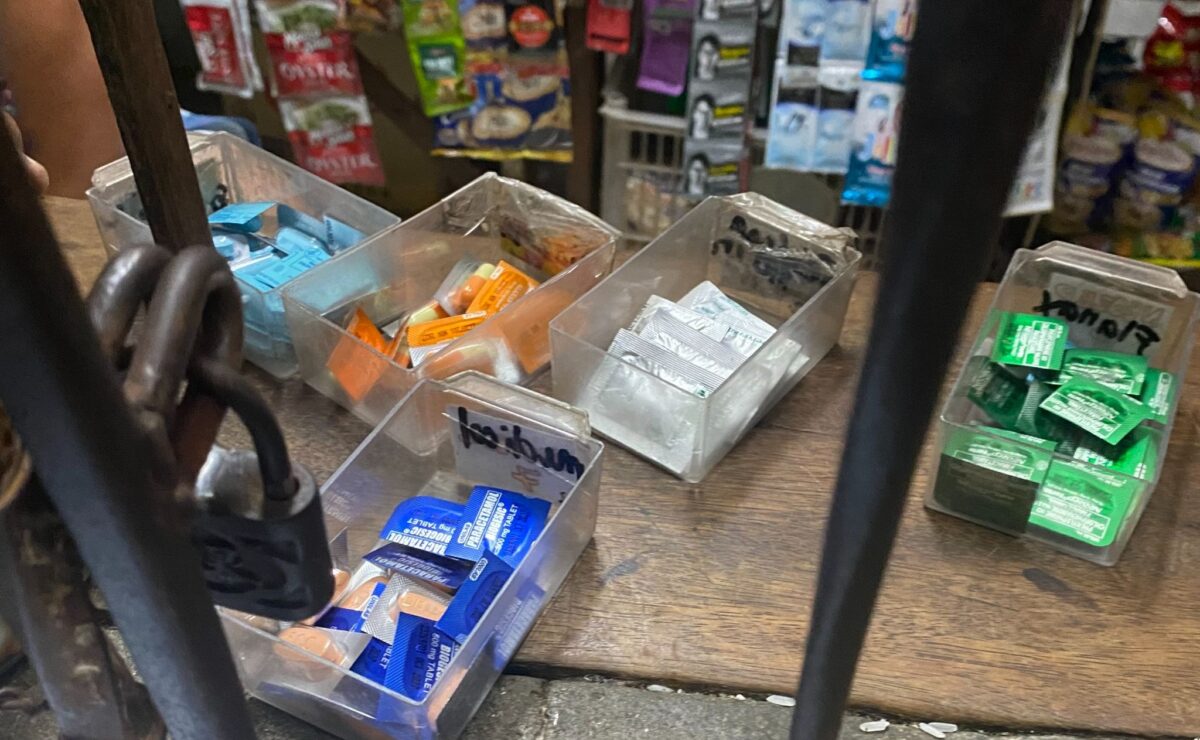
The study found that some store owners also gave customers advice based on their own experiences. Store owners described being asked which medicines to use for fever, colds, abdominal pain and other common complaints.
“‘Ate, what medicine can be used for this [illness]? [What is] the proper medicine for runny nose and for fever? Can I take Neozep and Biogesic at the same time?’ I tell them no; they’re both Paracetamol. You’ll over-use it if you take them at the same time. Those kinds of questions,” a store owner told the researchers.
Paracetamol is the generic name for Biogesic, while Neozep is a combination medicine containing paracetamol, phenylephrine hydrochloride and chlorphenamine maleate.
The study also documented instances in which customers were advised to consult doctors or go to pharmacies for antibiotics and other medicines requiring professional guidance.
Most store owners draw line between stores, pharmacies
Despite serving as informal medicine outlets, the participants generally did not regard their stores as pharmacies.
“[I]t is evident that tinderas are wary not to cross any boundaries. Without prompting, they would repeatedly articulate that they are not pharmacies, and serious illnesses must be directed to ‘real’ pharmacies,” the researchers said.
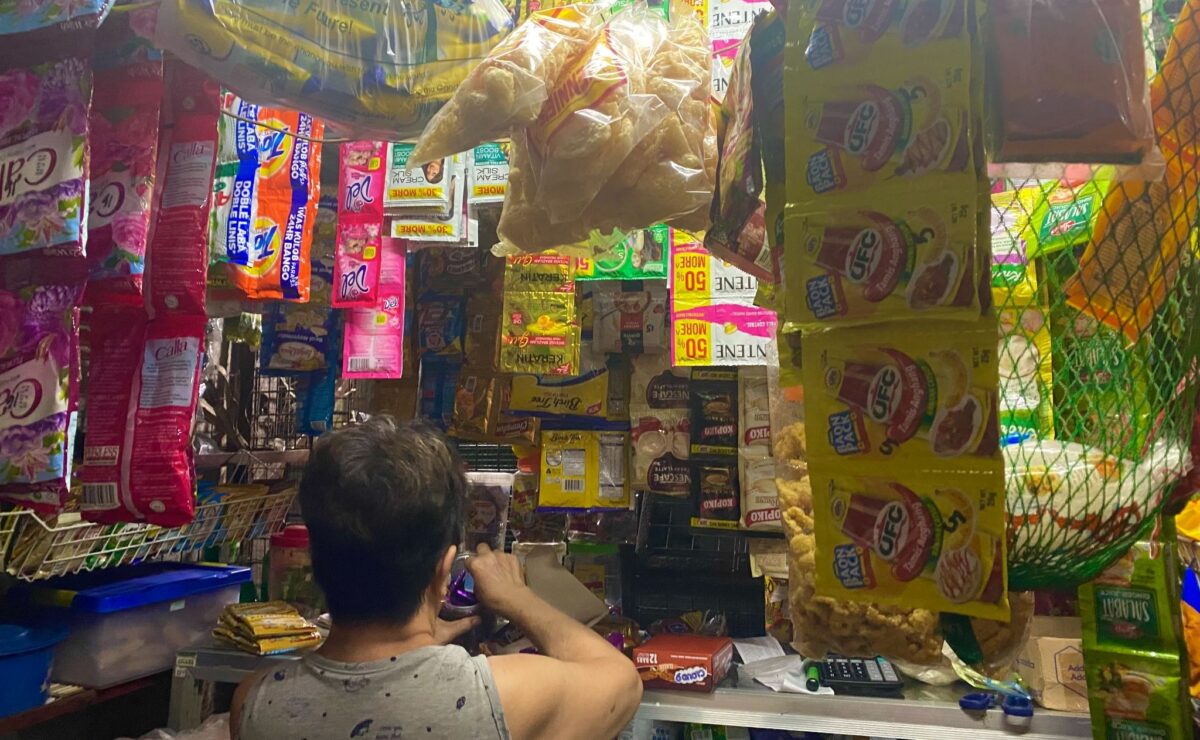
The study found that 11 of the 14 participants refused to sell antibiotics and other prescription medicines, while only three sold antibiotics, and even then only in limited ways.
“I told [the consumers] that it’s still best to consult a doctor. It’s hard to self-prescribe,” one sari-sari store owner said.
“I don’t give any more advice since I’m not a doctor,” another store owner added.
The participants also drew a clear distinction between their sari-sari stores and formal pharmacies, even as many viewed the medicines they sold as essentially the same.
The researchers noted that store owners often obtained their stocks from pharmacies, which shaped their perception that the medicines were legitimate and effective.
“The medicines are effective because they get well immediately,” a store owner said.

For another participant, the main difference was price. The store owner said the medicines were “more or less the same” but could be cheaper, particularly compared with branded medicines sold at a well-known drugstore.
The store owners also differentiated themselves from pharmacies through the quantity and kinds of medicines they kept. One participant said the store carried only ordinary medicines and avoided selling them in bulk because doing so might make the business appear to be a pharmacy.
“There is […] a strong assertion that they [sari-sari stores] are not pharmacies, and have no intention of masquerading as one,” the researchers noted.
Most refuse to sell antibiotics
The distinction was particularly evident in the way participants treated antibiotics. Most said they did not sell them and stressed that such medicines required prescriptions.
“For unique antibiotics, a prescription is needed. Normally, antibiotics require a prescription,” one store owner explained.
“I don’t sell Amoxicillin. That’s not allowed. A prescription is needed,” another store owner said. “And of course, it’s different if you take just one. That’s why it’s not allowed. When you take just one, it becomes more active– the virus, I think. When you take antibiotics, it should be for 7 days. It’s not allowed [to sell them]. It should be sold in pharmacies. You should have a prescription.”
A third participant said customers did look for antibiotics but declined to sell them because of concerns about their proper use.
“Actually, there are people who look for antibiotics. But I’m an advocate for proper usage of antibiotics. So no, I don’t sell them.”

Overall, the study found that only three of the 14 participants sold antibiotics, and even then only in limited ways. Two of the three sold only cephalexin, according to the researchers.
There was, however, an exception in Rodriguez, Rizal. A sari-sari store there was found to sell rosuvastatin, cotrimoxazole, azithromycin, amoxicillin and acetylcysteine.
The store owner said the medicines came from a local pharmacy about a kilometer away and that prescriptions were requested.
“This may be because they sold the medicine to the nearby home for the abandoned elderly. The household members also use some of the medicines,” the researchers said.
Researchers found that some prescription medicines were also being used by the store owner’s household, including rosuvastatin, while children’s medicines such as paracetamol and vitamin C were purchased for the owners’ grandchildren and additional bottles were bought for children in the neighborhood.
Selling medicines remains a legal issue
The researchers stressed that the convenience provided by sari-sari stores exists alongside restrictions under Philippine law.
Republic Act No. 10918, or the Philippine Pharmacy Act, requires pharmaceutical establishments to operate under pharmacist supervision, and the study said sari-sari stores selling pharmaceutical products as nontraditional outlets are illegal unless duly licensed by the Food and Drug Administration (FDA).
“Strictly speaking, the sale of pharmaceuticals through sari-sari stores is illegal unless the outlet is duly licensed by the Food and Drug Administration (FDA). There are, however, layers of liminalities, such as due considerations for geographically isolated and disadvantaged areas (GIDAs) and medicines not captured in the FDA circular,” the researchers clarified.
The researchers said this, along with questions about how different medicines are classified, creates some ambiguity in enforcement.

READ: Risks of selling medicines in sari-sari stores
The issue gained greater attention during a 2022 crackdown on sari-sari stores selling counterfeit COVID-19 medicines.
That same year, the Department of the Interior and Local Government (DILG) directed local government units to pass ordinances banning the sale of medicines in these stores nationwide. This came after the FDA received 185 reports of sari-sari stores illegally selling medicines in one month.
READ: ‘Sari-sari’ stores may apply for FDA license to sell meds
The study said calls to prohibit the sale of even over-the-counter medicines outside pharmacies were met with objections from groups citing difficulties in obtaining medicines, particularly in geographically isolated areas.
Antibiotic misuse fuels wider resistance risk
Beyond the question of where people obtain antibiotics, the study placed their use within a broader public health concern: the growing risk of antimicrobial resistance (AMR).
The researchers cited previous Philippine studies showing that antibiotics had been used inappropriately, including for common colds, while completing prescribed courses was uncommon. They noted that antibiotics were sometimes regarded as “masyadong malakas,” or too strong, because of perceived side effects.
“In the Philippines, antibiotic misuse and antibiotic sharing are rampant, resulting in adverse reactions, waste of resources, treatment failures, and ultimately the rapid emergence of antimicrobial resistance,” the researchers wrote.
The study also pointed to earlier research documenting the availability of antibiotics in sari-sari stores. It cited findings from Central Visayas, where antibiotics such as amoxicillin and cephalexin had been available in neighborhood stores, with some reportedly found past their expiration dates.
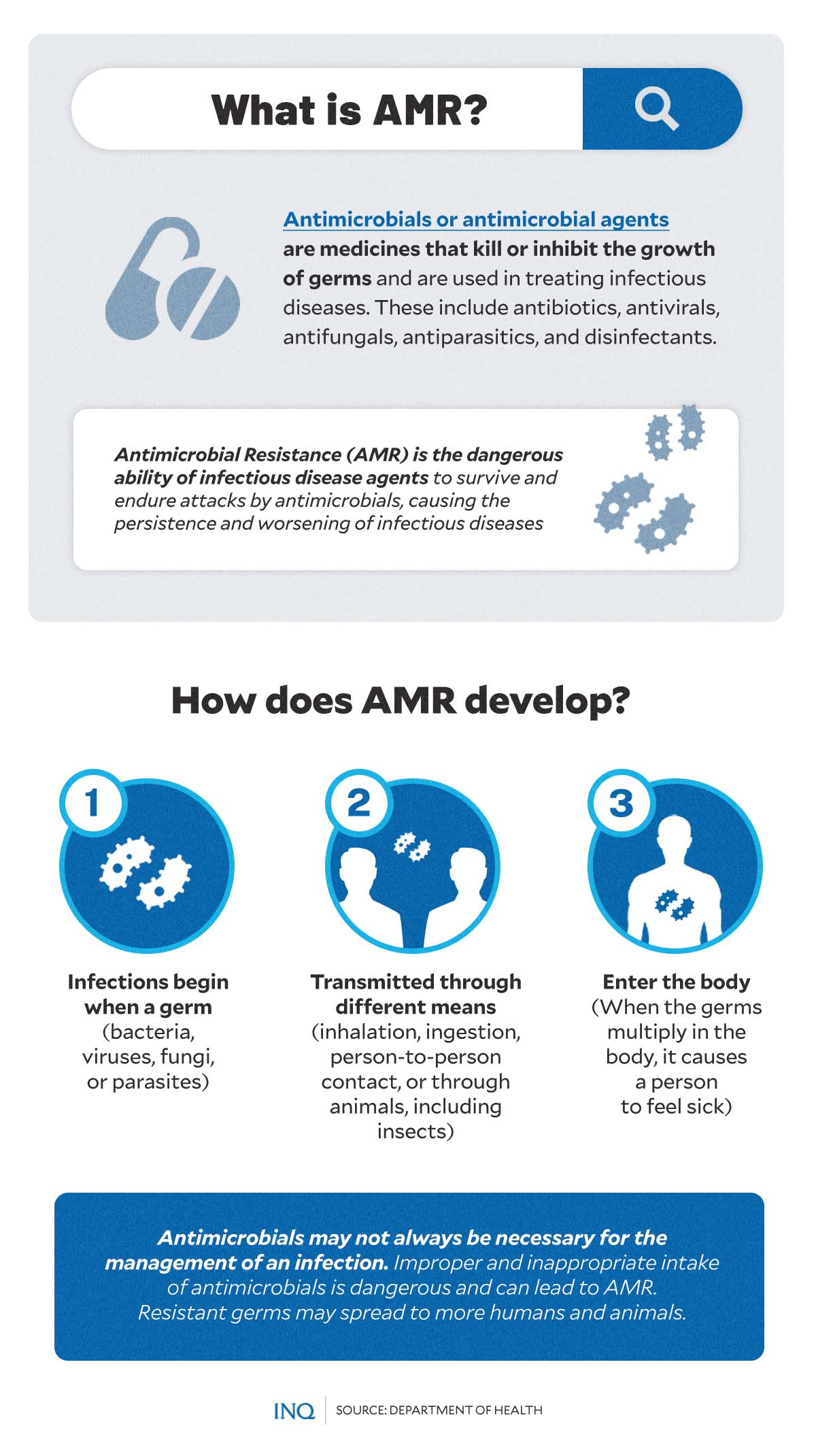
The concern is not limited to informal medicine outlets. The Department of Health (DOH) previously stressed that self-diagnosis and self-prescription remained among the practices contributing to the problem in the country.
“Here in the Philippines, many people tend to self-prescribe, instead of consulting a doctor, and go to pharmacies to buy and intake medicines without the guidance of our [health professionals],” former DOH officer in charge Maria Rosario Vergeire said.
The health department identified contributors such as prescription-sharing, poor adherence to treatment and interruptions in medication, as well as social and economic barriers and limited health literacy.
Vergeire also warned of the consequences if antibiotic misuse continued.
“Right now, the problem with antimicrobial resistance is increasing in the country. We might reach a critical point wherein the usual medicines we use to fight off infections might no longer work for most Filipinos because we are already resistant as a result of misusing and overusing antimicrobials,” she said.
READ: AMR: When infections fight back, kill
The World Health Organization (WHO) defines AMR as a situation in which bacteria, viruses, fungi and parasites no longer respond to antimicrobial medicines, making infections harder or sometimes impossible to treat and increasing the risks of severe illness, disability and death. About one in six laboratory-confirmed bacterial infections worldwide was found to be resistant to antibiotics in 2023.
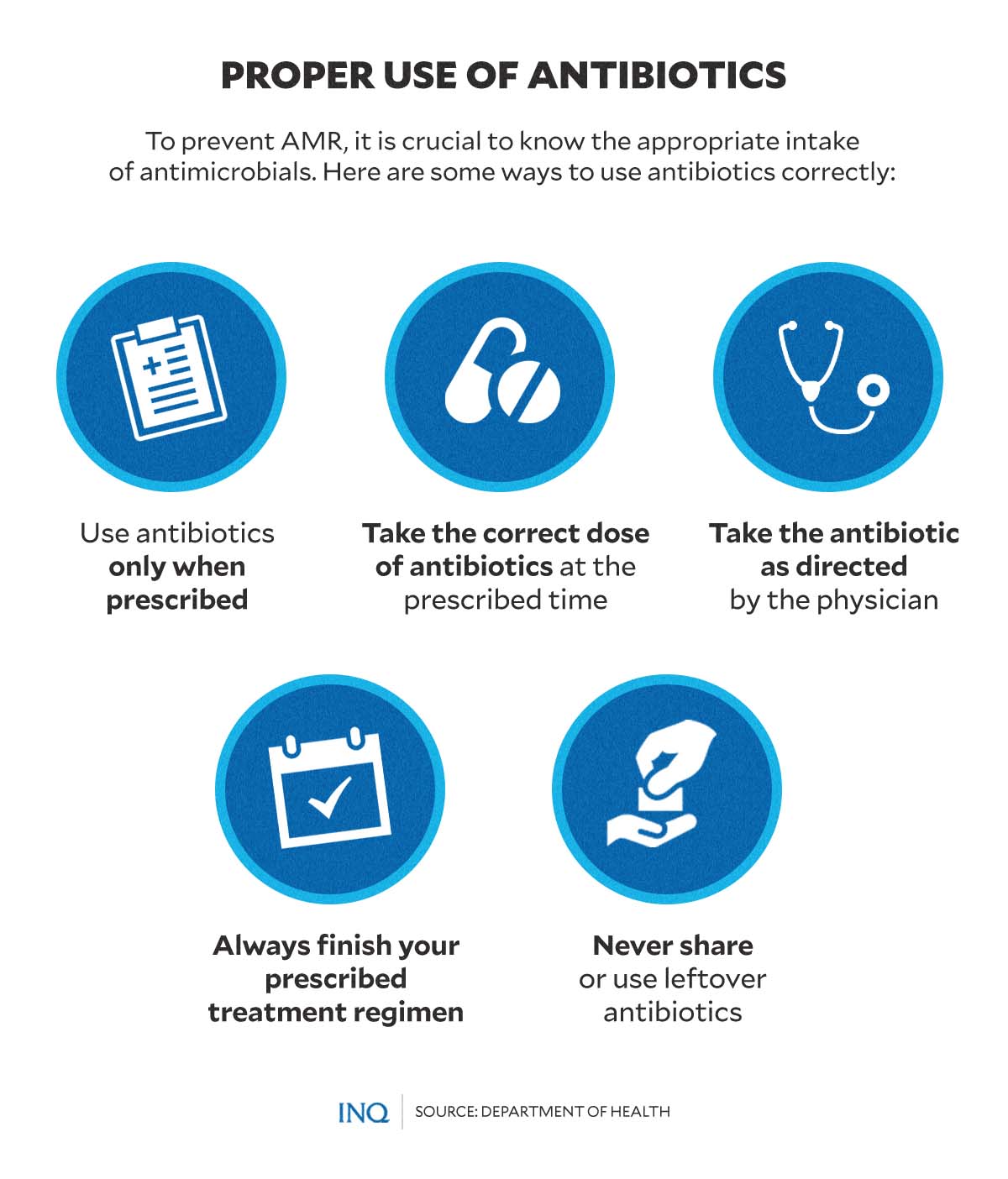
WHO said the misuse and overuse of antibiotics — such as taking them when they are not needed or using the wrong type — remain among the main drivers of AMR.
It also identified limited access to appropriate medicines and diagnostics, inadequate infection prevention, poor water and sanitation, and weak awareness and enforcement of legislation as factors that allow resistance to emerge and spread.
Researchers urge more nuanced approach
The researchers said sari-sari stores should not be treated as replacements for pharmacies or professional health care, but their role in communities should be considered when policies governing access to medicines are developed.
“The sari-sari store, as a venue to observe interactions between the consumers, the government, and the medical and pharmaceutical world, shows us its social, political, and economic relevance,” the researchers wrote.
“Sari-sari stores bring valued ‘things’ in close proximity to the people who look to them for healing and comfort,” they added.
READ: Pharma, drug store owners to DTI: No to sari-sari stores selling meds

The study recommended against blanket prohibitions and punitive measures, suggesting that regulatory flexibility and more accessible licensing for sari-sari store owners be explored.
It also called for education for store owners and consumers on responsible self-medication, as well as efforts to include sari-sari stores in public health measures aimed at improving pharmacovigilance.
“We see the value in recognizing the role of sari-sari stores in the health system, as well as in accounting for economic and geographical barriers before imposing top-down prohibitions,” the researchers said in a statement.
The study linked reliance on informal medicine sources to the broader problem of access to health care, including financial constraints and limited availability of health services. It characterized self-medication as both a public health challenge and, in some circumstances, a survival strategy for ordinary Filipinos.
The researchers said the findings serve as a starting point for further research into the role of sari-sari stores in informal medicine distribution and the ways Filipinos navigate between household practices and the formal health care system.
Your subscription could not be saved. Please try again.
Your subscription has been successful.
“Overall, our findings underscore the need for more nuanced policy-making that accounts for the socioeconomic realities that surround access to medicines, ensuring that policies and laws do not inadvertently restrict healthcare options for those who need them the most,” they wrote. /dm
KioskNews shows a cleaned-up reading view extracted from the publisher’s page — the original always lives on their site, not ours.