Ambling Changhua’s sumptuous cultural park
A sun-drenched early morning discovery of the many gardens and multitudinous history of the Cheng Mei Cultural Park
By Shane O’Reilly / Contributing reporter


Located a 40-minute drive south of Changhua City, the Cheng Mei Cultural Park (成美文化園) lies beyond a roadside verge of tall, thick trees.
A right turn follows a long allee flanked by manicured foliage, from the thick, burly heads of large bonsai trees to the crimped bark of Japanese black pine and lush Chinese juniper.
With many stony, tree-lined scenic pathways and towering coniferous and deciduous trees, visitors will find themselves meandering happily through a sprawling, artistically sculpted masterpiece.
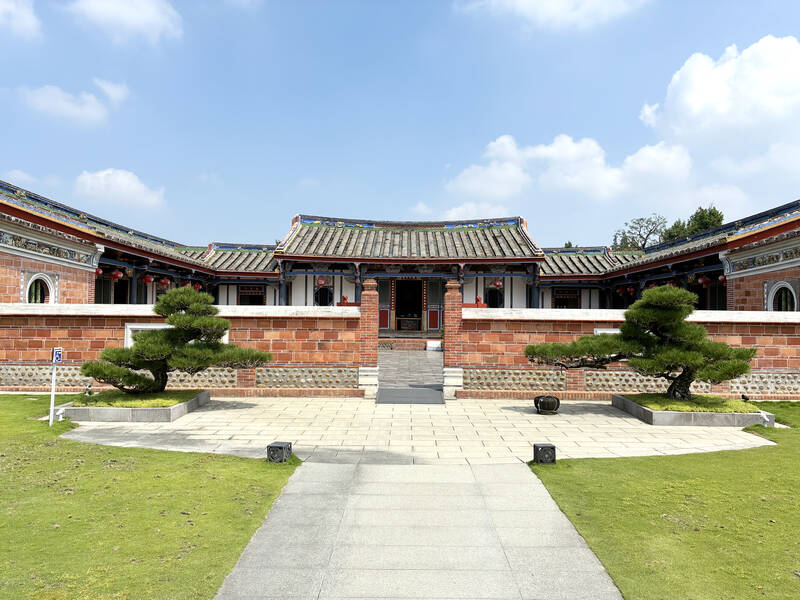
The heart and ancestral home of the Wei Family.
Photo: Shane O’Reilly
This undulating 10-hectare private garden estate is all thanks to the prominent Wei Family (魏家), local food and drink magnates who founded this estate as a passion project of sorts.
After a massive magnitude 7.3 earthquake in September 1999 destroyed their 1885 ancestral home, they began a seven-year restoration plan in 2005, which was expanded to include these incredibly ornate gardens in honor of their parents and ancestors.
And as such, this handsomely renovated ancestral home is the architectural gem at the heart of everything here.
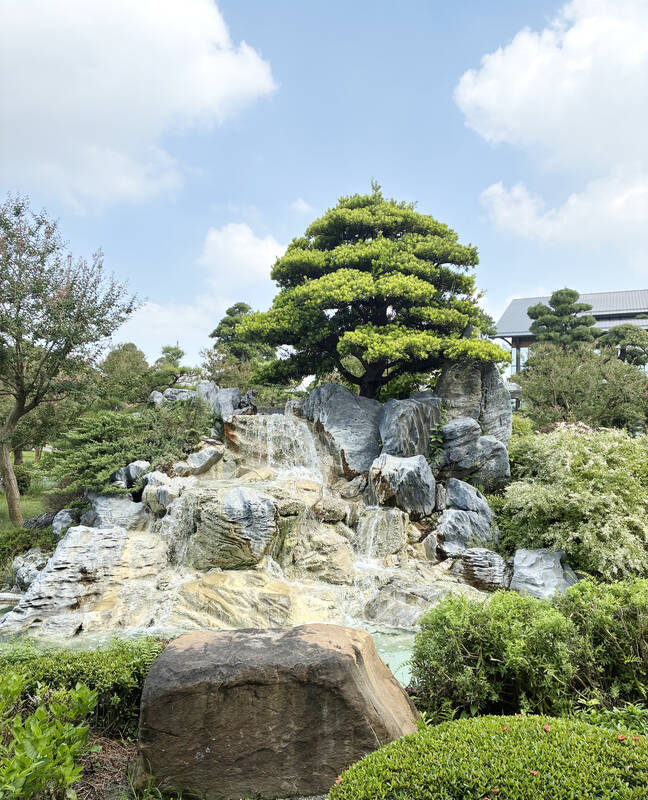
One of a variety of mini waterfalls to be found throughout Cheng Mei Cultural Park.
Photo: Shane O’Reilly
The Dream-Sowing Seed (播夢種子 / 播夢種籽), a tall, bulbous wood and steel installation, is located approximately 50m in from the entrance and serves as an in-and-out gateway from one garden trail to another.
A labyrinth of landmarks includes a prominent lake, ornamental pools replete with fat, mottled koi, mini waterfalls and a colossal 500-year-old Burmese Rosewood.
The meticulously pruned He-De Garden (和園) is home to a grove of impressive pine and cypress species as well as a pond and a traditional footbridge.
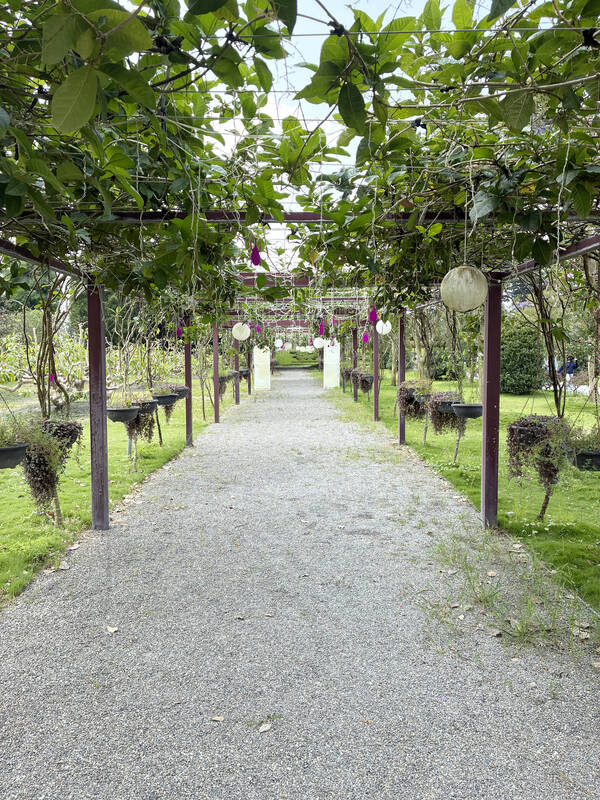
A semi-sheltered folly and walkway decorated in beautifully trellised overhead plants.
Photo: Shane O’Reilly
It’s all a sinuous, whimsical affair, wayfaring from billowing bushes to carefully crafted themed gardens and quaint cobblestone walkways.
Beautifully sheared, the topiary breathes an air of natural, flowery scents, a home to fluttering butterflies and dragonflies dancing and skimming water surfaces.
On hot summer days, visitors can recline in the underarm shade of many a knotted, gnarled tree from the comfort of a strategically placed bench or Adirondack chair.
Gravel avenues and babbling waterways run in tandem, while clearings open out to lavender patches or garden folly, their wood frames wound with the trellises of hanging plants.
Occasionally, banks of verdant shrubbery are broken by pops of color from Pink Cassia, Queen’s Wreath, and splashes of Ixora. However, much of this vibrancy will be lost between October and March.
ANCESTRAL HOME
Keeping much of its historical majesty intact, Chengmei Gongtang (成美公堂) unfolds as a layered, multi-winged, and rather angular red-brick, red-tile structure encompassing three courtyards.
Beyond the painstakingly preserved bedrooms and altar room, dozens of chambers are ideal as showrooms for what has become a traditional folk museum, with numerous interactive displays and educational spaces.
There’s even an air-conditioned, mahogany-furnished, high-wood-beam screening room with films on continuous playback, perfectly suited to relax, cool down and learn a little about the estate before venturing onward.
For your information
IF YOU GO
Cheng Mei Cultural Park lies just off the main arterial Zhongshan Rd in Yongjing Township (永靖鄉). Open daily from 9am to 5pm, there is an entrance fee of NT$300 per adult. Admission is free for children ages 7 and under, with tiered ticket pricing up to age 18. A cart and driver service is available for guided tours. The only dining option within the grounds is the Songbai Xuan Landscape Restaurant (松柏軒景觀餐廳), which offers set menus and banquet-style dining. For something more casual, the Chengmei Happiness Cafe (成美.幸福咖啡) within the Happiness Hall (幸福大廳) serves basic snacks and cold drinks.
KioskNews shows a cleaned-up reading view extracted from the publisher’s page — the original always lives on their site, not ours.