10 Movies You Need To Watch on Netflix in September 2026

Ben Brewster is a filmmaker, critic, screenwriter, and actor whose work sits at the intersection of film culture, craft analysis, and storytelling.
He is a movie list contributing writer at Collider and a contributing writer for High on Films, where he covers contemporary cinema, independent film, and festival releases with an eye toward narrative structure, performance, and visual language.
Ben is an active film festival participant, having worked with Newport Film, the Nantucket Film Festival and as a screener for the Austin, Boston & Woodstock film festivals.
He brings to that work a programming instinct shaped by years of close engagement with independent and documentary cinema. This comes with a deep investment in the kinds of films that rarely find their way into the mainstream conversation without someone willing to advocate for them.
His background spans documentary and narrative filmmaking, film marketing, and production, including work with award-winning directors. This as well as developing his own indie production company, Lilac Creative Studio, through which he develops and produces original work across fiction and nonfiction forms.
His debut documentary, Diamond in the Rust, is an examination of economic redevelopment and displacement in the Queens area of New York City. The film was recently accepted to the Unisphere Film Festival, the Defense of Democracy Film Festival, and the Urbanite Arts & Film Festival. This would mark his first festival recognition as a director.
In addition to his writing and programming work, Ben hosts Beneath the Bloom, a film podcast exploring the work behind the scenes in cinema, and the struggles one can face to make a movie become a reality. The show reflects the same sensibility that runs through all of his work. A conviction that film is not merely entertainment but one of the most powerful tools human beings have for understanding each other.
Across mediums, his work is driven by a deep belief in film as a communal, transformative art form.
Sign in to your Collider account
Netflix added more than forty titles at once this September, and buried in that flood is one of the strongest movie lineups it has offered in months. It brings in new theatrical releases as well as some true library classics, giving subscribers the mix many movie lovers look for, of the brand new and the essential. Whether you're chasing a recent horror sensation or finally catching up on a decades-old project everyone else has already since, there's a real reason to open up the red and black app this month.
For Netflix in September, this piece ties together projects through their tension, movies built on gripping suspense and intense drama. There is true moral compromise, and characters are pushed to their absolute limits, whether that's a solider surviving no man's land or a struggling actress falling for the wrong man on the wrong weekend. These aren't movies for when you're doing chores, no. Several of them, in fact, are worth prioritizing before they inevitably rotate off the platform again. A handful of these titles landed on the platform for the first time this month, so there is a sense of urgency behind these picks beyond quality alone.
Yet, there is also a real range in scale here, from an intimate single-location romantic comedy to a technically dazzling war epic staged as one continuous take. But that range is part of the point. The Netflix movie library works best when you let it surprise you, instead of just letting whatever the algorithm manufactures for you as its default choice. So, here are ten movies on Netflix worth your time this month.
10 'Caught Stealing' (2025)

Darren Aronofsky's genre-bending crime thriller Caught Stealing follows a former baseball player turned bartender, Austin Butler, who gets pulled into a violent, escalating criminal underworld after agreeing to watch a neighbor's cat. It starts as a darkly comic set up in a gritty New York City, but quickly spirals into something much more brutal, as Aronofosky's usual interest in bodies and psychology under extreme pressure asserts itself. Butler anchors the film with a performance that tracks a believable descent from ordinary guy to someone forced into violence he never wanted. The movie's tonal shifts, comedy that curdles into non-stop suspense chases are handled with a real confidence you would hope for from a director who's spent his career pushing genre conventions past their comfort zone.
This is Aronofsky working in a leaner, more purely entertaining register than some of his heavier arthouse work, without sacrificing the psychological intensity that defines the best of his eccentric filmography. It's a showcase for Butler as a true leading man, carrying real vulnerability and physicality across a punishing runtime. The film's New York setting is rendered with true specificity, becoming its own kind of character. It is a confident, unpredictable ride that rewards genre fans looking for something original and a little rougher around the edges than typical studio fare.
9 '28 Years Later' (2025)

Danny Boyle's long-awaited return to the franchise that helped redefine modern zombie horror, 28 Years Later. The third entry finds a new generation living in the aftermath of the original outbreak, isolated on a quarantined island and forced to reckon with what's become of the mainland they've never known. Boyle brings back the same kinetic, unsettling visual style that made the original so distinctive, while pushing the mythology behind it all into surprisingly new and unexpected territory. The film balances brutal, visceral horror with the real emotional weight created by the father-son duo of Jamie (Aaron Taylor-Johnson) and Spike (Alfie Williams). Their relationship operates around the philosophy of inherited trauma and what it means to grow up in a full-on catastrophe. Ralph Fiennes anchors a key supporting role with gravity, grounding the film's more out-there conceptual swings.
This is a legacy sequel that actually earns its existence, not repeating the same thing for nostalgia’s sake but expanding on the original's ideas in inventive and thought-provoking ways. Boyle's direction remains as urgent and propulsive as ever, even with being decades removed from the original film that helped launch this whole subgenre. It's a project that is unafraid to be strange and ambitious in its back half, taking real risks that most horror sequels wouldn't dare attempt. For longtime fans of the franchise and zombie movie fans in general, this is essential viewing.
8 'Rebel Ridge' (2024)

Jeremy Saulnier's tense, controlled thriller follows a former marine (Aaron Pierre) who runs afoul of a corrupt small town police department after they seize his cash under civil asset forfeiture. This one pushes back in ways that expose just how deep the town's corruption actually runs. Pierre delivers a star-making performance forged on coiled restraint, a man capable of real violence who chooses again and again, not to escalate until there is no other choice. Saulnier's direction is patient and precise, constructing the tension through traditional police procedure and cutthroat consequences. The film's interest in systemic justice, specifically around policing and asset forfeiture abuse, gives a real weight and urgency to what could have been a straightforward action premise.
This is a film that trusts its audience to sit in that tension instead of rushing toward release, and that patience pays off in a gripping and action-packed second half. Pierre's performance alone makes this essential viewing for Lanterns-obsessed fans, a genuine star turn that deserved a much bigger theatrical rollout than what it got. Saulnier continues to prove himself as one of the most reliably tense genre filmmakers working today. It's the kind of smart, well-constructed thriller that's increasingly rare in an era of franchise-dominated action cinema.
7 'Society of Snow' (2023)

J.A. Bayona's harrowing survival drama recounts the true story of the 1972 Andes flight disaster, in which a Uruguayan rugby team's plane crashed in the mountains, forcing survivors into unimaginable choices to stay alive. Bayona takes in the mountain setting with a punishing scale, making the physical brutality of the survivors' situation viscerally clear without becoming exploitation. The ensemble cast, largely unknown to international audiences, delivers performances built on physical and emotional exhaustion in place of the usual movie star polish. The film's approach as well to its most famous plot point is dealt with genuine care and a moral seriousness that strays away from any form of sensationalism.
This is one of the most devastating survival films made in years, forged from a real empathy for its subjects. Bayona's direction never loses sight of the human cost underneath the extraordinary circumstances, and the film's closing stretch lands with an earned emotional and human weight. It's a difficult watch, but for anyone interested in survival stories or based-on-a-true-story film-making done right, this is essential viewing.
6 'Killer Joe' (2011)

William Friedkin's pitch-black Texas noir follows a young man (Emile Hirsch) who hires a police detective moonlighting as a contract killer to murder his mother for insurance money. The man he hires is Matthew McConaughey's Killer Joe, and the plan itself spirals into something far more disturbing than anyone involved anticipated. McConaughey delivers one of the most purely unsettling performances of his career, all soft-spoken menace and total control, in a role that helped kick-start his 2010s reinvention. Friedkin, working from Tracy Letts's play, directs with a confidence and nastiness that never shies away from the pitch black comedy or its deeply vivid horror. The film's infamous final act remains one of the most upsetting and unforgettable sequences in modern American cinema.
Killer Joe is not an easy watch, and it isn't meant to be. Friedkin was deep into his career and still interested in pushing audiences past their comfort zone. McConaughey's performance alone makes it worth the time for anyone tracking his transformation from romcom staple to an actor making some of the most interesting and compelling career choices in Hollywood. It's a movie that earns its NC-17 reputation while still functioning as a very well constructed piece of Southern gothic noir. Not for the faint of heart, but a must-see for genre fans.
5 'Sleepless in Seattle' (1993)

Nora Ephron's beloved romantic comedy Sleepless in Seattle follows a widower (Tom Hanks) whose son calls into a radio call-in show describing his father's loneliness. It catches the attention of a Baltimore journalist (Meg Ryan), who becomes convinced, without ever having met him, that he might be her soulmate. Ephron's script is a masterclass in delayed gratification, keeping its two leads apart for nearly the entire runtime, despite building immense romantic tension. Hanks and Ryan's chemistry, even filtered through phone calls and separate storylines, remains one of the genre's most enduring pairings.
This is peak '90s romantic comedy craftsmanship, warm, funny and truly moving without ever feeling saccharine. Ephron's understanding of loneliness and longing gives the film real emotional weight underneath its rather high-concept premise. It's the kind of comfort watch that holds up decades later precisely because its built on real character work rather than pure genre mechanics. If you need a palette cleanser after some heavier titles on this list, this is exactly that.
4 'A Quiet Place: Day One' (2024)

Michael Sarnoski's prequel to the Quiet Place franchise relocates the story to the earliest hours of the alien invasion in New York City, following a terminally ill woman (Lupita Nyong'o) trying to survive the initial chaos alongside a stranger (Joseph Quinn) that she meets along the way. Working from John Krasinki's established mythology, Sarinoski brings emotional specificity to a franchise entry that could have leaned on its predetermined extraterrestrial scares alone. The film's New York setting adds scale and horror the the franchise's sound-based tension, staging some of the series' largest sequences amid packed city streets and subway tunnels.
Day One is a prequel that earns its existence. It deepens the franchise's stakes instead of feeling like a repetition of its foundational conflict amongst a new setting between new characters. Nyong'o and Quinn's central relationship gives the film a unique heart within its horror mechanics, elevating it above a typical franchise cash-in and differentiating it from the Abbott family's storyline. Sarnoski's direction proves he can handle large-scale genre film-making without losing the intimacy that made his debut, Pig, so effective. It's one of the strongest entries in recent horror prequel history and a great watch for superfans of the sci-fi genre.
3 'Wind River' (2017)

Taylor Sheridan's directorial debut follows a grieving wildlife tracker (Jeremy Renner) and a rookie FBI agent (Elizabeth Olsen) investigating the death of a young indigenous woman on a Wyoming reservation, uncovering systemic neglect and violence along the way. The film closes with a title card noting the absence of missing-persons data for Indigenous women in America, reframing the entire preceding story as something much more sobering and real than genre fiction. Renner delivers one of the most understated and effective performances of his career, and the snowbound Wyoming setting becomes its own kind of antagonist throughout. Sheridan's script never loses sight of its larger social point even while functioning as a tense procedural mystery.
This is one of the defining modern neo-Westerns, quietly devastating rather than loud about its anger, which makes it conclusion hit much harder. For audiences looking to understand why Sheridan's particular style of storytelling has resonated with so many, there is no better place to look to than Wind River. The mystery plot never overshadows the film's real subject, who gets protected in America and who gets forgotten. One of the more purely urgent films for the discourse that came from it in the last decade.
2 'Nightcrawler' (2014)

Dan Gilroy's pitch-black media satire Nightcrawler follows Lou Bloom (Jake Gyllenhaal), a hollow, ambition-starved drifter who stumbles into the world of freelance crime journalism. He films grisly accidents and crime scenes to sell to local news, and quickly discovers he has a terrifying talent for it. Gyllenhaal’s performance is gaunt and unnervingly intense, playing Lou as a man who's absorbed every self-help platitude about ambition and success without ever developing an actual conscience. Gilroy's Los Angeles at night is rendered with a neon-lit menace, becoming a kind of moody and uncomfortable character in its own right. The satire of the movie's sensationalist local news media is still as sharp and relevant as ever, arguably more so given how the modern media landscape has evolved since its release.
One of the sharpest character studies of the 2010s, this movie portrays how capitalism can hollow out a person and reward the emptiest, most predatory instincts. Gyllenhaal fully commits himself to the role, and it is widely considered one of the most striking transformations of the decade. It's a film that gets more disturbing on a rewatch, the more you sit with Lou's specific, articulate emptiness. For anyone who loves character-driven thrillers with real teeth, put this one at the top of your list.
1 '1917' (2019)

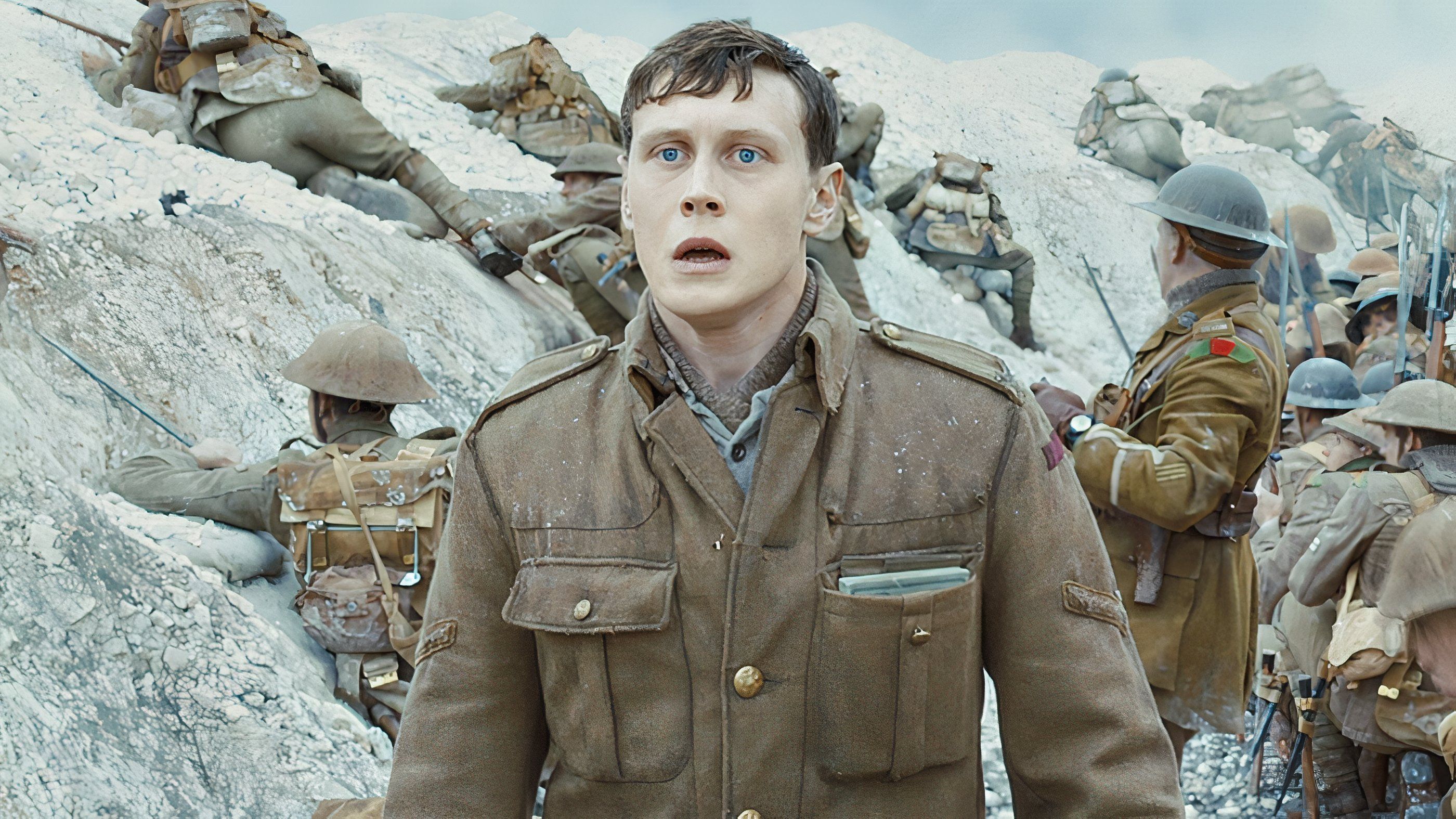
Sam Mendes's technically dazzling WWI epic follows two young British soldiers racing across enemy territory to deliver a message that could save sixteen hundred men from a deadly doomed attack. The whole thing rendered as one continuous unbroken take, something that Mendes attempted with Spectre and didn't do exactly what he had hoped for. Fortunately, this time around, backed by Roger Deakins' cinematography, the project immerses the audience directly into the soldiers' journey. Doing so, without bothering the viewer with the cumbersome nature of the stereotypical cuts that create a sense of emotional distance from the story. 1917's structure forces real-time urgency onto every scene, turning even quiet stretches into sustained, unbearable tension. George MacKay anchors the epic with a performance that required an emotional and physical endurance unique to this project, at times carrying the movie alone across its runtime.
1917 is a technical marvel that never loses sight of the human stakes of the war below the formal ambition of the project. The "one continuous take" gimmick serves the story's urgency instead of existing just for its own sake. Mendes's direction proves that formal, daring scale and sensitive, weighty sequences are not mutually exclusive, which is a rare combination in a war film this ambitious. It's the strongest recommendation on this list, a film that rewards both the big screen you might have missed it on, and the more intimate rewatch on your TV. If you watch nothing else on this Netflix batch, make it this one.

- Release Date
- January 10, 2020
- Runtime
- 119 minutes
- Director
- Sam Mendes
- Writers
- Krysty Wilson-Cairns, Sam Mendes
- Producers
- Callum McDougall, Jayne-Ann Tenggren, Michael Lerman, Pippa Harris, Sam Mendes
KioskNews shows a cleaned-up reading view extracted from the publisher’s page — the original always lives on their site, not ours.