2010's Hit 177-Episode Horror Series Was 1 Change From Perfection


Cathal Gunning has been writing about movies, television, culture, and politics online and in print since 2017. He worked as a Senior Editor in Adbusters Media Foundation from 2018-2019 and wrote for WhatCulture in early 2020. He has been a Senior Features Writer for ScreenRant since 2020.
Sign in to your ScreenRant account
While one of TV’s biggest horror franchises ever has lasted more than 300 episodes, it is sad but true that the AMC show’s legacy would be markedly better if the series had markedly fewer outings. It is almost impossible to explain just how much the emergence of streaming sites has altered the history of television shows as a medium in the years since 2010.
Right around the same time that HBO was spending unprecedented amounts of money on their expensive and risky 2011 fantasy series Game of Thrones, sites like Netflix were pioneering a binge-watching model that would go on to alter the storytelling style of traditional TV and online shows forever. While traditional network television typically provided viewers with between 15 and 25 episodes per season between around September and May of each year, streaming was far more chaotic and unpredictable.
Some shows waited years between seasons. Others, like Netflix’s acclaimed Money Heist, were initially intended to be standalone self-contained miniseries and were only green lit for a second season thanks to their unexpected popularity. Meanwhile, traditional network and cable TV gradually adapted to these changing norms, something that left ongoing shows in a strange double bind. Some of these, like the iconic horror series The Walking Dead, could have benefited from streaming’s innovations.
The Walking Dead Would Have Been A Perfect Streaming Series

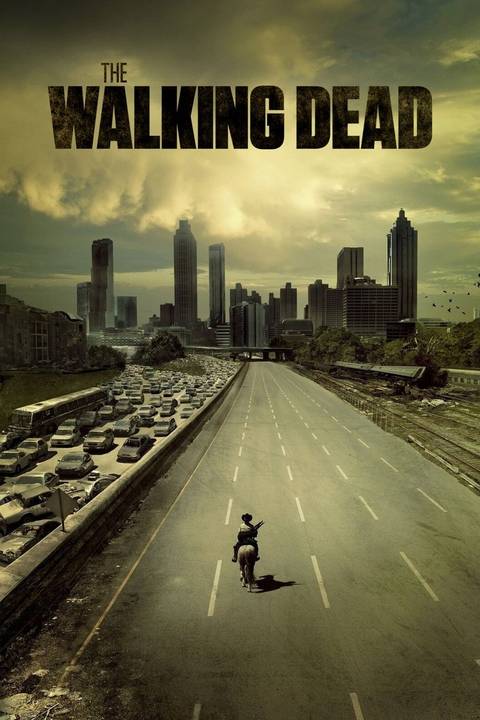
It might be tough to remember 16 years later, but The Walking Dead was a massive critical and commercial success when the post-apocalyptic zombie series debuted in 2010. With a pilot episode directed by The Shawshank Redemption’s Frank Darabont, the AMC show was immediately and understandably hailed as a modern masterpiece, and quickly became AMC’s flagship series. The fact that various The Walking Dead spinoffs are still ongoing in 2026 proves just how enduring its popularity was.
However, like so many other hit shows from Glee to Lost, The Walking Dead gradually lost the critical acclaim that met its early episodes. The show’s story of Andrew Lincoln’s Rick Grimes started strong, bringing many of the most memorable images from Robert Kirkman’s iconic comic series of the same name to the screen faithfully. With an ensemble cast that included future A-list star Jon Bernthal and Prison Break’s Sarah Wayne Callies, The Walking Dead felt like a taut, terrifying story back in season 1.
However, The Walking Dead’s best season was also, not coincidentally, its shortest by far. With a budget that was considered astronomical at the time, The Walking Dead season 1 lasted only six episodes and told a compelling, brutal, twisty story in that brief time. As early as season 2, critics were pointing out that The Walking Dead needed to tread water between expensive action-heavy episodes, since the series had suddenly made the jump from a six-episode first season to a 13-episode sophomore outing.
While the other R-rated small screen horror hit of the era, Ryan Murphy’s FX anthology American Horror Story, had the luxury of introducing a new cast of characters and a new story with each new season, The Walking Dead was stuck with its cast and plot. And stuck was exactly how many viewers felt, as season 3 opened up to an even longer 16-episode run and the series held onto this average runtime all the way through to 2019’s season 9.
The Walking Dead’s Long Seasons Killed Its Momentum

Inexplicably, The Walking Dead’s final two seasons, released between 2019 and 2022, increased their episode count to a jaw-dropping 22 and 24 episodes respectively. While a couple of episodes in season 10 were singled out for praise and there are classic seasons amid the show’s long run, The Walking Dead’s traditional TV structure can still be held accountable for many of the show’s existential issues when it came to storytelling.
Without fail, much like Game of Thrones' run typically featured two expensive, action-heavy episodes per season and entire episodes dedicated to breathing room in between. Similarly, The Walking Dead spent most of its screen time recuperating from each season’s occasional dramatic Walker attacks. This approach worked for the HBO fantasy show, since the dialogue scenes from Game of Thrones included all-time great TV moments like Varys and Littlefinger’s argument about chaos, but The Walking Dead had a harder time pulling off this approach.
Too often, The Walking Dead turned an urgent horror show into a soap opera thanks to the sheer amount of screen time that was spent watching characters converse, debate, fight, disagree, and fall in and out of love while viewers waited for Walkers to turn up. If every season consisted of only five to ten episodes, something that became commonplace in the era of streaming shows, this entire problem could have been avoided.
It is easy, with the benefit of hindsight, to say that The Walking Dead was wrong to stick to its traditional longer seasons throughout its run. However, it is also important to note that the show’s genre competitors were already experimenting with alternative approaches to release schedules long before The Walking Dead’s series finale, and even its own spinoff shows prove that this could have helped the legacy of the franchise in the long term.
The Walking Dead’s Spinoffs Prove Streaming Could Have Saved The Series

There are so many shows in The Walking Dead franchise that it can be tough to even keep track of all of them. However, a glance at their collective critical reception underlines one striking reality. It’s not just that recent streaming shows with fewer episodes per season, such as the spinoffs Daryl Dixon and The Ones Who Live, were the best received.
Rather, it’s also that the spinoffs Dead City and Tales of the Walking Dead both fared better than their predecessors World Beyond and Fear the Walking Dead which, not coincidentally, had longer seasons. The closer The Walking Dead franchise’s spinoffs stick to the original show’s lengthy seasons, the worse the reception of these shows proves among critics online.
This makes it tough to deny the reality that The Walking Dead’s series finale might, ironically, have been far better received if viewers had spent less time with the show’s characters, rather than more. By the time the show’s 177th episode aired, The Walking Dead’s audience had dwindled to a mere 2.2 million, a shadow of its 17.2 million peak and another compelling piece of evidence that proves the horror show didn’t need as much screen time as it took to tell its story.
- Release Date
- 2010 - 2022-00-00
- Network
- AMC
- Showrunner
- Frank Darabont, Angela Kang, Scott M. Gimple, Glen Mazzara
- Directors
- David Boyd, Ernest R. Dickerson, Billy Gierhart, Guy Ferland, Laura Belsey, Jeffrey F. January, Michael Cudlitz, Sharat Raju, Alrick Riley, Michael Slovis, Michelle MacLaren, Rosemary Rodriguez, Seith Mann, Tricia Brock, Daisy von Scherler Mayer, Daniel Sackheim, Fred Toye, Gwyneth Horder-Payton, Jon Amiel, Kari Skogland, Kevin Dowling, Tawnia McKiernan, Larry Teng, Julius Ramsay
- Writers
- Channing Powell, David Leslie Johnson-McGoldrick, Glen Mazzara, Jim Barnes, Vivian Tse, Robert Kirkman, Erik Mountain, Evan Reilly, Kevin Deiboldt, Julia Ruchman, Nicole Mirante-Matthews, Nichole Beattie, Eddie Guzelian, Geraldine Inoa, Magali Lozano, Curtis Gwinn, LaToya Morgan, Eli Jorne, Adam Fierro, Frank Renzulli, Ryan Coleman, Jack LoGiudice, Charles H. Eglee
KioskNews shows a cleaned-up reading view extracted from the publisher’s page — the original always lives on their site, not ours.