Afternoon front page: Netanyahu ‘defiant’ after inconclusive Israeli election; Carney, Quebec premier clash over EU summit; and more
It’s Wednesday, October 28. Here are the top stories we’re following today.
Sign In or Create an Account
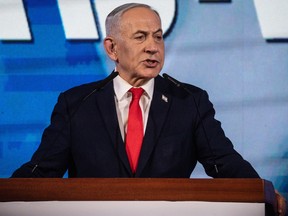
Bercovici writes that Israel’s much anticipated election results are anything but clear, with both Benjamin Netanyahu and unofficial leader of the change bloc, Yashar! leader Gadi Eizenkot each claiming to have emerged as the front-runner on Wednesday. Netanyahu’s Likud party has more seats than Eizenkot’s, but both have an unclear path to a majority coalition government. “It is difficult to see a resounding mandate for anyone in this outcome. Everything will turn on the final tally and subsequent negotiations,” Bercovici concludes.

The relationship between Quebec Premier Paul St-Pierre Plamondon and Prime Minister Mark Carney — who have yet to meet in person — quickly soured this week after it was revealed that the federal government turned down the premier’s request to directly address attendees at the Canada-European Union summit in Montreal on Thursday. Quebec’s desire to have strong and autonomist international action in all areas falling within its territory has long been challenged by Ottawa, which considers international relations under its sole jurisdiction.

When a joint Canada-European Union statement is issued at their summit kicking off in Montreal on Thursday, there’ll be no mention of “associate membership,” but instead it will call for “ever closer associations” between Canada and the 27-member bloc, “short of full membership itself,” according to reports. “The main concern is that this is unknown terminology, it might bring up legal uncertainty and expectations from other third countries,” one diplomat said.

“We are now $45,744 away from our $1 million goal,” GoFundMe page organizer Derek Kreindler wrote on the page on Tuesday. “Thousands of people from across Canada and beyond have chosen to honour (police officer Jeff Smith) who suffered catastrophic injuries while protecting approximately 25 Jewish worshippers on Kol Nidre. That response has been extraordinary.”

The despised Indian Act, which sets out the basic legal frameworks under which First Nations exist in Canada, is the rare piece of federal legislation that is despised with equal fervour by both conservatives and progressives, Tristin Hopper argues. The only reason it still exists is because of disagreement over what comes next, he writes. “On the one extreme, Indigenous rights and privileges are phased out entirely.” Or, “on the other extreme, the Indian Act is scrapped in favour of a latticework of new sovereignty and self-governance rights that could have massive unintended consequences.”
Join the Conversation
This website uses cookies to personalize your content (including ads), and allows us to analyze our traffic. Read more about cookies here. By continuing to use our site, you agree to our Terms of Use and Privacy Policy.
KioskNews shows a cleaned-up reading view extracted from the publisher’s page — the original always lives on their site, not ours.