Liberman's party rules out Netanyahu unity government as Eisenkot faces growing coalition pressure
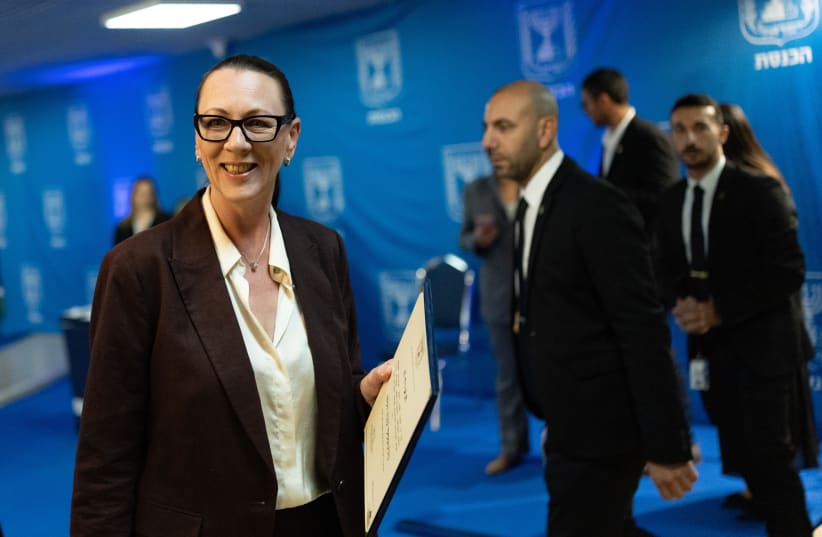
Yisrael Beytenu MK Yulia Malinovsky reaffirmed her party's refusal to join a unity government with Prime Minister Benjamin Netanyahu and Likud, in a radio interview shared by N12 News on X/Twitter on Sunday.
"We will not be in such a government," Malinovsky said. "I see no way to negotiate with a man who is unwilling to take responsibility for the October 7 massacre, who still has a Qatari agent in his office and who, just a moment ago, incited the people against one another."
Yisrael Beytenu chairman Avigdor Liberman, Democrats chairman Yair Golan, and B'Yachad chairman Naftali Bennett, all members of the Eisenkot-led bloc, have pledged to replace Netanyahu and have ruled out serving in a unity government under his leadership.
Malinovsky's remarks came as Likud and Yashar representatives met on Sunday afternoon for coalition talks aimed at exploring the possibility of forming a unity government.
Following the meeting, Likud and Yashar issued a joint statement describing the talks, which also included representatives of B'Yachad, as "businesslike," adding that "it was agreed that dialogue between the parties would continue."
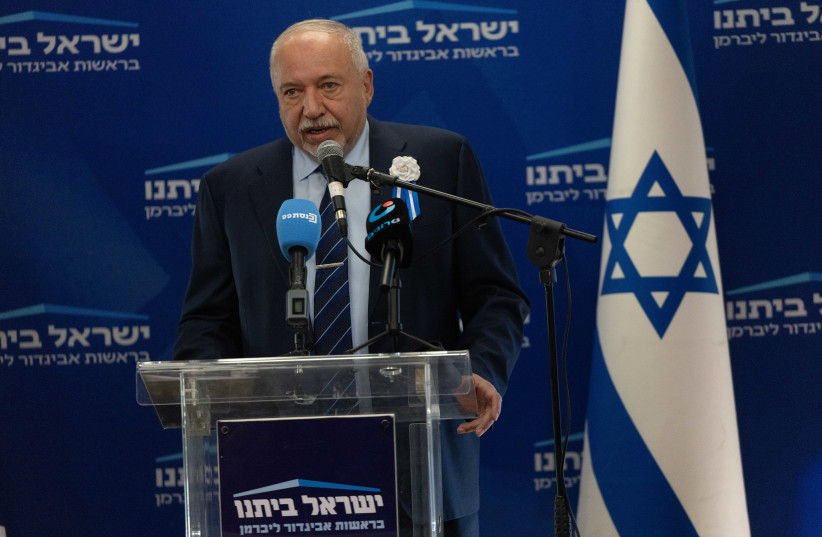
Liberman's coalition conditions complicate Eisenkot's efforts
Liberman's position adds another challenge to Yashar chairman Gadi Eisenkot's efforts to form a government.
Beyond refusing to join Netanyahu, Liberman has also ruled out sitting in a government with Arab parties, an option supported by Golan and the Democrats. He has also rejected forming a minority government that would depend on Arab parties abstaining from votes.
At the same time, Liberman has shown greater flexibility on the haredi draft legislation, another major obstacle to forming a coalition.
During the election campaign, Liberman strongly advocated passing legislation requiring ultra-Orthodox men to serve in the IDF. He has since signaled a willingness to compromise on the issue to facilitate the formation of a government.
On November 8, Liberman defended his willingness to negotiate with haredi parties over military conscription, arguing that reaching political agreements did not mean abandoning his principles.
His shift comes as the Eisenkot-led bloc has opened the door to negotiations with the haredi parties, despite previously ruling out cooperation with them.
The talks offer Eisenkot another potential route to securing a governing majority following the October 27 elections, which left neither his bloc nor Netanyahu's camp with a clear path to forming a coalition.
Eisenkot faces mounting pressure as coalition deadline approaches
Eisenkot entered his second week holding the presidential mandate to form a government on Sunday, with negotiations over a potential coalition still facing significant obstacles.
In recent days, he has intensified efforts to persuade United Torah Judaism (UTJ) to join his prospective government. However, informal negotiations remain far from an agreement, primarily because of disagreements over military conscription and the guarantees demanded by the haredi parties.
One of the central issues is how to ensure that commitments made to the haredi parties would be honored after a government is sworn in, particularly if proposed legislation encounters legal or political obstacles.
Meanwhile, members of the Eisenkot-led bloc are concerned that concessions offered to the haredi parties could become public, generating backlash among voters who supported the bloc's commitment to changing the existing conscription arrangements.
There are also fears that the haredi parties could use the negotiations to secure more favorable terms before ultimately returning to Netanyahu's camp, leaving Eisenkot politically exposed without securing their support.
The negotiations are taking place under a tight deadline. Eisenkot has approximately three weeks remaining to form a government, with the option of requesting an additional 14-day extension from President Isaac Herzog.
Within the Eisenkot-led bloc, concerns are growing that prolonged negotiations could give Netanyahu an opportunity to undermine the coalition-building effort and potentially force another election.
Shir Perets, Keshet Neev, and Anna Barsky contributed to this report.
KioskNews shows a cleaned-up reading view extracted from the publisher’s page — the original always lives on their site, not ours.