China holds 80% of world’s underwater data centre patents as computing energy demands grow
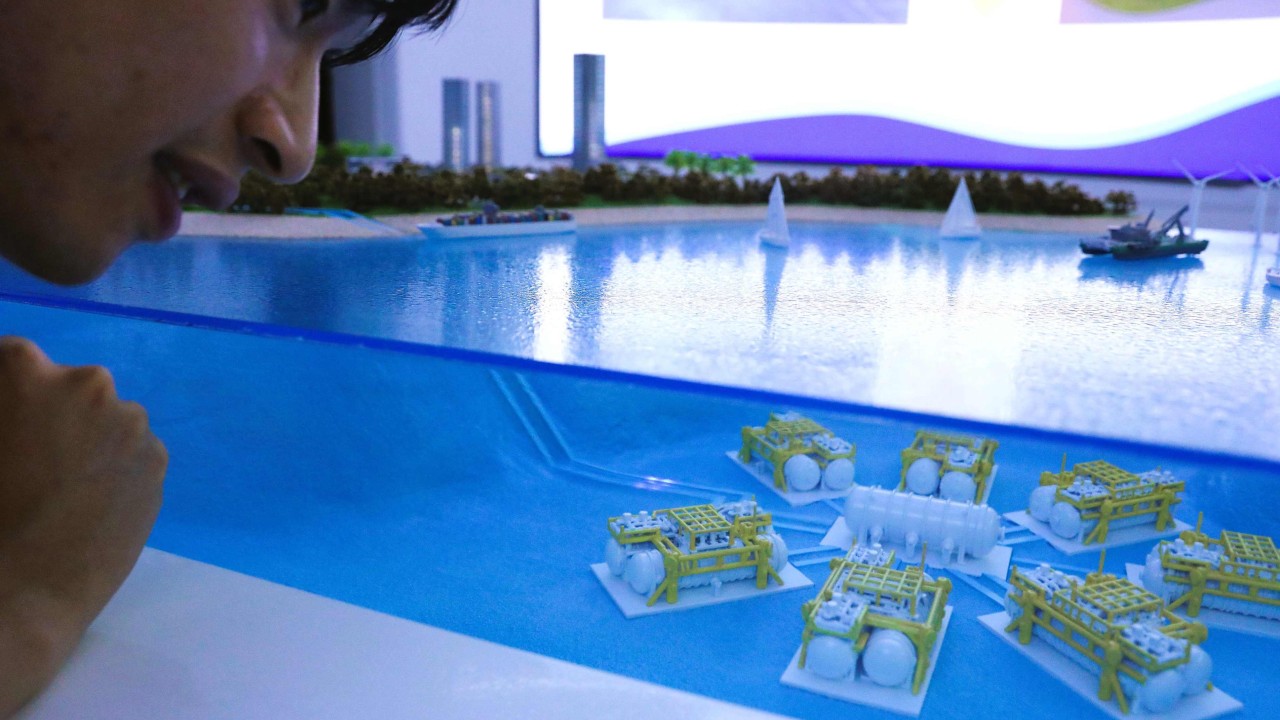
China owns 80 per cent of the world’s underwater data centre patents, giving it a decisive lead in critical technologies, according to a two-decade study of global patents in the field.
The findings reveal a shift away from the West in the race to build future green computing infrastructure, as China transforms from an early follower into the dominant force in subsea data technologies.
“China holds competitive edges in engineering-oriented technologies such as modular construction and in situ maintenance, while overseas research and development focuses more on eco-friendly design and cross-regional networking,” the Chinese researchers wrote.
China’s surge comes at a critical time as the world grapples with growing energy demands for data centres and artificial intelligence.
Underwater data centres use seawater as a natural cold source to dissipate heat. By comparison, land-based data centres consume up to 3 per cent of total global electricity, with air conditioning alone accounting for a third of that power.
Subsea facilities slash energy bills and water needed for cooling, while avoiding the use of scarce land, offering a sustainable way to power energy-hungry applications.
Two researchers – from the Patent Examination Cooperation Centre and the National Marine Data and Information Service, both in Tianjin – analysed 168 patents related to underwater data centres between 2006 and 2026 to map out how the field had evolved. Their paper was published in the Chinese-language Journal of Marine Information Technology and Application earlier this month.
Before 2014, early development was led mostly by marine engineering firms and research institutes in the United States, Norway and Canada that focused on building pressure-proof capsules and underwater foundations, according to the paper. At the time, there were fewer than three patent applications per year.
Between 2015 and 2020, patent applications grew, focusing on optimising the capsule structure, developing thermal management solutions and setting up power supply systems. The technical objective shifted from testing feasibility to reliability, to confirm the technical viability of long-term underwater operations.
02:59
The global DNA database fuelling Malaysia’s green turtle comeback
For example, the American tech giant Microsoft said servers deployed off the coast of Scotland through its Project Natick for two years from 2018 “showed a failure rate one-eighth that of the land-based control group”.
Since 2021, China has emerged as a growth engine of the sector, accounting for around 80 per cent of global patents out of the 168 analysed in the study.
“Technological innovation has shifted from isolated validation towards system integration and engineering implementation,” the researchers wrote.
“Technologies including modular clustering, in situ maintenance, multi-energy complementarity and intelligent operations and maintenance help reduce costs, improve quality and enhance efficiency, supporting large-scale commercial operations.”
South Korea comes a distant second with 17 patents, focusing mainly on data pod deployment and structural equipment development.
The US has eight patents – in system architecture, power supply and local data processing – while European countries including Norway and Britain hold six patents in subsea production control, power supply and automated operations and maintenance.
“Driven by the digital economy and carbon reduction goals, China’s underwater data centre sector … will gradually expand from nearshore into the deep sea and transition from isolated computing facilities into nodes for the marine economy,” the researchers wrote.
They said future research could look into how to integrate offshore wind power with underwater data centres and evaluate their long-term ecological impacts.
To view the research paper, click here. If outside China, you can view the paper here.
KioskNews shows a cleaned-up reading view extracted from the publisher’s page — the original always lives on their site, not ours.