One 1960s Star Trek Episode Made Spock Nasty For No Reason

Craig began contributing to Screen Rant in 2016 and has been ranting ever since, mostly to himself in a darkened room. After previously writing for various outlets, Craig's focus turned to TV and film, where a steady upbringing of science fiction and comic books finally became useful. Craig has previously been published by sites such as Den of Geek.
Craig is an approved critic on Rotten Tomatoes.
LinkedIn: https://www.linkedin.com/in/craig-elvy-5b31a3381/
Sign in to your ScreenRant account
The Star Trek universe is full of nasty little things that can make a person act out of character. Pass through the galactic barrier and develop a god complex. Touch some red stuff, and your crew mates are suddenly waving swords around shirtless. It's just another day in Starfleet. Sometimes, however, the only explanation for a character acting strangely is inconsistent writing, as is the case with Spock in Star Trek: The Original Series season 3's "That Which Survives."
Spock is, of course, very well known for his dedication to logic and empirical proof. He rejects emotional judgments in favor of scientific deductions, and regularly finds himself confused by the subjective whims of human colleagues. Crucially, though, Spock is not cruel or mocking when expressing his Vulcan perspective. Leonard Nimoy's character may not fully understand why humans act the way they do, but he at least acknowledges and respects the difference between species.
If McCoy suggests a course of action driven by the heart, Spock offers one driven by the head. If Kirk does something silly, Spock responds with "fascinating," and adds another mental entry to his ongoing study into the chaotic nature of humankind.
That's not what happens in "That Which Survives."
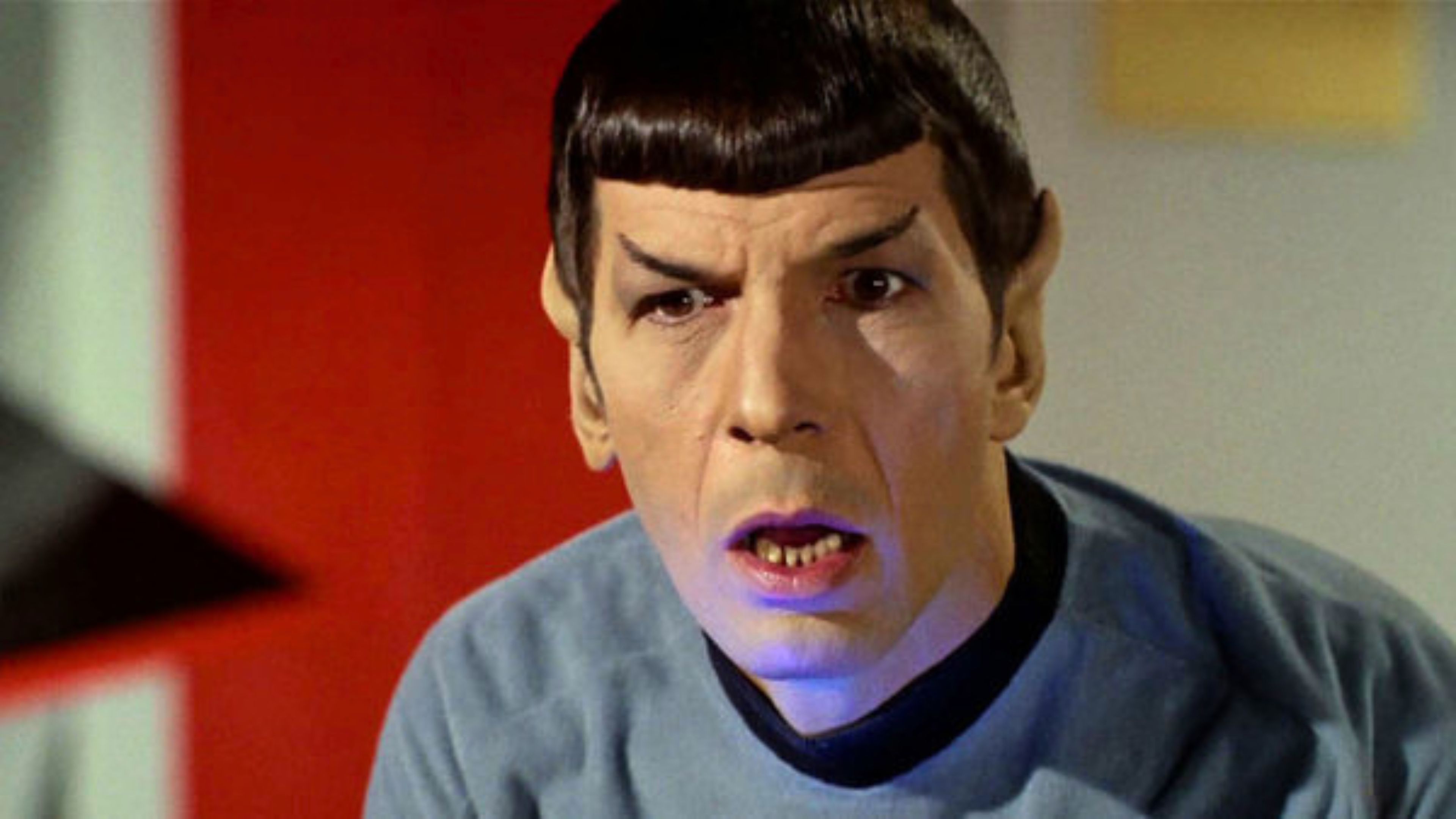
This particular episode sees Spock berate colleagues for using metaphors. He aggressively corrects them when they offer any degree of approximate measurement. Anyone who dares offer an opinion gets shot down with a verbal bullet of cold logic. And it happens in virtually every scene Spock's present for. Making other Enterprise officers feel small becomes his entire character.
While most Star Trek episodes play the 'Spock gets super-logical' card at some point, it's far more intense in "That Which Survives," almost like the Vulcan is expecting every other crew member to think the way he does, and he's surprised when they're incapable of doing so. Anyone would think this is Spock's first time working alongside so many Earthlings.
Why Spock Acts So Differently In Star Trek's "That Which Survives"

One might think that Spock's change in attitude is due to spending most of "That Which Survives" in charge of the Enterprise, with Captain Kirk stranded on an alien planet. But there are plenty of episodes where Spock "has the Conn," and in none of them does he transform into the boss from hell.
More to the point, Spock's attitude in the episode is... highly illogical.
As the Vulcan himself should know, expecting humans to think like his own people is a futile endeavor. All he's doing as stand-in captain is lowering morale on the bridge. Uhura and Lt. Rahda (Sulu's temporary replacement) appear to shrink in the face of Spock's withering criticism, while Scotty, in the middle of performing a delicate repair that could blow up the entire ship, is pressured by Spock's constant countdown and calls his superior officer a "cuckoo clock" through grimaced teeth.
Ultimately, going around the bridge and making the people you're expecting to save the day feel useless isn't very productive.
Spock may enjoy some lively disagreements with Dr. McCoy during his Enterprise career, but "That Which Survives" marks a rare occasion where Nimoy's character comes across as genuinely unlikable to other characters.
One explanation is the teleplay being written by John Meredyth Lucas. A producer on Star Trek's second season, Lucas is only credited as a writer on a handful of other episodes. Of those, the only one that features Spock heavily is "Patterns of Force," which couldn't be more different in its setup to "That Which Survives." Perhaps Lucas simply viewed Spock's command style differently compared to the rest of the show.
Rather than attributing Spock's odd attitude to the episode's writer, another possible explanation is that the inconsistency came about due to Star Trek's ongoing struggle with quality in season 3. Kirk's Enterprise found itself limping toward cancellation at this point, so expert characterization might simply be too much to ask for.
- Release Date
- 1966 - 1969-00-00
- Network
- NBC
- Showrunner
- Gene Roddenberry
- Directors
- Marc Daniels, Joseph Pevney, Ralph Senensky, Vincent McEveety, Herb Wallerstein, Jud Taylor, Marvin J. Chomsky, David Alexander, Gerd Oswald, Herschel Daugherty, James Goldstone, Robert Butler, Anton Leader, Gene Nelson, Harvey Hart, Herbert Kenwith, James Komack, John Erman, John Newland, Joseph Sargent, Lawrence Dobkin, Leo Penn, Michael O'Herlihy, Murray Golden
- Writers
- D.C. Fontana, Jerome Bixby, Arthur Heinemann, David Gerrold, Jerry Sohl, Oliver Crawford, Robert Bloch, David P. Harmon, Don Ingalls, Paul Schneider, Shimon Wincelberg, Steven W. Carabatsos, Theodore Sturgeon, Jean Lisette Aroeste, Art Wallace, Adrian Spies, Barry Trivers, Don Mankiewicz, Edward J. Lakso, Fredric Brown, George Clayton Johnson, George F. Slavin, Gilbert Ralston, Harlan Ellison
KioskNews shows a cleaned-up reading view extracted from the publisher’s page — the original always lives on their site, not ours.