An even more unpredictable Donald Trump is the world economy’s worst nightmare
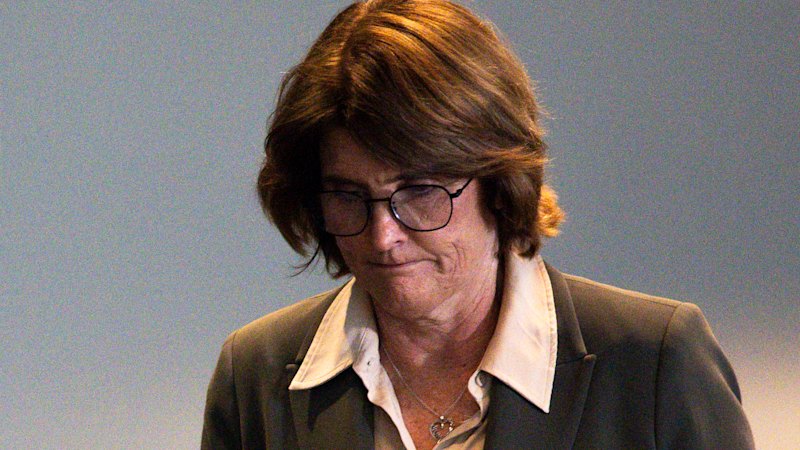
But she was snark-adjacent on Tuesday afternoon during her press conference in which she explained the bank’s decision to whack the economy with its fifth rate rise this year.
The first case of Bullock near-snark appeared when she was asked about a particular economist who had argued the bank needed to push the official cash rate beyond 6 per cent while other experts had warned the RBA was likely to push the country into recession.
“One thing they have in common is they are entirely certain about what needs to be done,” she said of the critics. “I am not and I admit that.”
It was as polite a put-down of the chattering economic class as you’ll ever see from Bullock.
At the end of her hour-long press conference, Bullock was asked whether the bank had erred last year by cutting interest rates. The bank sliced the cash rate to 3.6 per cent in three separate moves taken in February, May and August.
For those with short memories, the May cut was the first time the RBA had met after President Donald Trump announced his liberation day tariffs.
The bank’s preliminary analysis suggested an ongoing trade war would drive the economy into a recession and lift the jobless rate by almost two full percentage points. So concerned was the bank about Trump’s plans, it discussed whether to cut rates by half a percentage point.
As Bullock noted in her May 20 press conference last year, the trade situation was not only uncertain, “it’s actually unpredictable”.
So, pressed this week whether it was a mistake to cut rates last year, she conceded it might be true – but that would require a crystal ball more likely to be found with Professor Trelawney in the world of Harry Potter.
“I wouldn’t say it was a mistake. I would say what happened was, with hindsight, if we saw what was coming, if we saw those Trump tariffs will not do anything, don’t worry about them. If we saw that consumption was going to do better than we thought … [would] we have lowered?” she said.
All of which brings us to today and the economic fallout from both the RBA’s recent rate hike and what emerges from the US midterm elections.
First, the rate hike. The bank has delivered five rate increases this year. On a $600,000 mortgage, that equates to about $500 a month.
The general rule of thumb in the RBA is that it takes 12 months or so for a change in the cash rate to fully wash through the economy. That means we’re nine months of the way through the fallout from that February rate hike. We’re just six weeks into the impact from the September rate rise.
So there’s a whole lot of monetary policy tightening yet to really hit the economy.
It was one of the reasons three members of the Reserve Bank’s interest rate setting committee voted against a rate hike this week. They’re worried the cumulative impact of those past rate hikes has yet to work its way into Australia’s economic nooks and crannies.
Amplifying that worry, which permeates most of the RBA, is what happens after the US midterms and the devastating rebuff meted out by American voters to Trump.
To go back to Bullock, unpredictability is the worst of worlds for a central bank.
One issue, which has been a growing problem around the world, is the increase in interest rates on government debt. America, with $US40 trillion in debt and a president who doesn’t care about budget deficits, is central to this problem.
A Democrat-controlled House and Senate may actually block Trump-inspired spending, reducing the deficit and taking pressure off the global bond market.
Of course, that’s predicated on some of the newly elected leftist members of the Democrats not coming up with their own spending plans. Thankfully, those could be offset by Trump who has vowed to be “Mr Veto” if results did not go his way.
Then there’s the war against Iran. Unlike the liberation day tariffs, the war has had an enduring inflationary effect on the global economy and forced all central banks to tighten monetary policy.
Trump’s next move in the Middle East could be a swift resolution or utter catastrophe.
We can all hope for a resolution. Perhaps Trump will simply declare victory and move on like Pyrrhus of Epirus.
Oil and gas prices would fall, but it would take years for the inflation pressures created by the war to fully work their way out of the economy.
The alternative – Trump restarting attacks on Iran and across the Middle East – is almost too unpalatable to consider.
The flurry of subpoenas that will start flowing from Capitol Hill to the White House (and government departments across Washington) is obviously a political issue. But they’re an economic one as the inquiries and investigations unleashed by the Democrats on Trump’s administration could clog up the president’s decision-making process.
Then there are the tech bros who have been given the green light on a data centre building spree which is transforming not only America but the world. It is one of the factors behind this week’s lift in Australian interest rates as tech giants engage in a boom that is competing for limited resources against other parts of the economy.
The midterms, however, confirmed that many communities are pushing back hard against unfettered and unplanned data centre construction.
A Democrat Congress, with support from some suburban Republicans, on top of governors responding to their constituencies, could slow the AI rollout.
A slowdown in data centre construction may have long-term implications for productivity, but it could also ease inflation pressures flowing from the sector.
Ultimately, the fallout on the global economy depends largely on how the occupant of the White House responds to the choices made by millions of Americans.
And that guy does do snark at a level that would make Michele Bullock blush.
The Opinion newsletter is a weekly wrap of views that will challenge, champion and inform your own. Sign up here.
KioskNews shows a cleaned-up reading view extracted from the publisher’s page — the original always lives on their site, not ours.