ENTRENCHED CULTURE OP-ED: Corruption by any other name — organised crime has replaced State Capture
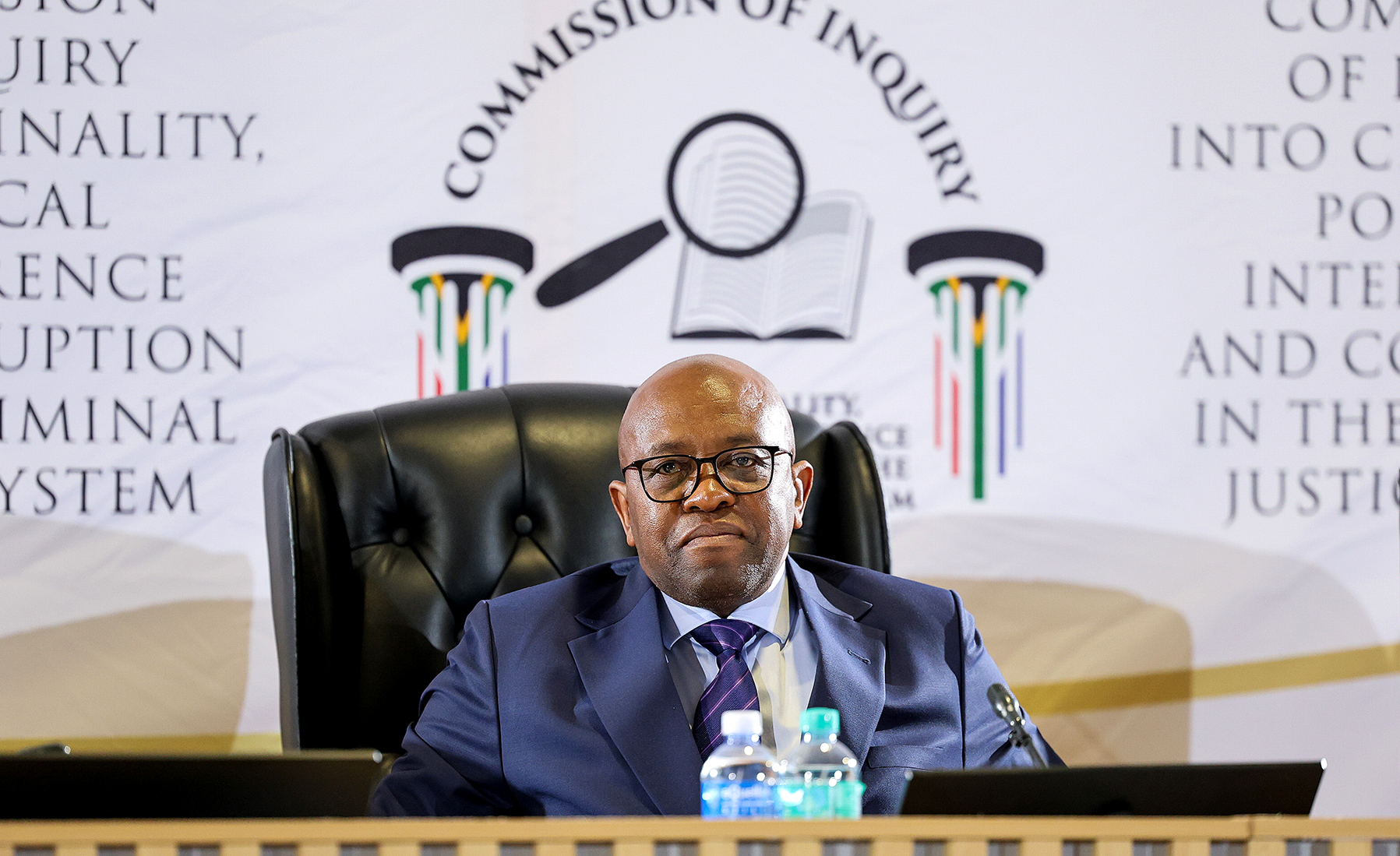
The Madlanga Commission is shifting how we talk about grand corruption in South Africa. Events uncovered at the commission are framed clearly as being consistent with organised crime, representing a decisive change from the language of the earlier Zondo Commission, where corruption was predominantly regarded as part of a political project of State Capture.
The significance of a phenomenon can be determined by how it is framed. The framing of events can also shape the nature of the responses to those events. Framing the activities of grand corruption by former President Jacob Zuma and the Gupta brothers as State Capture had immense utility at the time. The sheer evocativeness of the concept spurred unity in civil society, transcending racial and class differences. To take a stand against State Capture seemed more important than opposing mere corruption.
In the same breath, however, central to the discussions and analysis of State Capture was the insistence that Zuma, the Guptas and their associates were not engaged in simple criminality but rather politics – a claim that while true, nonetheless veers towards being trite.
Politics invariably connects to grand corruption. Corrupt syndicates that covertly fund political parties in competitive electoral environments are features of politics the world over. Enunciating that truism, however, potentially blunted any fervour for a deep reformation to oppose corruption. Indeed, Zuma was successfully ousted, but institutional change remained elusive. The Madlanga Commission, by contrast, brings into sharp relief the criminality of corrupt practices, thus presenting an opportunity for a reset.
Both the Zondo and Madlanga commissions exposed how networks of senior politicians, bureaucrats, and law enforcement, security and intelligence officials colluded for corrupt ends. Crucially, these alliances extended beyond state actors to include figures from organised crime and the underworld.
Procurement fraud and tender-rigging have featured heavily in the Madlanga Commission, phenomena all too familiar since the revelations from the Zondo Commission – but the Madlanga Commission has also specifically focused on pervasive and overwhelming corruption within law enforcement structures. We encounter senior officials in law enforcement and the security apparatus, sharing close, personal ties with key criminal figures, suspected drug traffickers and known tobacco smugglers – who allegedly orchestrated, inter alia, cocaine heists from massive drug busts, kidnappings, torture and extortion. It paints a grim and violent picture, a prism through which these matters appear clearly as crime and the protagonists as criminal.
Discussions around the Zondo Commission were not as lucid. Recall the Regiments-Trillian scandal exposed during the Zuma-Gupta reign. Working with reputed management consulting firm McKinsey, which essentially convinced Transnet to acquire new freight locomotives, and then advised on their procurement, Trillian ensured the procurement ballooned by R16-billion above the original costing, which formed the basis of kickbacks. Sophisticated, complex methods were employed to shift and launder funds across regions and institutions, involving successful businesspeople operating in the respected and coveted legal and finance sectors. This latter fact perhaps obscured the perception of the State Capture protagonists as criminals.
Lenient light
Certain legal transgressions – white-collar crime, for example – can be seen in a lenient light in society. There is an unacknowledged scale concerning the relationship between criminality and status, where the higher the value of theft, the less criminal the perception of the perpetrator. Consider stealing billions in value, capturing entire industries or extracting vital resources from desperate communities: perpetrators might experience moral condemnation from some quarters and some reputational damage.
Such acts, however, are often not regarded as crimes at all, perhaps because they don’t usually involve forms of direct physical violence or because of the elite class position of the perpetrators.
The Zuma-Gupta network utilised a deceptive public-relations campaign underpinned by the trope Radical Economic Transformation (RET), in an attempt to legitimise their activities. While it animated an ideological current flowing through the ANC at the time, it is difficult to imagine the corrupt Zuma-Gupta alliance congealed behind it. The slogan claimed to express a political reality, an ideology responding to material conditions and characterised by the lack of racial transformation of the commanding heights of the economy.
But, surely, the likes of former Trillian director Eric Wood and Ajay Gupta and his brothers were not brought together by a genuine commitment to the racial equity of South Africa’s economy. There may have been sincere believers, but it seems more plausible that the network simply rode the RET wave: a smoke-screen rather than an internal motivation. Claiming malfeasance was driven by an ideological disposition offered a political shroud to pure criminality.
The liberal tradition understands corruption as an aberration. It rightly believes it must be confronted and eradicated, but tends to overemphasise individual moral failure. Critical left traditions see corruption as intrinsic to the structure of modern economic relations, thus presenting the question of politics. However, this critical posture ought not to engender a resignation that corruption is a normal feature of the political economy.
No ideology required
The structural force that drives corrupt behaviour in a constrained economic environment like ours does not necessarily require an ideological or political basis. As evidenced in the Madlanga Commission, where ambitious people occupying powerful positions have the means, they will seek out like-minded associates and opportunities to maximise benefits for themselves and each other. An ideological explanation here is a distraction.
By framing corruption as organised crime, the Madlanga Commission presents a timeous opportunity to deeply shift society’s perceptions of malfeasance and criminality. Politics has a neutral or ambiguous character; it can be healthily grounded in democratic practice or negative and reactionary. Crime like corruption is inherently negative. The link between crime and corruption must therefore be highlighted to galvanise righteous public indignation against the entrenched culture of criminal corruption.
The Madlanga Commission must illuminate the shadowy criminal practices of corrupt syndicates operating at the highest levels of our society. But it must not stop there. If the Madlanga Commission is going to have a lasting impact, beyond the clarity it has already brought to corruption discourse, it must perform as a catalyst towards a process of institutional reform of law enforcement and the state more broadly. Most importantly, corruption of any form must not be given any legitimacy in our public sphere by associating it with extant political currents permeating the body politic. DM
Waseem Holland is a researcher at the Public Affairs Research Institute.
KioskNews shows a cleaned-up reading view extracted from the publisher’s page — the original always lives on their site, not ours.