Russian satellite’s close approach to European spacecraft highlights orbital risks
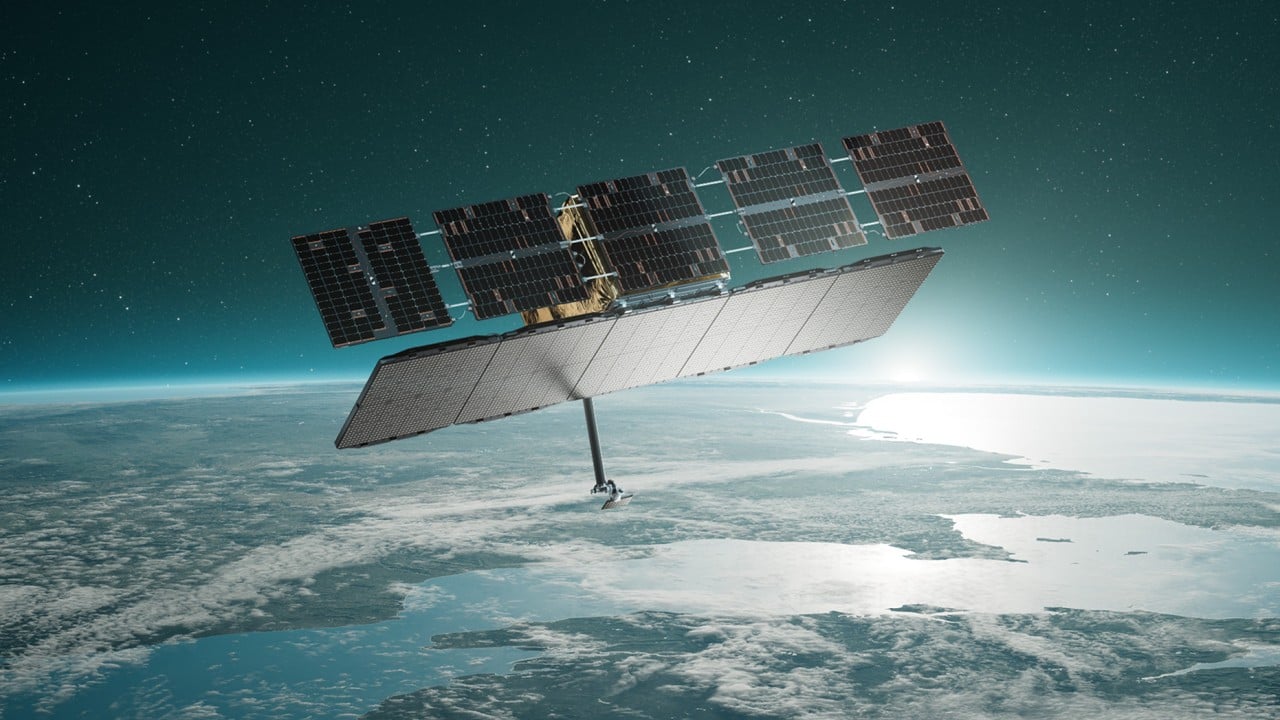
A Russian satellite moved within just 100 metres of a European commercial spacecraft that supports Ukraine’s military at the weekend, orbital tracking data showed, raising concerns about Moscow’s activities in space.
Russia launched the Cosmos-2612 military satellite into low Earth orbit in April.
It began changing course late September and eventually moved into the same orbit as ICEYE-X36, a satellite operated by Finland’s ICEYE under contract with the United States.
The two spacecraft came within 100 metres of each other on October 18, according to orbital tracking data analysed by Agence France-Presse.
“There is no reason it would have needed to manoeuvre the way it did... and into such close proximity to the ICEYE satellite for a benign reason,” Clayton Swope, a space security specialist at the Centre for Strategic and International Studies, said.
The incident has drawn attention from space experts, who say such close approaches can be used to inspect, monitor or interfere with other satellites.
While Russian satellites have passed near foreign spacecraft before, experts said several factors of this case stood out.
“It was a combination of factors that made this event so concerning”, Swope said.
The Russian satellite not only approached the Finnish spacecraft but deliberately adjusted its orbit to closely match it, he explained.
ICEYE’s satellite constellation also provides imagery and space-tracking data that supports Ukraine in its war with Russia.
An ICEYE spokesperson said the company was aware of the incident and “tracking it closely”.
The US Space Force accused Russia of unusually “fuel-intensive” manoeuvres in May to move four military satellites close to a Western commercial satellite used by Ukraine.
ICEYE’s satellites use radar technology that can capture images of the Earth’s surface at night and through cloud cover, making them particularly valuable for military intelligence.
The satellite approached by Cosmos-2612 uses the same tech as another ICEYE spacecraft involved in the May incident.
The US Space Force says Russia has launched several satellites in recent years to test technologies that could be used to intercept or disrupt other spacecraft.
Swope stressed, however, it was impossible to confirm whether Cosmos-2612 carried a weapon.
In a published note, he said the incident should be viewed in the broader context of Russia’s efforts to challenge Western space capabilities.
Since the start of its Ukraine invasion, Moscow has argued that Western commercial satellites supporting Kyiv are indirectly taking part in the conflict.
A Russian foreign ministry official in 2022 warned at the UN that such “quasi-civilian infrastructure” could become a legitimate target for retaliation.
By Monday morning, Cosmos-2612 was moving away from ICEYE-X36 and the two satellites were again separated by several kilometres.
Analysts at the US-based ISR Institute last week predicted that another close approach involving Russian satellites and an ICEYE spacecraft could take place in the coming weeks.
KioskNews shows a cleaned-up reading view extracted from the publisher’s page — the original always lives on their site, not ours.