AutoZone and O'Reilly better positioned to capitalize on do-it-for-me trends—BofA Securities
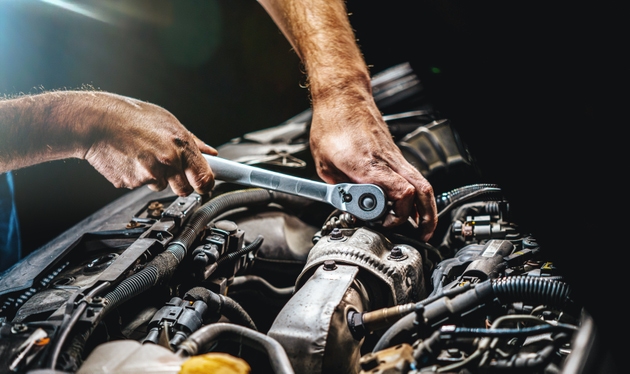
audioundwerbung/iStock via Getty Images
The auto parts sector has traditionally benefited from strong do-it-yourself (DIY) demand among vehicle owners. However, years of inflation, persistently high gas prices that have weighed on miles driven, and increasingly complex vehicle repairs have helped shift demand toward do-it-for-me (DIFM) services. DIFM sales have now surpassed DIY sales at the three major auto parts retailers, though only two appear well positioned to capitalize on the growing trend toward professional auto repair.
For this reason, BofA Securities analyst Christopher Nardone advises clients to Buy Auto Zone (AZO) and O’Reilly (ORLY), but to remain cautious on Advance Auto Parts (AAP), assigning the stock an Underperform rating.
“The DIFM segment has become the primary growth engine for AZO, AAP, and ORLY, consistently outpacing the DIY channel given favorable tailwinds and strategic investments,” Nardone writes.
However, as consumers shift toward DIFM services, AutoZone (AZO) and O’Reilly Automotive (ORLY) appear better positioned to benefit. Their strong balance sheets allow them greater flexibility to invest cash flow in capital expenditures, expand supply chain capabilities, improve parts availability, and capture market share among commercial customers.
“We think double-digit commercial growth is sustainable in the near-term for both ORLY and AZO,” Nardone notes.
On the other hand, Advance Auto Parts (AAP) is considered more strategically vulnerable to softness in the DIY segment.
“While AAP has made meaningful progress simplifying its operations and improving its supply chain, the timing and magnitude of the next leg of productivity benefits remain uncertain,” Nardone says, adding that sales growth will remain muted, particularly in DIY, given continued pressure on the low-end consumer.
Nardone acknowledges the steps AAP had made to improve the business, which include closing more than 500 underperforming stores, consolidating its distribution network, and expanding its assortment and “market-hub” footprint.
This leaves 7% adjusted operating margin as the next goalpost, a target management has pushed back given slower-than-expected top-line growth and the unpredictable timing and impact of its growth initiatives.
Therefore, Nardone targets a much more modest 4.3% adjusted operating margin in 2027 given muted sales growth, lapping tariff refunds, and broader cost inflation will slow the pace of margin expansion.
At the same time, O’Reilly (ORLY) enjoys a more balanced professional/DIY mix, which will prove more advantageous in an inflationary environment. He forecasts 4-5% total comparable sales growth in the second half of next year, a target that could prove conservative as like-for-like inflation expectations across the industry accelerate.
O’Reilly’s (ORLY) supply chain is a “key competitive advantage given the density, strategic positioning, and capital intensity of its distribution network, which is nearly impossible for competitors to replicate.”
For AutoZone (AZO) investments in distribution, stores, and technology are beginning to pay off and will accelerate share gains in the coming quarters. While AZO has only 5% market share in the commercial market, these investments to bolster the company’s supply chain infrastructure with more mega hubs should also position AZO to outpace growth in the market, Nardone says.
“We forecast 10-12% commercial sales growth over the next three years, and as commercial becomes a bigger portion of the business, AZO total revenue growth will accelerate.”
Speaking to growing EV/AV adoption, Nardone sees “potential long-term risks to the automotive aftermarket” as EVs require less routine maintenance and widespread AV adoption (though still in its early stages) will reduce accident frequency and repairs in certain categories.
BofA Securities assigns a Buy rating on AutoZone with a $3,800 price target based on a 20x forward P/E (2028), which assumes 19% upside from Friday’s closing price.
O’Reilly (ORLY) is also given a Buy rating with a $106 price target based on a 29x forward P/E (2027), which assumes 18% upside from Friday’s close.
Advance Auto Parts (AAP) is rated as Underperform with a $42 price target based on a 13x P/E multiple. This assumes 11% downside to Friday’s close.
KioskNews shows a cleaned-up reading view extracted from the publisher’s page — the original always lives on their site, not ours.