China’s historical climate records could be skewed by human bias, study finds
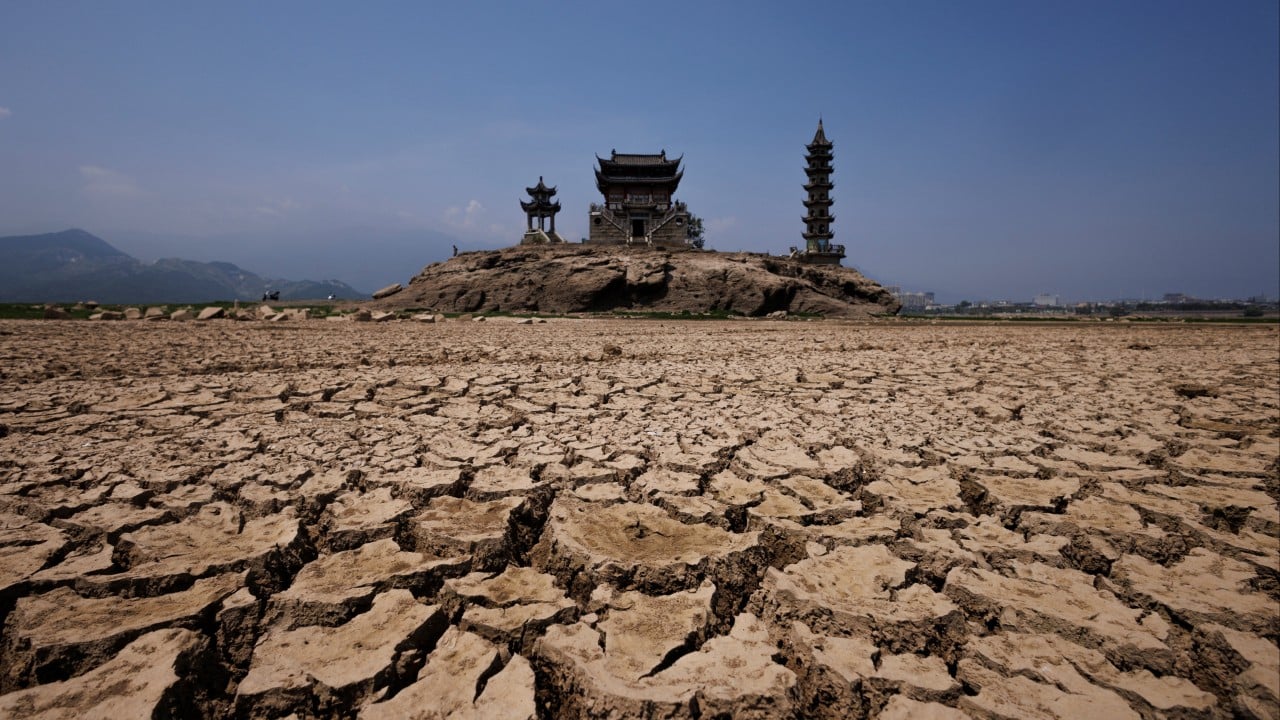
For centuries, scholars, officials and local chroniclers in China recorded the world around them, resulting in a collection of imperial histories, gazetteers, personal diaries and records that is seen as the most continuous in the world.
Among them are detailed accounts of the weather – including droughts, floods and harvest conditions – which researchers have used to try to reconstruct and understand the region’s climate history.
But a new study by researchers in China and Germany, based on data-driven evidence, suggests these historical records carry human bias that skewed how climate extremes were interpreted.
After comparing archival records from northern China’s Yellow River Basin over hundreds of years – from 1470 to 1900 – against natural records from tree rings, the team found that this distortion stems from a phenomenon called “generational amnesia”.
“We argue that historical archives carry a generational imprint of perceptual bias, in which the severity of climate extremes is judged against recent lived experience rather than long-term climate variability,” the team said in a paper published in the peer-reviewed journal Nature Communications on November 9.
“This has implications for bias-aware corrections for risk assessment, adaptation, and paleoclimate reconstruction.”
15:07
Children now experiencing ‘best weather of their lifetime’, warns Asia’s top climate scientist
Song Shuang, the study’s first author and a postdoctoral researcher at the Max Planck Institute of Geoanthropology, said biases in historical archives were already a “well-known phenomenon” to geographic historians.
This includes a human tendency to record abnormal events over normal ones. While this bias was known, Song said it had not been proven based on data.
“I don’t think that because of this paper, everyone needs to correct their interpretation of historical archives,” he said.
Instead, Song said it was good to be aware of the phenomenon, especially for those in the natural science field who may not be as familiar with it, which could lead to “misinterpreted phenomena”.
China’s vast historical archives have been widely used to reconstruct past climate conditions from the era before modern instruments were invented.
Among the prominent theories drawn in part from these written records is the theory that extreme weather during the Little Ice Age helped trigger the collapse of the Ming dynasty in 1644.
This theory is based on both natural climate proxies and archival data such as grain prices and famine reports.
According to the team’s paper, historical records serve as a key source of collective memory, which they define as the “storage, retrieval and forgetting of information by a society”.
“Collective memory shapes how societies respond to extreme climate events, yet long-term evidence on how the collective memory of such events becomes perceptually biased over time is lacking,” the team wrote.
Song said this research came about when he noticed a mismatch between historical archival data and natural paleoreconstructed data, or historical climate records reconstructed using natural proxies.
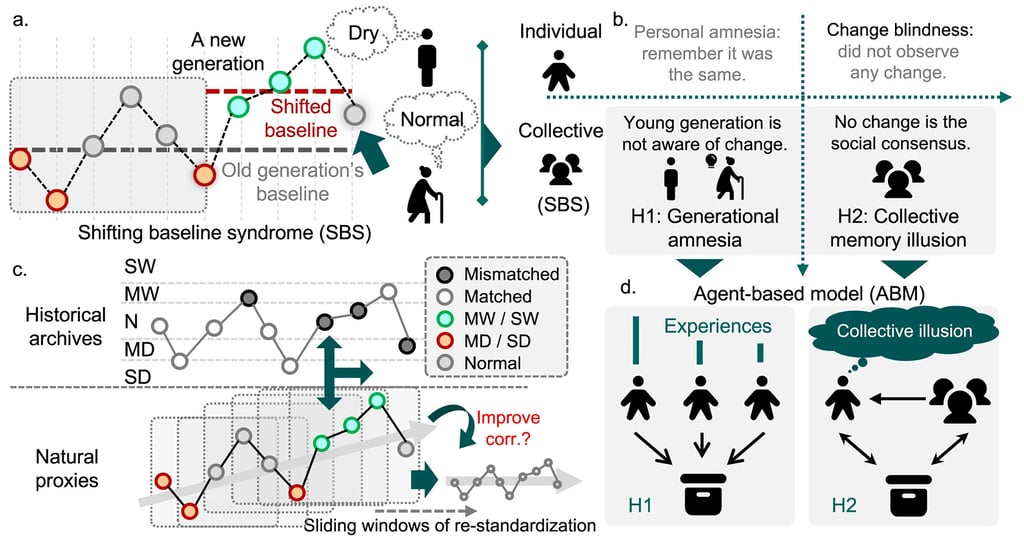
After speaking with people from different fields, he learned that environmental psychology had a similar phenomenon called shifting baseline syndrome.
This describes a psychological pattern in which people judge environmental conditions – and decide what counts as “normal” – against the climate they experienced earlier in life.
It explains why different generations living side by side can experience the same weather yet hold different views of whether the climate is normal or extreme.
“I found that this theory could explain this phenomenon very well, so I started to dive into this direction,” Song said.
Collective memory inconsistencies can stem from different sources, primarily generational amnesia or collective memory illusions.
The former happens when younger generations lack knowledge of environmental conditions in the past, while the latter happens when shared narratives distort how past conditions are remembered.
To investigate the mismatch and pinpoint the source of the memory inconsistencies, the team compared human-written accounts against natural climate records.
For the historical data, the researchers drew on records from the Atlas of Extreme Droughts and Floods over the Past Millennium, a compilation of information from official histories, local gazetteers and personal diaries.
To ensure the records were mostly complete the team focused on four centuries of archives, from 1470 to 1900, spanning both the Ming and Qing dynasties.
They then compared these written accounts against natural tree-ring hydroclimate reconstructions – a method that uses annual tree-ring growth to estimate how wet and dry the growing season was, offering a baseline free from human perception.
“We show that mismatches between archival and natural records of climatic extremes in the Yellow River Basin follow a systematic pattern: archival severity is over- or underestimated when a year is only slightly wetter or drier than comparable earlier years,” the team wrote.
The natural records aligned better with the historical ones when they were re-standardised against a moving 20- to 40-year window – averaging 33 years, roughly the human lifespan at the time – instead of the entire study period.
The team’s modelling suggests that generational amnesia is sufficient to explain these inconsistencies, while collective illusion did not reproduce the same mismatch.
They acknowledged that there were limitations to their work, including inherent uncertainties in tree-ring climate reconstructions and the potential influence of changing political and institutional contexts on how disasters are recorded.
While the impact of climate amnesia today was not covered in the study, Song said he believed that we continue to compare our perceptions of the climate to a biased baseline.
“We have more and more instrumental measurements of our climate,” he said. “But I don’t think the public has a good enough awareness of its changes.”
Song said many people still made comparisons about the weather like “it’s colder than last year” and “it’s hotter than my childhood”.
He said our baseline now could be driven by things like social media, as everyone can perceive their environment and compare it with discussions online. That could be creating a collective memory-based bias, he added.
“It means an individual perceives the environment by comparing it to a collective memory or collective opinion on this matter, rather than their personal experience.”
Song said modern instrumental measurement data offered a better way to correct biased perception of the climate.
In the period studied by Song for the paper, the information flow was slow, and that could be why generational amnesia rather than a collective memory illusion was relevant.
The researchers also said their findings marked a step towards integrating collective memory into coupled human-natural models to help manage long-term disaster risks.
“As climate change accelerates, understanding how each generation responds to a new normal or baseline will become increasingly important,” they wrote.
KioskNews shows a cleaned-up reading view extracted from the publisher’s page — the original always lives on their site, not ours.