The Jensen Huang saga could be the beginning of the end of the AI bubble – or just a boon for competitors
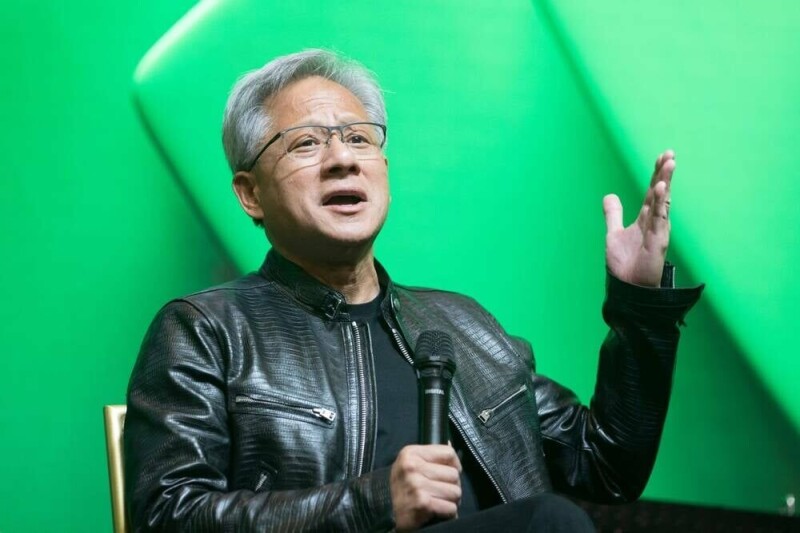
KETTLE Jensen Huang is out at Nvidia after a trio of affairs that include an alleged Chinese spy and two of his subordinates, turning the week into one that's shaken the tech sector.
You can listen to the latest episode of The Kettle right here on this page, as well as on Spotify, Apple Music, or YouTube. Those platforms also let you subscribe to The Kettle, so you are always notified when the latest episode goes live.
What will become of Nvidia now that its only leader in 33 years, and one whose vision shaped the company into one of the largest in the world, is gone? Who will take charge? Will other chipmakers take advantage of the chaos to surpass the Geforce maker? Will Jensen be the one to put a pin to the AI bubble?
Join host Brandon Vigliarolo, systems editor Tobias Mann, and reporter Dan Robinson to talk about the Jensen Huang affair(s) and how the misdeeds of one of AI's biggest names could reshape the entire industry on this week's episode.
A lightly edited transcript is included below:
REG AD
Brandon (00:01)
REG AD
Hey everyone and welcome to another episode of The Register’s Kettle podcast. I'm your host, Reg Reporter Brandon Vigliarolo, and the big news on the tech industry's mind this week is the ouster of Nvidia founder, CEO, president, and board member Jensen Huang over allegations that he not only had an affair with a suspected Chinese spy, but also at least two Nvidia employees who were his subordinates.
Nvidia's been shaped into one of the most valuable companies in the world over the past thirty-three years, and Huang has played a pivotal, if not the pivotal, role in that ascension, meaning his controversial departure is going to rock the industry, if not the greater world. With me to discuss this is our systems editor Tobias Mann and Reg reporter Dan Robinson. Thanks to you both for coming on.
Dan Robinson (00:42)
Hi.
Tobias Mann (00:43)
Good to be here.
Brandon (00:43)
Quite the week, huh? It seems like we went from Jensen’s just going to survive this spy kerfuffle to the board basically seeming to demand his resignation in the course of a few days, right? So Dan, bring us up to speed on the timeline here, what happened?
REG AD
Dan Robinson (01:01)
Well, it all happened over the last couple of weeks. That was when the story first surfaced, or it was first reported in the media, of an affair with an alleged Chinese spy who happened to work for this company in Singapore that bought a lot of Nvidia's products.
Brandon (01:30)
Right, company was Megaspeed, right? And her name's Alice Huang, no relation to Jensen, coincidence.
Dan Robinson (01:36)
So it's all happened fairly quickly, but like you say, at the start of this week, it all seemed like Jensen could weather the storm. We were discussing this in our editorial chat and we thought that basically there isn't really anybody who could replace him, or so we thought. He practically is Nvidia, and it's been his vision that's driven the company for so long. But then he came out and he confessed and said he was sorry to all the Nvidia employees. Then the second affair came to light and very quickly, on November 11th actually, Wednesday, he handed in his resignation and it was accepted by the board. So we got to hear about it yesterday [Thursday] when they announced it and it was filed with the SEC.
Brandon (03:03)
And since then a third affair has come out, right? The New York Times published a finding.
REG AD
Tobias Mann (03:06)
Just a few hours later, yeah.
Dan Robinson (03:08)
It seems so. Makes you wonder how many others may be about to come out in the following days.
Brandon (03:13)
We're not going to speculate, but my gosh, it seems like that leather jacket really made him irresistible. It’s kind of crazy, right? It seems like the internal affairs with Nvidia employees are the ones that sort of broke the board's back, right? The spy affair seemed like it was kind of like…. Apparently American authorities have basically said they've found no direct evidence to say she is a spy.
Dan Robinson (03:44)
Exactly.
Brandon (03:45)
It could just be that she runs a chip company too, or at least a company that is dealing in servers and datacenters. So she has a business reason beyond politics to potentially want to get involved with Jensen. What do you guys think? Was it the internal elements that finally kind of broke the camel's back here and forced the board to act?
Dan Robinson (04:08)
I think that was the final straw. I think quite possibly he could have weathered the storm as we were saying, if it had just been the one affair outside the business.
Brandon (04:20)
Outside the business, right? Because now like you were saying, Tobias, not only do you have potentially an international spy affair, but you also have an HR issue to contend with.
Tobias Mann (04:29)
Right. And I do think that the board could wave their hands around an alleged honeypot scenario. “He was targeted, this was a deliberate act, they preyed on his insecurity.”
Brandon (04:44)
“It wasn't as big as it's made out to be in the media.”
Tobias Mann (04:47)
They could make up any number of excuses that they wanted in order to wave their hands over it and keep him CEO or if their arms were twisted by US intelligence services they could have taken him out of an executive role and pushed him into a chairmanship. They had options.
And then you had the HR kerfuffle of him allegedly sleeping with another employee. And at that point now there's a pattern. I do sort of question once the news came out that he had an extramarital affair with an employee, whether or not that had influenced him being targeted by Megaspeed and or the Chinese intelligence service, assuming those allegations prove out.
Brandon (05:42)
We don't know the timeline on one or the other, do we?
Tobias Mann (05:46)
Right, no. And so it could be that the Chinese intelligence service became aware that this was an avenue that could be exploited and they took it. It's not lost on anybody that he spent most of the last year and a half lobbying to get his chips back into China. And largely successfully on the US side of things. It's been held up by Beijing, which kind of undermines that theory a little bit.
Brandon (06:22)
It seems like if she was a spy doing China's bidding and he managed to get the Trump administration to allow those older chips in, then Beijing wouldn't have been like, “No, screw you, we're making our own….”
Tobias Mann (06:34)
But there's the other allegation here, which was that Alice Huang and Megaspeed were smuggling GPUs. Their operation in Singapore was set up such to bring more modern GPUs into the market. And so it could have been that Beijing all of this is alleged didn't really care for its model labs getting old hardware. So they could appear to be blocking us and promoting their own chips while smuggling in more advanced silicon from Nvidia through Singapore.
Brandon (07:10)
Through Alice Huang's company, essentially, right? So I know Jensen's going to be appearing before Congress to talk about all this, right? This is not over by a long shot, right?
Tobias Mann (07:26)
So, I don't think that we should play up the gray market and the black market side of the GPU smuggling operation too much. I highly doubt Jensen knew anything about that, other than he was aware that it happens. But gray market and black market smuggling, as anybody who's worked in the electronics and the technology field will know is nothing new.
When I was a young kid in college, gray market cameras, if you needed a new camera, was a great way to save a couple hundred bucks on a camera so long as you weren't expecting a warranty to come with it. So I wouldn't read too much into the smuggling side of things. I think that's happening, but I don't think Jensen's involved at all.
It's hard to ignore the fact that he spent the last year and a half lobbying Washington to allow chips into China, more powerful chips into China. And even prior to that, he had instructed his engineers to develop China-specific accelerators and cut down owned fuse off cores, whatever it took in order to limbo under export controls. And it was not particularly popular with the last administration. Gina Raimondo openly criticized Nvidia about how they were taking the spirit of the law out of context and Nvidia pushed back a little bit about that.
Dan Robinson (08:56)
That's right. She did say at one point that whatever Nvidia did to get around the rules, they were going to change them to block him.
Tobias Mann (09:08)
And she eventually walked that back a little bit, because the rules are there, and so you can't really get too upset with somebody for trying to abide by the rules. Was Nvidia following the spirit of it? No.
Brandon (09:18)
Sure. That's a huge potential market for Nvidia, right? China is a massive market and they have a huge appetite for chips, right?
Tobias Mann (09:29)
In one quarter They wrote off ten and a half billion dollars of potential profits because they could not ship H20s to China because the Trump administration kneejerked.
Brandon (09:38)
I remember when that story came out. That was a huge amount of money, right? How much of their market is Singapore in that area? It's some massive chunk of change.
Tobias Mann (09:50)
And Dan, you probably are aware of this as well. So there's a lot of companies that operate out of Singapore but don't actually have data centers there because it's not a particularly power-dense area for them. And so there's a lot of companies that, if you look at it at face value, looks like they're importing a lot of GPUs to Singapore, but the GPUs don't dor the most part don't actually make it there.
Brandon (10:21)
They're ending up in Malaysia.
Tobias Mann (10:22)
Except perhaps in the case of Megaspeed.
Brandon (10:24)
I think Simon [Sharwood] wrote a piece recently, I think it was actually just yesterday, where he mentioned that in one case, Singaporean buyers sometimes account for over twenty percent of the quarterly revenue for Nvidia. So that's a huge market, right? Whether or not those chips are ending up in Singapore or China or some other country that's operating as a territorial expansion of Singapore for serving data centers to them, that's a lot of money. And that market could grow immensely. So, there's a fair argument to be made there that in Jensen's just being a capitalist, right? He sees a market opportunity. He's going to try to take it, it's not a conspiracy. It's not necessarily that the company's acting in collusion with China to circumvent imports. It's just, well, we got this opportunity, so we're going to follow the letter of the law, not the spirit. I don't think it's necessarily fair to fault Nvidia for that.
Dan Robinson (11:20)
And Simon wrote [the] story which was about the Singaporean authorities saying that they were having a very hard time getting cooperation from the US authorities when they were investigating Megaspeed. So it does make you wonder if this really is a spying thing or if they're really worried about the smuggling, why were they not cooperating with the Singaporean authorities over this?
Brandon (11:54)
Right. Right.
Dan Robinson (11:55)
There's something else going on there, isn't there?
Brandon (11:58)
Very possibly. So OK, so more broadly, stepping back from just Nvidia and its trials and tribulations as one of the world's most largely successful companies, Tobias, you watch the chip industry. It's your thing here at the Reg. And watching chips obviously nowadays means watching Nvidia. I'm sure this is going to have an impact on the AI industry, the tech industry. And possibly beyond, right? So what have you been hearing from people you talk to, from other companies, from Nvidia itself, that is going to point to how this is going to impact the space?
Tobias Mann (12:41)
I just saw this morning, I think it was Wired had a piece out, that there's some disbelief and some upset within Nvidia's own employees right now. Bring the boss back.
Brandon (12:54)
I think some are petitioning to bring him back.
Tobias Mann (12:57)
And I think one of the things that can't be overstated is there's no real replacement for Jensen. He is the face of the company and they're now in the middle of an identity crisis. Ian Buck, who runs their HPC division and is the father of CUDA, is favored by many as a possible replacement. But I don't know that that's something Ian really wants to do. And while he's taken a much more public role in the last couple years, I don't know that he has the pull and the same degree of charisma that Jensen did in order to kind of reshape reality. The joke used to be that Steve Jobs had a reality distortion field. And that was certainly true of Jensen. Right now, Colette Kress, the acting CEO, who is the bean counter keeping Nvidia's operations and Jensen's ambitions grounded for the last 13 years, is acting CEO but I don't think she's going to be long term in that position.
Brandon (14:12)
Sure. It's interesting you say like keeping Jensen's ambitions grounded, right? But I know a lot of people have been talking about how a large part of the reason that Nvidia turned into what it is is because of Jensen Huang's bets that he's made over the years. Betting that GPU architecture was going to be a good model for AI was one of the reasons the company exploded to the way it is. So I wonder if she could go on to keeping Nvidia on pace, right? Because she doesn't maybe have the risk-taking nature that Jensen did or does.
Tobias Mann (14:44)
Right. So this is the give and take of that relationship as far as I've seen it over the years. Things didn't always go well for Nvidia. There was a lot of hard pivots that they had to do in order to keep the business growing. You may recall back to when the pandemic shut down the economy. There was a hard pivot to selling GPUs for crypto mining because at least that's where the money was coming from. And while it was not at all popular with PC enthusiasts, it did keep revenues coming in. And so there were certainly risks and rewards that were measured. And I have no doubt that Kress was heavily involved in that. With that said, I don't think that she is the personality, how to say this, caricature. I don't think that she is the person to replace Huang unless the culture is going to change dramatically.
Brandon (15:48)
You can't imagine a CFO having this sort of vision thing that Jensen Huang has had to push all these various projects and everything that he does on stage with the dancing robots and what have you.
Brandon (16:10)
And Jensen was an engineer, right? The company was headed by an engineer for 33 years. That creates a certain culture, right? You don't want this to turn to another Boeing situation, right? Where the bean counters take over and the company suddenly becomes so risk averse that they're just doing anything they can to keep the profits coming in, which leads to an inferior product.
Tobias Mann (16:29)
And to draw some comparisons, this is not the first time we've seen something like that happen. Bob Swan's tenure at Intel as CEO, he was forced out because he could not take, he was running it like a CFO. He had been the CFO. He was forced out and replaced by Gelsinger, whose unchecked ambition proved too much for the board in the end. So there is some grounding that is required in companies this large in order to keep personality and ambition from getting in the way of the business, and vice versa. In this chaos, however, there's great opportunity for other players right now. And it's not going to be the clean fight, I don't think, that any of us would necessarily want to see.
Brandon (17:22)
Any ideas who comes out on top or too early to tell?
Tobias Mann (17:25)
You can't ignore the fact that Nvidia is still the biggest player in this space and that's going to remain true. The execution over the roadmap, the existing roadmap, is going to tell us whether or not the company is going to survive long term. Having said that, from a technological standpoint, hardware is not Nvidia's advantage right now.
AMD has caught up and in some ways surpassed Nvidia in terms of accelerators and chips. So Lisa Su is in a great position to capitalize on this right now. There is an emerging push from hyperscalers and increasingly model devs towards semi-custom hardware developed in collaboration with companies like Broadcom and Marvell. And so if...in this chaos, hyperscalers go, I'm going to insulate myself from the potential that the roadmap may fall apart by investing more in our in-house silicon, you could see Nvidia's claim over the market decline over this time. And at the same time, you could also see chip startups asking inconvenient questions about how far does the rot go? Can Nvidia's chips be trusted? And it's not like chipmakers haven't been calling that into question for years now. Three years ago, Cerebras's CEO called out Jensen as un-American and an AI arms dealer for insisting on selling chips to China. I fully expect there's going to be quite a bit of underhanded dealing and playing off of all of this conspiracy going forward.
Brandon (19:15)
Like I was saying earlier, it was there before, those claims of Nvidia being a risk or there being conspiracies surrounding their Chinese market. I can't imagine that slows down now.
Tobias Mann (19:32)
That said, there are an awful lot of firearms manufacturers accused of being arms dealers during prior wars that are still kicking, so…
Brandon (19:41)
Absolutely. Absolutely. I guess the continued success of any of these companies again sort of hinges on whether frontier models continue to be the de facto norm in AI computing, right? Because that could change as well.
Tobias Mann (19:56)
There's a lot of things that could happen. The reality is the bubble is here because there is a disconnect between the actual value of these goods and services and the prescribed value of these goods and services. If that gets brought back to reality, the bubble pops. If it happens quickly, it's going to be tremendously damaging to economies. If it happens slowly, things could play out much cleaner. But, there's a lot of people who are concerned right now that Huang may be the one that pops the bubble.
Brandon (20:36)
Pops the bubble. That's what I was going to ask next was basically, is this a bubble-popping moment for AI? Does Jensen's ouster, is Jensen's ouster the pin that pops this bubble? Do either of you have any thoughts then?
Tobias Mann (20:48)
I'm going to let Dan answer that question first.
Dan Robinson (20:52)
Well, people have been asking questions about Nvidia's financing of a lot of the AI industry.
Brandon (21:02)
They're kind of key to a lot of the circular investing that's been going on.
Dan Robinson (21:06)
So you do start to wonder how many of these AI companies, especially like the rent-a-GPU cloud companies, how many of those are being kept going by investment from Nvidia and whether that's going to continue with the CFO in charge. And also whoever happens to be the follow-on chief executive, will they continue to do that kind of thing? If so, maybe that could start to let some of the air out of the AI bubble.
Brandon (21:50)
Those neoclouds are always kind of the ones that are canaries in the coal mine, so to speak, in this industry.
Tobias Mann (21:58)
That's what we think. I would agree with what Dan had to add there. I would note there's two elements that I'm sort of watching. Whoever ends up being the new CEO is going to have an awful lot of say in terms of how additional funding and investment takes place. Nvidia invests in neoclouds in two ways. One of them is direct funding. They'll invest money and it's tied to a procurement agreement. So if they're going to use that money to buy our chips, we're going to help facilitate that. The other side of it is that GPUs are so valuable and in such demand. It's particularly Nvidia's GPUs, which are seen by the market as being the most valuable and most potent, which isn't necessarily true as I mentioned earlier. If that valuation of the prescribed value of those GPUs declined, getting debt backed by those GPUs, kind of like collateral on an auto loan, might get much, much more difficult because the reason that neoclouds are able to go get billions of dollars in loans is because the lenders believe that the assets are still going to be worth something if the company isn't successful.
Brandon (23:27)
And llke you said, there could just be a first domino to get pushed. What do you guys think about the potential of Tim Cook being Jensen's replacement as Donald Trump has suggested. Tim Apple.
Dan Robinson (23:44)
Tim Apple.
Brandon (23:46)
Becomes Tim Nvidia? Tim Vidia? No.
Dan Robinson (23:52)
I don't know.
Tobias Mann (23:53)
My bet would be on Jensen making a surprise return before Tim.
Brandon (23:58)
I don't think that Tim Cook wants to take over at Nvidia.
Tobias Mann (24:01)
Well not just that, but Tim's success was driven in large part by driving a logistics monster at Apple, ensuring that they always had the materials that they needed and anticipating market changes before they happened so that things like when the memory crisis hit, Apple's prices were insulated for several months and they could gain sales because people wouldn't buy others' products because they were getting more expensive faster. I don't think that that is something that Nvidia needs right now.
Brandon (24:44)
That's totally fair. Also I feel like Tim Cook is a bit I mean, we've called him bland on several occasions and I feel like the risk-taking nature may not be there in the same way that Jensen's kind of jet setting super hip tech man vibe gave Nvidia. I don't know. Dan, what are your thoughts?
Dan Robinson (25:07)
I don't know. I don't know about Tim Cook. Like you say. I'm not going to say he's bland because that's unkind.
Brandon (25:17)
You're more diplomatic than we are, I guess.
Dan Robinson (25:19)
About some of the other names that have been put forward by people taking odds on this have been Lisa Su. But I couldn't see her leaving AMD really.
Brandon (25:32)
Tobias shaking his head over here, yeah. No.
Dan Robinson (25:35)
Or Rene Haas from Arm. Who does share a lot of the same views on things as Jensen Huang did, especially on AI and on the physical AI on robots being the next big thing. So. I don't know, that could position him as a potential candidate. Who knows, would you want to step into the potential mess that's been left by Jensen's departure?
Tobias Mann (26:14)
I think it's pretty telling that most of the candidates outside of Nvidia are already the CEO of major technology companies. There's like Lip-Bu Tan at Intel, I could see, if he wasn't already at Intel, making that jump. And maybe he will. Intel is still kind of a mess. But it is somewhat telling that there's just not many good candidates to fill that role that aren't already in that position.
Brandon (26:48)
Jensen Huang is, I feel like it's akin to Apple hunting for a successor to Steve Jobs, right? Apple was Steve Jobs for many years, in the same way that Jensen lived 33 years at the helm of this company, from it being a tiny startup to being the behemoth that it is now. I don't want to call it a cult of personality, but Jensen Huang, like you said before, was in many ways Nvidia. This is a huge shift for this company, especially with the amount of influence that it has. So any thoughts on what might be next for Jensen? Does he come out with a new startup? Is this an OpenAI sort of thing where the storm ebbs and he returns? Any thoughts?
Tobias Mann (27:34)
Dan, you want to take that one?
Dan Robinson (27:35)
That's difficult to say. He might go for a startup. According to the company's proxy statement that was filed some time ago, he could be in for a $264 million payout for his termination which... He may just want to go to Hawaii and retire.
Brandon (28:09)
Maybe, I know Tobias, I think you mentioned in your story that you don't think that this is the end of his career in the space. He's just got too much get up and go and too much ambition to just walk away.
Tobias Mann (28:26)
There's the ambition and the cult of personality. So I would imagine he's probably going to disappear from the spotlight for a little while. Might be months, it might be a couple years. Without knowing the terms of his contract and his mobility in terms of being able to stand up a competing startup. Assuming that's what he even wants to do. But his cult of personality is such that, if he did start a new company, there would be very little stopping folks from jumping ship very quickly from Nvidia to come work for him. They may have to go take a two-year hiatus, but right now would not be the worst time to cash out some Nvidia stock to take a break for two years and go back to work for the old boss either.
Dan Robinson (29:20)
He might be on dangerous territory if he tried to go into a startup making AI accelerators though.
Tobias Mann (29:31)
Who knows? Maybe he will trade spaces with Lip-Bu and go run Intel.
Brandon (29:39)
Just a good old shuffling of leadership here.
Dan Robinson (29:43)
He was actually joking with the press and analysts at GTC that Intel has had 10 CEOs in the last 30 years and Nvidia has only had one. Famous last words, I guess.
Brandon (30:05)
Well, we'll see. It's going to be an interesting few weeks to kind of watch this unfold. I know he's testifying before Congress soon on the whole matter. The investigations into the Alice Huang matter aren't done. And I'm sure there's more revelations and shakeups to come in Nvidia. And we will be right here to write about it at the register and talk about it on The Kettle. Thanks for joining us and we will talk to you soon. ®
KioskNews shows a cleaned-up reading view extracted from the publisher’s page — the original always lives on their site, not ours.