Factory wages rose 5% in FY25, Jharkhand only state to see a fall
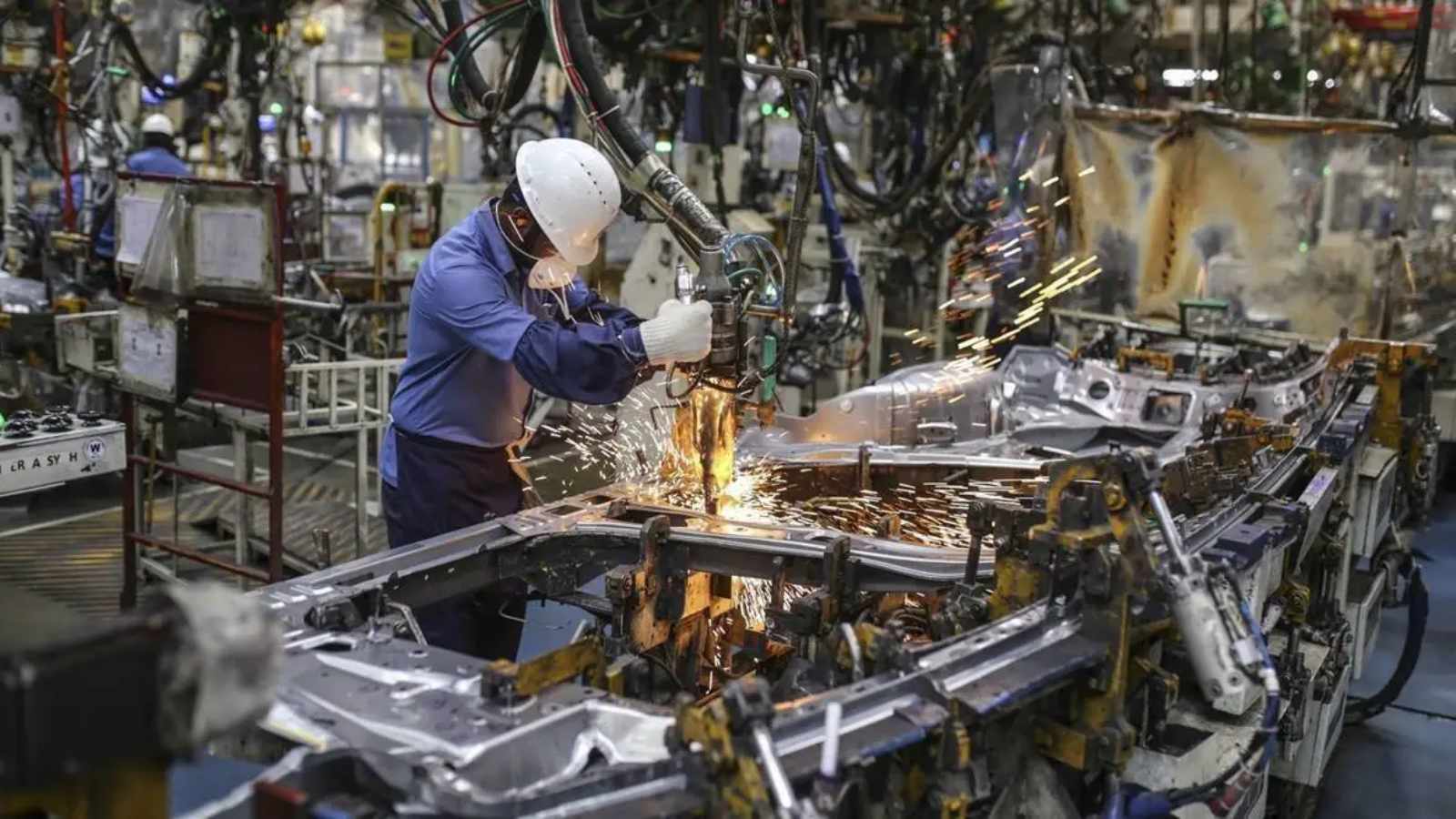
Wages of factory workers in Jharkhand were the highest in 2022–23 and 2023–24, at Rs 3.17 lakh and Rs 3.2 lakh, respectively. (Representational image)
Jharkhand was the only state in 2024-25 whose factory workers were paid less, on average, compared to the previous year, with government data released Wednesday showing wage per worker in the eastern state fell 5.2%. In contrast, factory wages rose 5.3% nationally to Rs 2.28 lakh in 2024–25, up from Rs 2.16 lakh in 2023–24, according to the latest Annual Survey of Industries.
Meanwhile, even as Tamil Nadu remained the state with the highest number of factories and workers, Uttar Pradesh was a key driver of industrial expansion. On the whole, the number of factory workers rose 7.3% nationally to 1.67 crore and the number of factories themselves by 2.6% to 2.7 lakh, making it the first time in over a decade that India has seen the number of factories rise by more than 2% in consecutive years.
To be sure, factory workers in Jharkhand are paid far more than the national average, with The Indian Express’ calculations showing that the average wage in the state was Rs 3.04 lakh in 2024–25, third behind only Rs 4.06 lakh in Sikkim and Rs 3.14 lakh in Goa.
In fact, wages in Jharkhand were the highest in 2022–23 and 2023–24, at Rs 3.17 lakh and Rs 3.2 lakh, respectively. As a result, the fall in 2024–25 seems to be a correction as high wages in the state attracted more workers.
In 2024–25, the number of factory workers employed in Jharkhand rose 9% to 2.08 lakh – even though the number of factories reduced by nine to 2,880.
Meanwhile, the average wage in Jharkhand’s neighbour Bihar jumped 16.7% – the highest of any major state – to Rs 1.63 lakh in 2024–25. However, this was driven by a 2% fall in the number of workers to 1.15 lakh, with the number of factories edging up by 1% to 3,426.
The Annual Survey of Industries (ASI), conducted by the Ministry of Statistics and Programme Implementation (MoSPI), is one of the most important surveys in the country and covers the formal manufacturing sector. Its results provide insights into how the country’s – and each state’s – manufacturing industries are changing and are key in calculating the GDP and formulating government policy.
Story continues below this ad
Worries in Gujarat?
The results of the 2024-25 ASI are based on inputs from 86,547 units, with MoSPI estimating that the number of factories in India rose 2.6% in 2024-25 to 2.7 lakh. In 2023–24, the number of factories had risen by 2.7%. As such, this is the first time in over a decade that the number of factories has increased by more than 2% in successive years.
With 12.8%, Uttar Pradesh saw the largest increase in the number of factories in 2024-25 to 24,964. However, Tamil Nadu (41,221), Gujarat (33,084), and Maharashtra (27,379) were ahead in the number of factories.
While Tamil Nadu and Maharashtra saw a 3% rise in factories in 2024-25, Gujarat saw a 1% reduction.
These changes led to Uttar Pradesh raising its share of factories in the country by almost a full percentage point to 9.4%, the highest increase of any state in 2024-25. Meanwhile, Gujarat’s share fell the most – by 0.4 percentage points – to 12.4%.
Story continues below this ad
Tamil Nadu continues to have the highest share of factories in the country, with the figure unchanged at 15.4%.
The story was similar in terms of the number of workers, with Uttar Pradesh seeing a 14% rise, second only to Haryana (15%) among major states.
Tamil Nadu continues to have the highest number of factory workers in India, having seen a rise of 5% in 2024-25 to 26.1 lakh. At an all-India level, the number of workers increased 7.3% to 1.67 crore in 2024-25.
Uttar Pradesh also saw above-average wage growth of 6.7% in 2024-25, as did Maharashtra (6.1%) and Tamil Nadu (5.6%). In Gujarat, wages only rose 2%, less than half the all-India average of 5.3%.

Siddharth Upasani is a Deputy Associate Editor with The Indian Express. He reports primarily on data and the economy, looking for trends and changes in the former which paint a picture of the latter. Before The Indian Express, he worked at Moneycontrol and financial newswire Informist (previously called Cogencis). Outside of work, sports, fantasy football, and graphic novels keep him busy. ... Read More
KioskNews shows a cleaned-up reading view extracted from the publisher’s page — the original always lives on their site, not ours.