SolGen to seek clarification, partial reconsideration of SC ruling on unprogrammed funds
Already have Rappler+?
to listen to groundbreaking journalism.
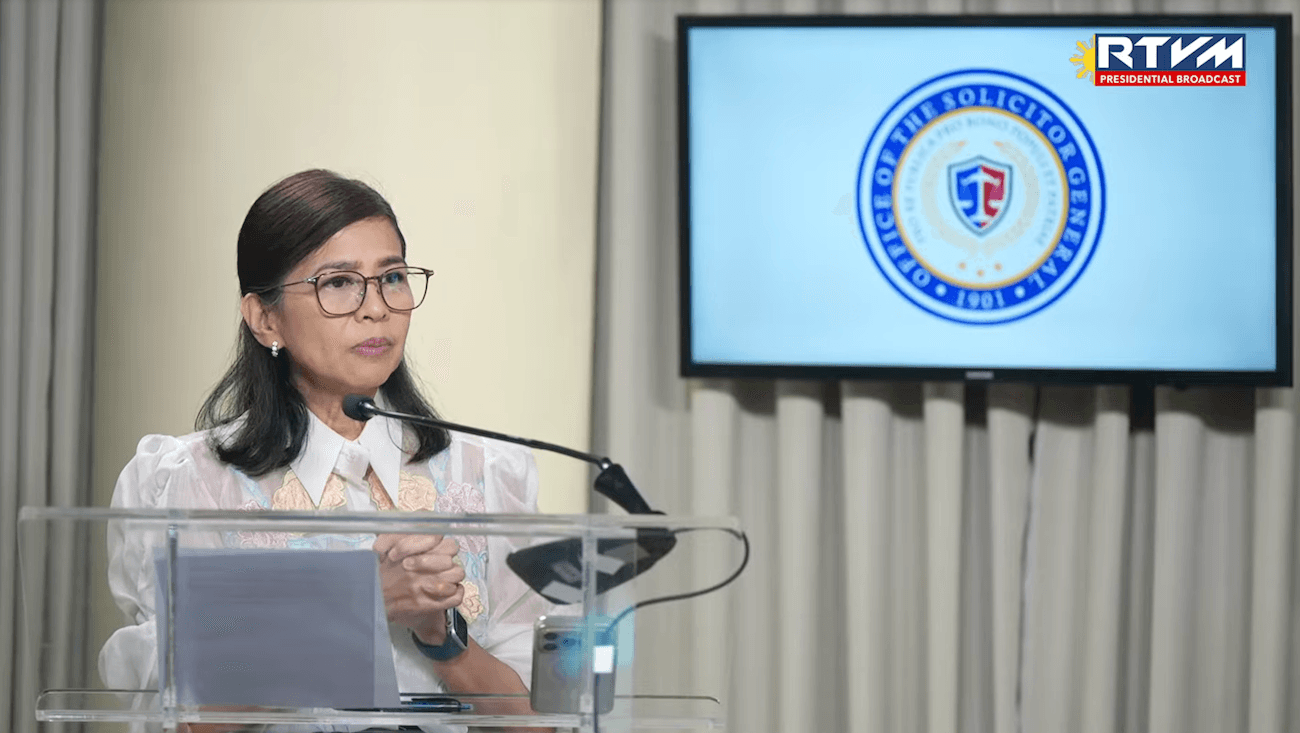
PRESS BRIEFING. Solicitor General Darlene Berberabe fields questions from the media at a news conference in Malacañang on October 22, 2026.
Screenshot from RTVM video
The Office of the Solicitor General notes that the 12 separate opinions accompanying the Supreme Court ruling 'reflect the complexity of the constitutional questions presented and the differing judicial perspectives on their resolution'
AT A GLANCE
- The Office of Solicitor General will seek clarification and partial reconsideration of the Supreme Court's ruling on unprogrammed appropriations, emphasizing the need for safeguards in budgetary powers.
- The Supreme Court ruled that the 2024 and 2025 budgets are unconstitutional due to Congress' increase of the national government's proposed budget through unprogrammed appropriations, which must comply with specific conditions.
- Budget Secretary Kim De Leon stated that the Department of Budget and Management is coordinating with the OSG to address potential issues arising from the ruling, while the Supreme Court clarified that previously spent funds do not need to be returned.
This is AI-generated. Read the article for full context. Report any errors.
MANILA, Philippines – The Office of Solicitor General (OSG) said on Thursday, October 22, that it will seek clarification and partial reconsideration of the recent Supreme Court’s ruling on unprogrammed appropriations (UAs).
“With utmost respect to the Court, the OSG will seek clarification and partial reconsideration of certain aspects of the Decision, particularly the guardrails prescribed for the exercise of budgetary powers,” the OSG said in a statement.
“The OSG agrees that safeguards are essential to ensure transparency, accountability, and fiscal discipline in the use of public funds. The complex challenge, however, lies in distinguishing the safeguards that are required by the Constitution from those whose formulation falls within the constitutionally provided powers of Congress and the Executive,” it added.
The OSG noted that the 12 separate opinions accompanying the ruling “reflect the complexity of the constitutional questions presented and the differing judicial perspectives on their resolution.”
“The OSG will carefully consider these opinions in its further action,” it said.
“The OSG remains committed to assisting the Court in ensuring that safeguards governing public expenditure are firmly anchored in the Constitution, while preserving the powers entrusted to the political branches in service of the Filipino people,” the OSG added.
In its ruling on Tuesday, October 20, the Supreme Court ruled that the 2024 and 2025 budgets are unconstitutional since Congress increased the president’s proposed national budget through UAs.
UAs are standby appropriations that may only be used once specific conditions are met, such as when government revenues exceed targets or when foreign grants and loans are on the table.
The Supreme Court did not rule that UAs are unconstitutional but clarified that UAs must be compliant with the following:
- There should be no lump sums in unprogrammed appropriations.
- The conditions for using new income and additional earnings from the government’s non-tax revenue incomes should be differentiated from programmed and unprogrammed expenditures.
- Congress should have sufficient standards in terms of prioritization for spending if there is more than one purpose under unprogrammed appropriations.
- The provision for the unprogrammed appropriations should be within the national fiscal program plan found in the budget and “consistent with its nature as a narrow contingent appropriation.”
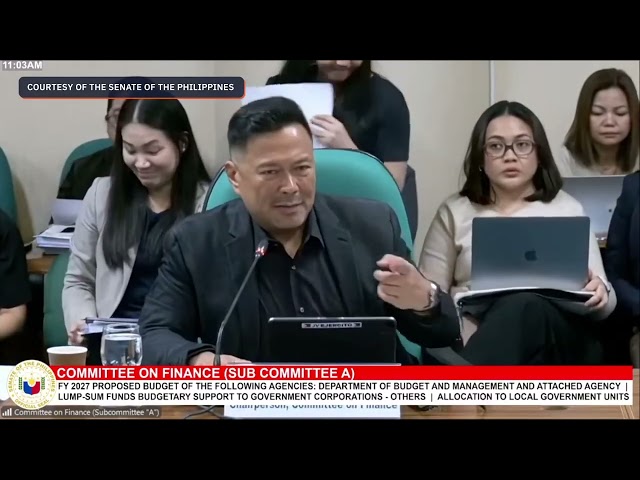
During the budget hearing of the Department of Budget and Management in the Senate on Thursday, Budget Secretary Kim De Leon said the DBM is closely working with the OSG to seek clarification before the High Court.
De Leon said that there are a lot of issues that may arise from the recent Supreme Court ruling, like unreleased UAs, unobligated allotment, and unpaid obligations from previous years.
The High Court had clarified that there was no need to return the money that had already been spent following the doctrine of operative fact. This means completed programs whose beneficiaries acted in good faith won’t be undone.
The doctrine, however, “does not shield authors, proponents, or implementors from criminal, civil, or administrative liability unless the proper tribunals explicitly find that they acted in good faith.” – Rappler.com
KioskNews shows a cleaned-up reading view extracted from the publisher’s page — the original always lives on their site, not ours.