From mean girls to psychedelics: 10 new books to read now
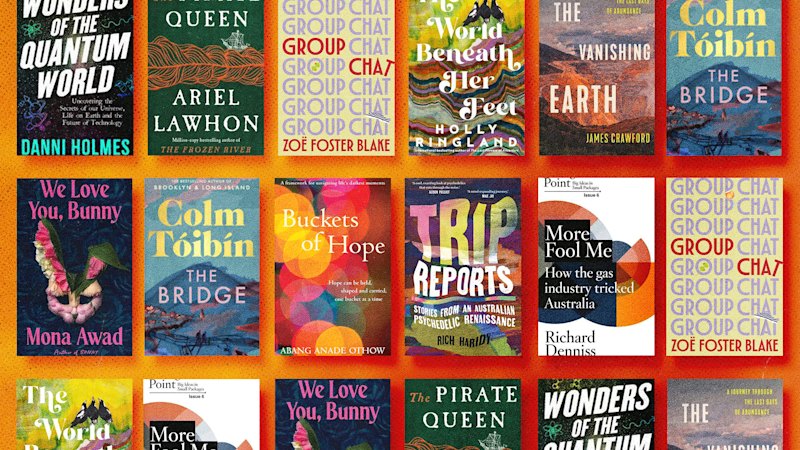
ean girls, pirate queens, psychedelics and quantum physics: this week’s books cover some unlikely territory. There are midlife crises in Mykonos, a journey into the Queensland wilds, and a furious reckoning with the Australian gas industry. Our critics review 10 fiction and non-fiction books worth knowing about.
Fiction
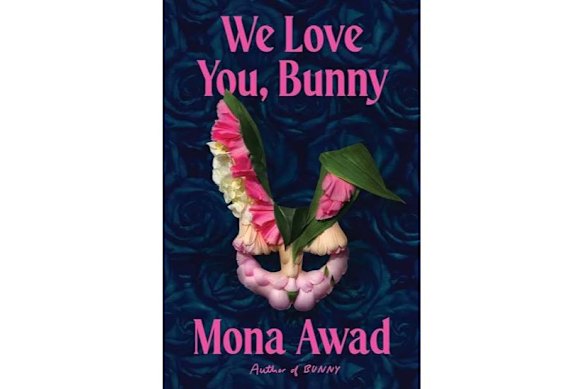
We Love You, Bunny by Mona Awad (Simon & Schuster, $35)
The publicity notes tout that this book is a cross between Frankenstein and Heathers, which sounds like a winning combination. This time round, Mona Awad’s follow-up to her cult hit Bunny gives us the point of view of the kidnappers, the self-named clique of mean rich girls called bunnies who have entrapped Samantha Heather Sweeting while she was on tour to promote her autobiography, ostensibly about her experiences with the posse. Restrained and gagged, she has no choice but to listen to their individual versions.
We Love You, Bunny continues this creepy-cute tale. This campus horror takes a satirical swipe at academia, creative writing schools, the obsessive desire to succeed and the cult of friendship, which is also riven by rivalry. It’s a fun, campy read, self-aware and bonkers, with pop culture and literary references throughout, and an unexpectedly bizarre character who swoops in at the end (Mary Shelley, eat your heart out). The rabbit references do become a little tiresome (yeah, we get it), but on the whole its surrealism-meets-reality schtick works if you’re looking for something whimsical, weird and violent.
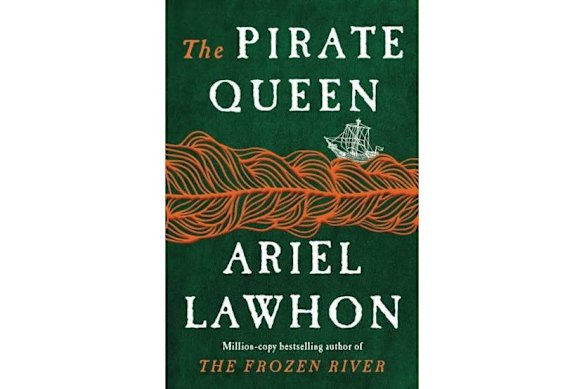
The Pirate Queen by Ariel Lawhon (Simon & Schuster, $35)
Based on the eventful life and adventures of Grace O’Malley, a little-known 16th-century Irish sea captain who defended her country against the English during the reign of Elizabeth I, The Pirate Queen is a feminist reckoning, a contemporary reading of how this female chieftain rebelled, defied gender expectations, and battled and strategised in a man’s world. Even before the story begins, the reader is presented with a cast of characters that spans three pages, as well as a guide to Gaelic pronunciation. It’s a bit intimidating, but luckily the narrative is so propulsive that you’ll forgive all this preliminary information.
Ariel Lawhon eschews a chronological storyline, dividing O’Malley’s life into three (maiden, mother and matriarch), with different perspectives and an editorial quirk that plays around with timelines. For example, a chapter in which she is 60 is followed by one in which she is 14. Although this structure does have a deleterious effect on pacing and momentum, Lawhon gets away with it because her source material and recreation are so strong. Expect action-packed skirmishes and romances at sea from this “red-headed ferocity”.
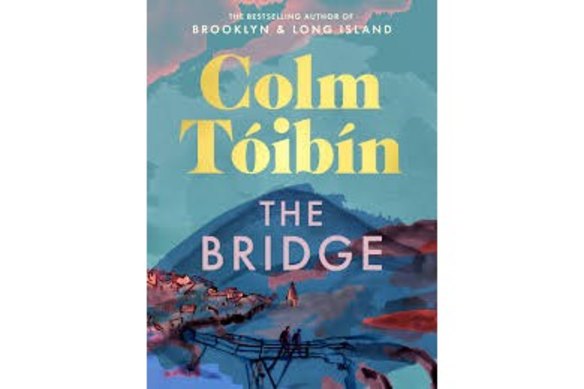
The Bridge by Colm Tóibín (Picador, $30)
Colm Tóibín’s latest book is set in the Catalan Pyrenees and is ostensibly a sequel to his short story, A Long Winter. It’s a grim, austere offering that picks up the story after the death of Miquel’s mother. Abandoned by his brother, he’s left with his father on an isolated farmstead with their sheep and donkeys. Their relationship is uneasy and strained; neither trusts the other. Miquel longs for escape; the only brightness in his life seems to be their servant Manolo, with whom he has an emotional and sexual bond. Sundry other encounters with random men are conducted in secret and with shame.
But a new bridge linking the neighbouring villages initially offers hope and opportunity. Alas, thanks to some bad choices, bad luck and betrayal, Miquel’s desire for freedom and exploration is cruelly denied. The Bridge reads more like a chapter in a book or an extended short story, with necessary narrative omissions due to its novella length. It’s not Toibin’s best work. The book can be graphic in its erotic descriptions, but also frustratingly coy when you want more details about its characters and their motivations.
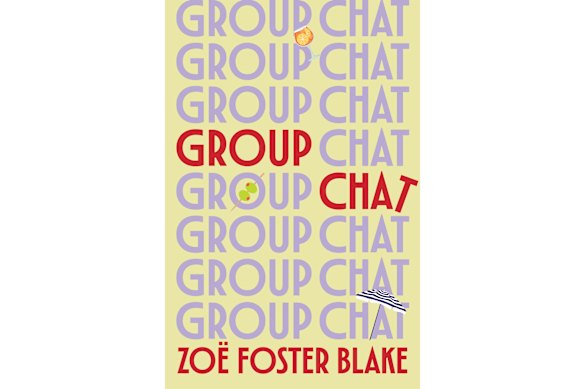
Group Chat by Zoë Foster Blake (Allen & Unwin, $35)
As a paean to female friendships, Group Chat is a lightweight, breezy read. When Farah’s husband is discovered to have cheated on her, Farah’s closest mates (Stella, Molly, Viv, Gab) rally round, but nothing says healing potential as much as an impromptu girls’ trip – an eight-day holiday in Mykonos. It was decades ago that the forty-something group had last visited the Greek island, and they’re looking forward to reliving their careless, debauched 20s. Or at least to temporarily stave off a midlife crisis and ennui.
In among the endless sweet cocktails, fake tans and beach parties, the quintet relax, bitch, get drunk, pop pills, fight and reassess their lives. Zoë Foster Blake pays particular attention to perimenopausal Stella, who has lost her groove after long enduring the mental load of carrying the household. Here she is free from being the “bedtime warden, or the logistics queen, or the patient wife”. But what exactly does she want, and is her long-term husband aligned with her desires? Group Chat is a relatable book for any woman, or at least any middle-aged, middle-class woman who has ever pondered the merits of adventure over security.
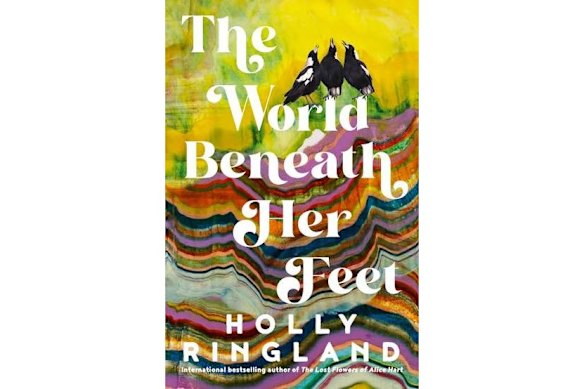
The World Beneath Her Feet by Holly Ringland (HarperCollins, $35)
Thirty-eight-year-old Maggie Byrd works at the Natural History Museum in London. Her dream life of fossils and opals is matched with her contentment in hanging out with her best friend, Harriet, and her boyfriend, Joe. But when she inherits her uncle Neil’s property in Topaz Valley, south-east Queensland – a wild pocket teeming with native vegetation and fauna – she has to return home to reclaim it. The trip back means a resurfacing of traumatic memories that necessitated her departure years ago.
The World Beneath Her Feet is a character-driven novel that’s written with the same level of empathy and scrupulous plotting that made Holly Ringland’s earlier novels (The Lost Flowers of Alice Hart, The Seven Skins of Esther Wilding) so successful. Except for the surprising last chapter, the narrative is split into two: Maggie as a rather tentative adult in 2018, and her firebrand adolescent self at 15 in 1995.
Aside from her deft touch in conjuring up the beauty of the natural world, Ringland is particularly good at detailing teen angst and confusion as Maggie grapples with love and loss with her besties, Gemma and Adam.
Non-fiction
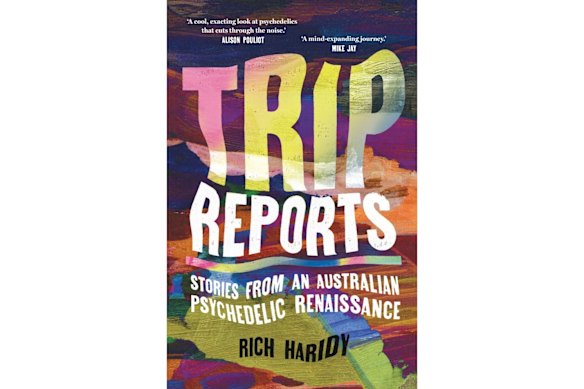
Trip Reports by Rich Haridy (NewSouth, $35)
There’s been a lot of hype about the therapeutic possibilities of psychedelics. But what if medicalising these substances isn’t the way to go? Rich Haridy asks this question in this sober and engrossing history of the renaissance of psychedelics in Australia. Traditionally, psychedelics were about community and connection. Rather than asking whether these substances can heal the sick, the addicted and the depressed, Haridy turns the query on its head. What if they can prevent these problems in the first place and build social bonds? It’s a great question, especially in light of the fundamentally mysterious nature of these drugs.
Marg Ross, the first mental health practitioner in Australia to start a clinical trial for psychedelics, points to the essential weirdness of psychedelics and the danger of blunting this quality by forcing them to be a predictable medicine. A mix of scientific rigour, well-researched storytelling and fresh, thought-provoking analysis, Trip Reports radically shifts the whole conversation about modern psychedelic medicine.
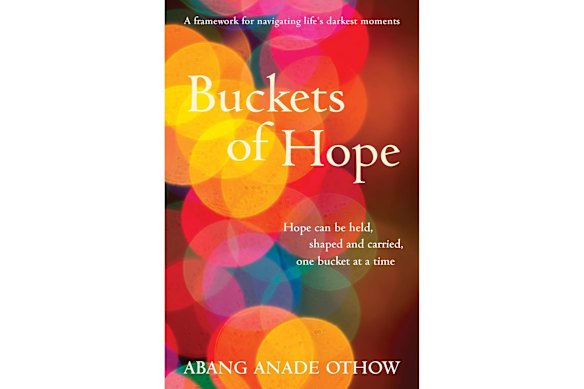
Buckets of Hope by Abang Anade Othow (ABC Books, $40)
Flowing through Abang Anade Othow’s homeland of Sudan, the Nile “winds through war zones and wedding feasts”, passing villages where women balance colourful buckets on their heads, “crowned not with jewels but with the burden and beauty of survival”. The compressed poetry of these words not only captures the dignity and unimaginable pain of Othow’s story, but how she taught herself to survive a childhood that could have destroyed her.
After civil war wrenched her from her family and her memories of them started to fade, she recalled these colourful buckets, making them receptacles for her emotions to help her contain trauma and hold on to hope. Now, writing of those endless years of dislocation and refugee camps, of bombs and horror, Othow tells of her father’s drive to save his people, her mother’s powers of endurance, of her beloved grandmother, her siblings and her cousins, all of whom came and went from her life. As a refugee in Sydney, she eventually reconnects with her mother and becomes a mother herself. Be prepared to have your heart pierced and your world enlarged.
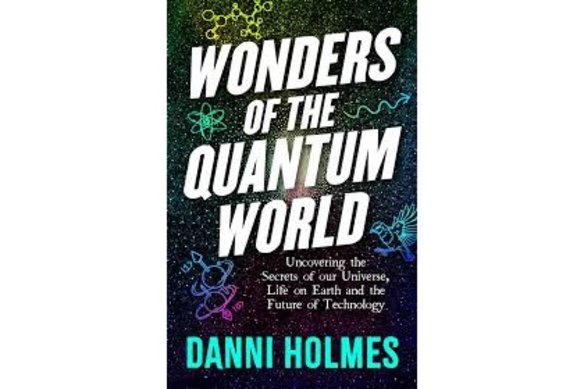
Wonders of the Quantum World by Danni Holmes (Melbourne University Press, $30)
Quantum physics, like rocket science, can seem beyond the ken of most of us. And yet, as Danni Holmes shows, it need not be. To introduce this micro-universe, she takes us on a magical mystery tour from the familiar world of classical physics deep into this other realm via a journey through our own bodies. Then, having rendered quantum physics more intimate, she sets out the key traits or laws that govern it.
How is it that quantum objects can behave as particles or waves under different conditions? Heisenberg’s “uncertainty principle” gets bandied about in common parlance but what does it mean exactly? Zooming out, she reveals how these abstract laws ensure that tectonic plates move, that stars shine and that black holes don’t last forever. Quantum computers, she confidently predicts, will “be able to solve the unsolvable”. It’s a grand claim that begs all sorts of philosophical questions. But when it comes to the science, Holmes is not only an expert in her field but a talented educator with a flair for making her subject accessible and cool.
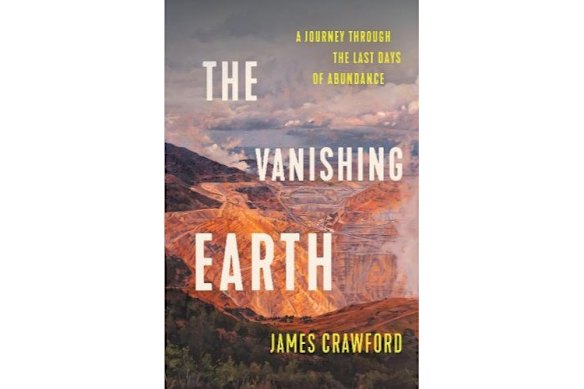
The Vanishing Earth: A Journey Through the Last Days of Abundance by James Crawford (Scribe, $40)
They are not the kind of places anyone goes to for a holiday, not even aficionados of disaster tourism. Known as “sacrifice zones” where wholesale extraction of minerals or fossil fuels has left festering wounds in perpetuity, there are millions of them around the world fuelling climate change and desecrating whole communities, regions and even nations. Places that are the ugly, poisonous and distressing dark side of our insatiable hunger for economic growth. James Crawford goes on a valiant odyssey to the “towering radioactive fertiliser ziggurats” of Florida’s Bone Valley, the salt flats where lithium is harvested in Chile and the shores of Spain’s “Sea of Plastic” to talk to the people affected by these man-made abominations. It might all be unbearably grim were it not for Crawford’s skilful and lucid evocation of the scientific, historical, economic and environmental big picture while never losing sight of the individual and existential dimension of his tale.
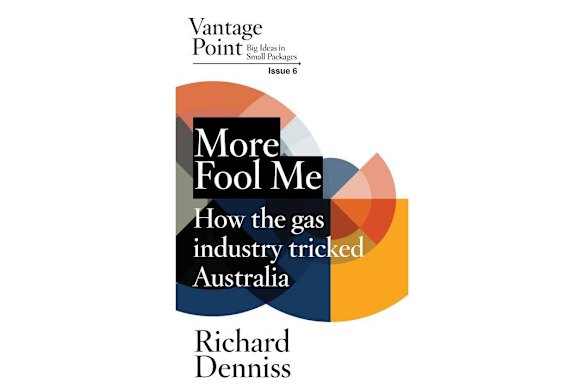
More Fool Me: How the gas industry tricked Australia by Richard Denniss (Australia Institute Press, $19.95)
Be prepared to get angry. Very angry. But righteously so. You’d have to be living under a rock not to be aware of the debate about taxing gas exports. At a time when so many Australians are struggling with the cost of living, how can our governments continue to abet the daylight robbery conducted by foreign gas companies while claiming there isn’t enough money for essential services? The answer, says Richard Denniss, is because successive state and federal governments have been conned by mining industry pressure groups, many of whom employ former resources ministers. In this punchy polemic, Denniss exposes the slippery figures behind frequently cited statistics about gross domestic product that create the illusion that the gas industry is contributing to our national wealth. “When the price of gas surges, the Norwegians and Qataris feel rich. But when prices of oil, gas and coal surge, Australians experience an energy crisis.” Here’s a handbook for how to channel your fury.
What else is happening in the book world?
- This novel is the raw, moving reality check Australian fiction needs
- Blood, lies and cartels: Five new crime books to read this month
- “Landmark achievement” wins $80,000 literature prize
- A giant Mao looms over Hong Kong. Welcome to 2030
KioskNews shows a cleaned-up reading view extracted from the publisher’s page — the original always lives on their site, not ours.