Diwali over. 3 days on, firecrackers among prominent PM2.5 pollution sources in Delhi
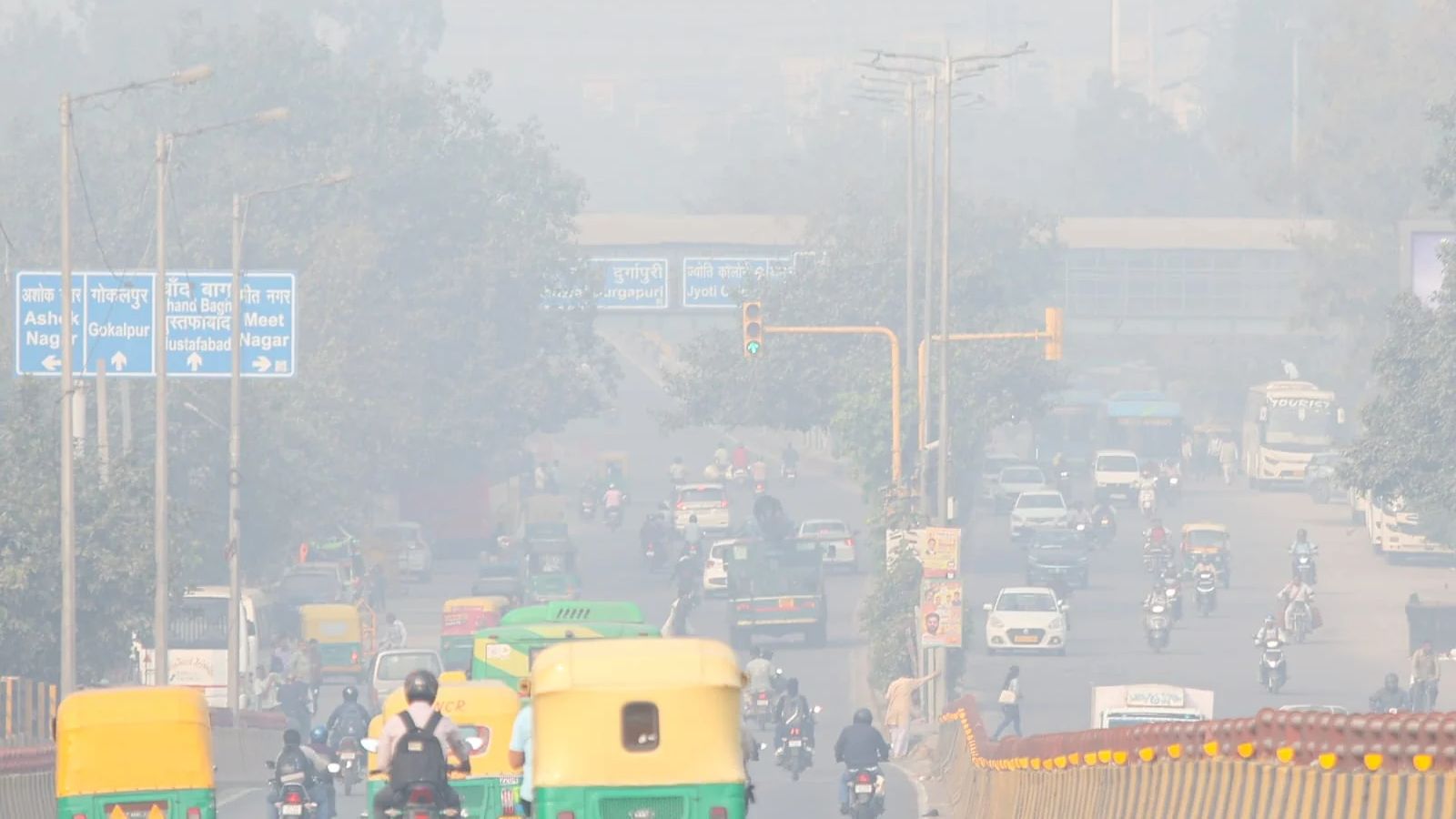
It’s been three days that the people of Delhi celebrated Diwali, but residents are still not breathing easy as firecrackers on Wednesday remained one of the prominent sources of the city’s PM2.5 pollution, accounting for 7.4% of the toxic particulate load, real-time scientific data showed.
With atmospheric dispersion conditions set to worsen sharply, the Capital’s air quality is likely to enter the ‘Severe’ range by Friday, projection models by the Indian Institute of Tropical Meteorology (IITM) indicated.
Delhi recorded an average 24-hour Air Quality Index (AQI) of 313 (‘Very Poor’) on Wednesday, against 299 (‘Poor’) on Tuesday. The index was ‘Very Poor’ on both Monday (344) and Sunday (376). In the adjoining NCR, Gurugram at 301 recorded ‘Very Poor’ AQI, while Noida at 291 stood in the ‘Poor’ category, as per data maintained by the Central Pollution Control Board.
Favourable conditions not to last long
Forecasts by the India Meteorological Department (IMD) indicate a sharp decline in the ventilation index by Friday, signalling an end to favourable meteorological conditions.
The vertical space in the atmosphere where pollutants can dilute and disperse, termed the mixing depth, is projected to shrink from 2,000 metres on Thursday to 1,400 metres on Friday that could lower the atmospheric ceiling and trap emissions close to the surface.
Concurrently, daytime winds likely to blow from the northwest at up to 15 kmph on Thursday, are expected to shift to variable southwesterlies and westerlies, slowing down to 5-10 kmph by Friday. Without sustained, directional winds to carry pollutants downstream, toxic particulate matter can increase, as they do not get dispersed.
Story continues below this ad
Under these stagnant conditions, IITM projections show, Delhi’s PM2.5-driven AQI is likely to climb steadily to hit a ‘Severe’ peak of roughly 428 by 9 am on Friday.
A rise in the contribution of stubble burning in neighbouring states is likely to be another trigger. As per the IITM’s Decision Support System (DSS), the share of farm fires in Delhi’s PM2.5 may surge to around 20% Thursday, before dropping to 11% in the following days.
Delhi also witnesses high baseline emissions from internal sources. As of Wednesday, secondary organic matter formed 22.7% and domestic solid biofuel burning accounted for 22.3% of the PM2.5 concentration. Vehicular emissions followed at 19.3%, secondary inorganic aerosols made up 11.9% (including 4.6% nitrate, 4.0% ammonia, and 3.3% sulphate), and mixed combustion added 10.6%, as per the IITM.
Firecrackers contributed 7.4% on Wednesday, marking the first time the episodic festive source has been continuously tracked in official real-time apportionment. The share had peaked at 71.1% on Diwali night (1 am to 9 am on Monday) and 29.8% on Tuesday morning.
Story continues below this ad
A new assessment released Wednesday by the Centre for Science and Environment (CSE) has revealed that Delhi’s early-winter (October to mid-November) air pollution has worsened significantly in 2026 due to an exceptionally high baseline burden.
“Diwali pollution is an annual tipping point, but elevated particulate levels before the festival this year show that baseline pollution is higher than in previous years,” said Anumita Roychowdhury, Executive Director, Research and Advocacy at CSE. “Year-round emission control across key sources remains inadequate. Had air quality been cleaner leading into winter, and episodic spikes from farm fires and firecrackers kept in check, seasonal weather shifts would not have triggered such severe pollution.”
The CSE analysis noted that the week preceding Diwali recorded an average PM2.5 concentration of 236 µg/m³, which is a three-year high representing a 97% increase over 2025 (120 µg/m³) and a 32 per cent increase over 2024 (179 µg/m³).
Analysing traffic flow, the study has found that emergency curbs enforced under the Graded Response Action Plan (GRAP) since November 1, including banning entry of non-BS-VI vehicles registered outside Delhi, parking fee hikes, and work from home advisories had negligible impact on road volumes. Weekdays under restrictions averaged a Travel Time Index of 2.40 against the pre-enforcement levels of 2.38, it said.
Story continues below this ad
“Traffic gridlock is a pollution multiplier, yet current clean air action plans treat vehicular emissions primarily as a tailpipe technology or routing problem rather than an absolute volume crisis,” the CSE analysis said.
KioskNews shows a cleaned-up reading view extracted from the publisher’s page — the original always lives on their site, not ours.