Members acknowledge progress in expanding remote-sensing satellite constellation
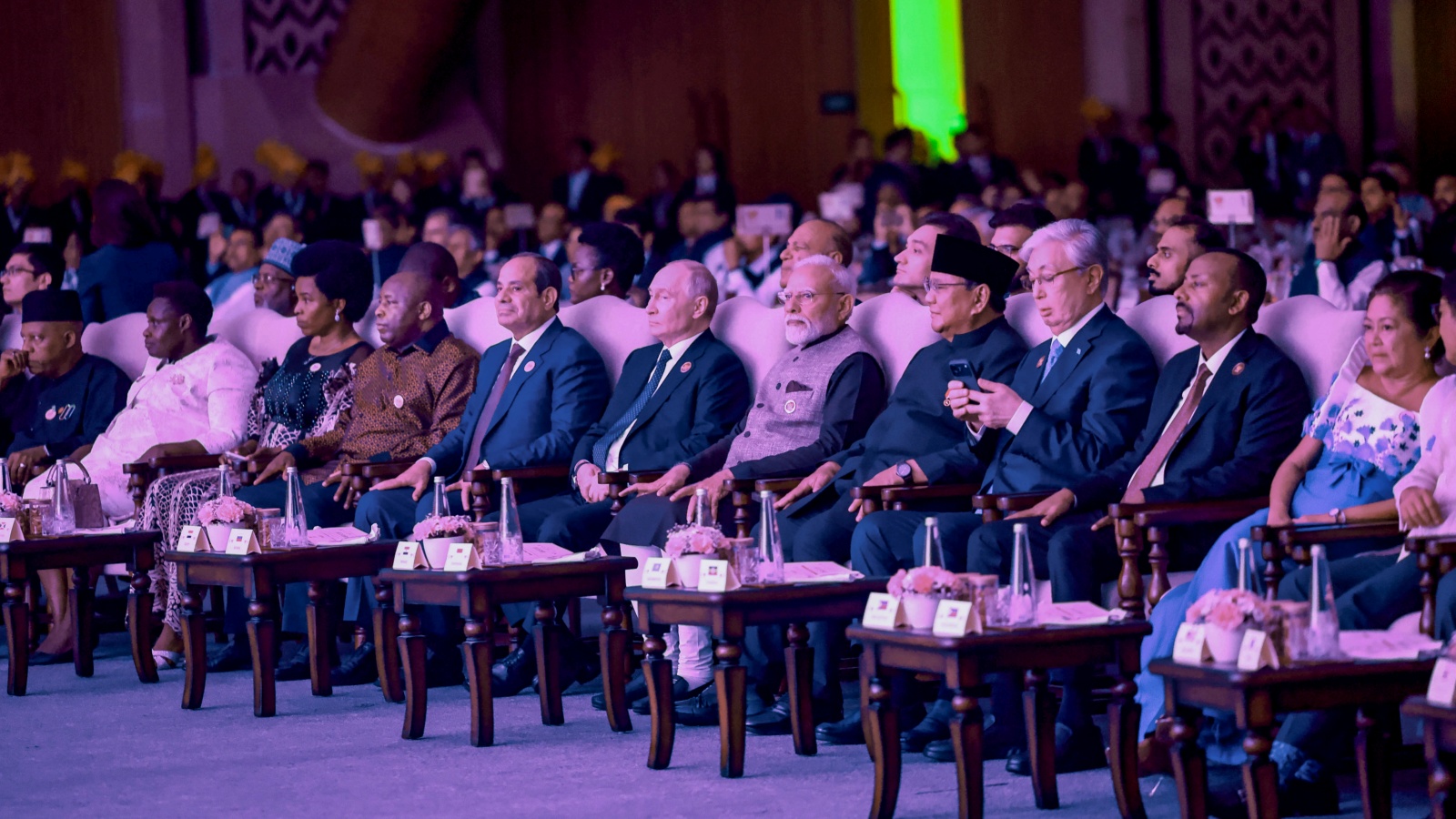
Prime Minister Narendra Modi with visiting heads of States, governments and other dignitaries at a Gala Dinner during the BRICS Leaders’ Summit in New Delhi on Saturday. (PTI)
The New Delhi Declaration adopted during the ongoing 18th BRICS Summit acknowledges the significant progress in finalising the amendment to the BRICS Remote Sensing Satellite Constellation (RSSC) Agreement for including new space agencies. The RSSC is a virtual network of existing observation satellites of the BRICS countries, including India’s Resourcesat 2 and 2A, China’s Gaofen-6 and Ziyuan III 02, and Russia’s Kanopus-V type.
The Summit also drafted the Terms of Reference for the BRICS Space Council.
There was also an emphasis on debris mitigation and long-term sustainability. “We welcome the discussions in the BRICS Heads of Space Agencies meeting held in Bengaluru that emphasised the importance of space debris mitigation for ensuring the long-term sustainability of outer space activities,” the declaration says. ISRO’s summit on space earlier this year was attended by senior officials from Brazil, China, Egypt, Ethiopia, Indonesia, Iran, Russia, South Africa and the UAE.
The declaration, while stating that non-binding agreements can contribute towards the Prevention of Arms Race in Outer Space (PAROS), noted the initiative of some members to create a single open-ended working group that will also look into a legally binding instrument on PAROS.
“We stress that practical and non-binding commitments such as Transparency and Confidence-Building Measures (TCBMs), and universally agreed norms, rules, and principles may also contribute to PAROS. We note the initiative of some BRICS members at the General Assembly to create a single Open-Ended Working Group to enable coherent, inclusive and effective discussions that serve such purpose and undertake to engage constructively in the process, based on existing achievements, including on substantial elements on a legally binding instrument on PAROS,” the declaration says.
The declaration also speaks of the planned BRICS Science and Research Repository, envisaged as a structured platform for knowledge storage and sharing among BRICS countries voluntarily, while respecting data security, intellectual property rights and relevant national policies. A draft framework document has also been prepared for the same. The declaration also acknowledges the cooperation of the countries in emerging spheres such as quantum technologies.
The declaration also welcomes the 65th jubilee of the first human spaceflight by Yuri Gagarin on 12 April, 1961, “which marked a historic milestone in the exploration of outer space and opened new frontiers for all humankind”.

Anonna Dutt is a Principal Correspondent who writes primarily on health at the Indian Express. She reports on myriad topics ranging from the growing burden of non-communicable diseases such as diabetes and hypertension to the problems with pervasive infectious conditions. She reported on the government’s management of the Covid-19 pandemic and closely followed the vaccination programme. Her stories have resulted in the city government investing in high-end tests for the poor and acknowledging errors in their official reports. Dutt also takes a keen interest in the country’s space programme and has written on key missions like Chandrayaan 2 and 3, Aditya L1, and Gaganyaan. She was among the first batch of eleven media fellows with RBM Partnership to End Malaria. She was also selected to participate in the short-term programme on early childhood reporting at Columbia University’s Dart Centre. Dutt has a Bachelor’s Degree from the Symbiosis Institute of Media and Communication, Pune and a PG Diploma from the Asian College of Journalism, Chennai. She started her reporting career with the Hindustan Times. When not at work, she tries to appease the Duolingo owl with her French skills and sometimes takes to the dance floor. ... Read More
KioskNews shows a cleaned-up reading view extracted from the publisher’s page — the original always lives on their site, not ours.