India, Denmark Agree On 5-Year Green Partnership Roadmap
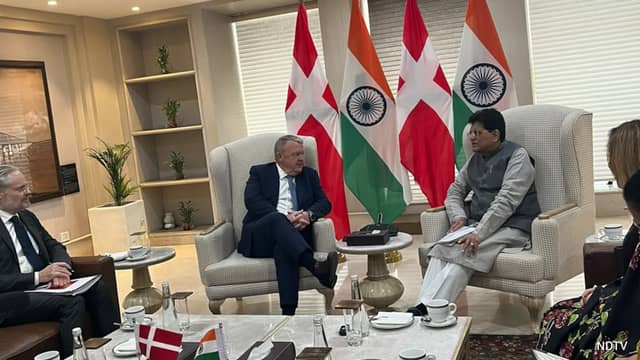
India and Denmark have agreed on a new five-year Joint Action Plan for 2027-2031 to deepen cooperation in green energy, climate action, maritime security, emerging technologies and other strategic sectors, signalling a fresh push to strengthen their bilateral relationship.
The decision was taken at the fifth India-Denmark Joint Commission Meeting in New Delhi on Saturday, co-chaired by India's External Affairs Minister S. Jaishankar and Danish Foreign Minister Lars Løkke Rasmussen.
The two countries also agreed to work towards elevating their existing Green Strategic Partnership to a Comprehensive Green Strategic Partnership, with a formal announcement expected at a later date at the prime ministerial level.
The latest developments build on the Green Strategic Partnership established in 2020, which has emerged as a key pillar of bilateral engagement, particularly in renewable energy, sustainable development and climate cooperation.
In a joint assessment of the meeting, the two sides expressed satisfaction over the progress achieved and reaffirmed their commitment to strengthening ties. They described the discussions as wide-ranging and constructive, covering bilateral relations as well as regional and global developments.
The proposed action plan will expand cooperation in renewable energy, energy efficiency, sustainable water management, maritime affairs and climate action. Both countries also reiterated their commitment to collaboration in healthcare, food and agriculture, and intellectual property rights.
An important feature of the evolving partnership is its expansion beyond traditional areas of cooperation. The ministers welcomed closer engagement in defence and security, emerging technologies and space, reflecting the growing strategic dimension of India-Denmark relations.
The two sides also agreed to establish new Tech and Climate Dialogues. This follows the inaugural Maritime Security Dialogue held in Copenhagen in June 2026, which provided a platform for discussions on maritime cooperation and security challenges.
Several agreements and institutional initiatives were also exchanged during the meeting. These included a renewed memorandum of understanding on skills development, covering vocational education and training in green, digital and care-related sectors.
India and Denmark also agreed to extend their Cultural Exchange Programme for another five years. A separate memorandum of understanding was exchanged between India's International Financial Services Centres Authority and the Danish Financial Supervisory Authority to strengthen cooperation between the two financial regulators.
The ministers further welcomed an agreement signed in January 2026 on the training and recruitment of healthcare professionals from Kerala, highlighting the growing role of skilled workforce mobility in bilateral relations.
Economic cooperation featured prominently in the discussions. Both sides noted expanding trade and investment ties and identified fresh opportunities arising from the proposed EU-India Free Trade Agreement. Danish companies have contributed to India's green transition, particularly through technology and sustainable business solutions.
The meeting also took place against the backdrop of strengthening India-EU relations, including a new security and defence partnership and efforts to deepen trade and investment links.
On international issues, Jaishankar and Rasmussen exchanged views on Russia's ongoing war in Ukraine, developments in the Middle East and the Indo-Pacific. They reiterated their commitment to international law, the UN Charter, rules-based trade and a rules-based international order.
The meeting follows the May 2026 interaction between Prime Minister Narendra Modi and Danish Prime Minister Mette Frederiksen in Oslo, underscoring sustained political engagement between the countries.
KioskNews shows a cleaned-up reading view extracted from the publisher’s page — the original always lives on their site, not ours.