Long March shows why the Communist Party needs strong leadership: state media
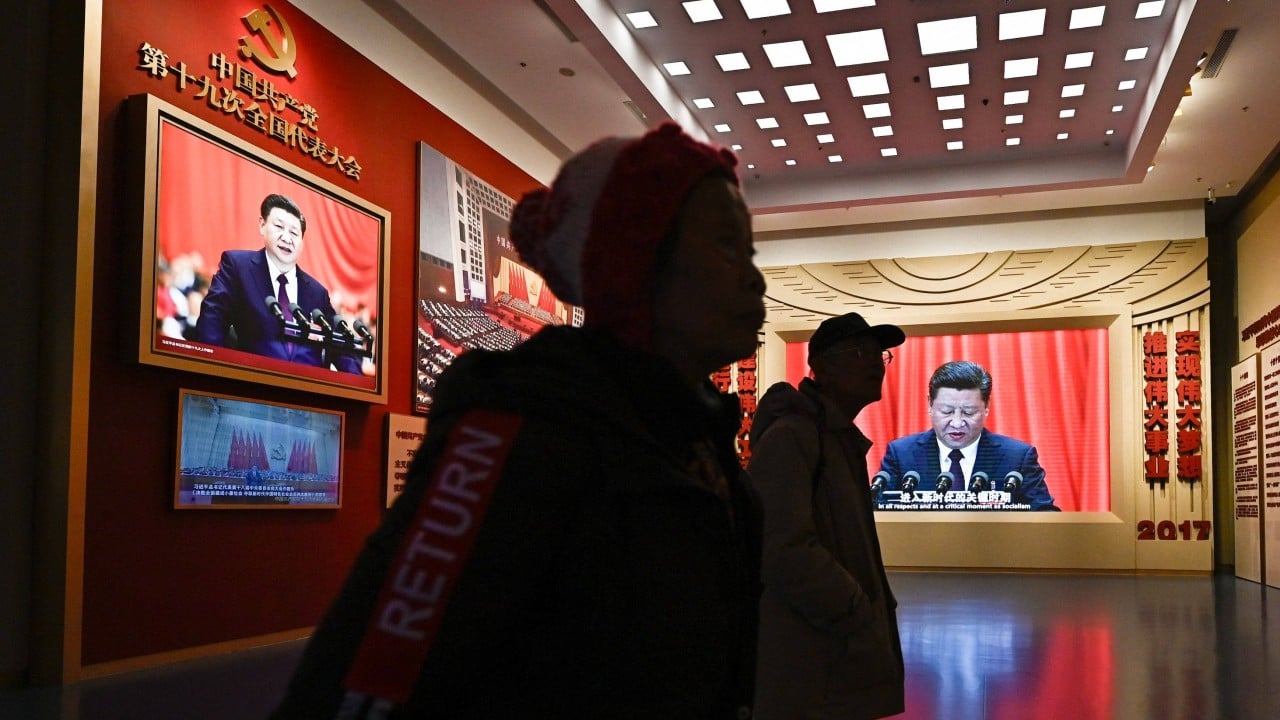
A Monday article published by the Communist Party’s mouthpiece argued that a key lesson from the Long March was the need for the party to have a strong core leadership and for its members to uphold that core’s authority.
“History shows us that only with a core can the party unite as one, and only with authority can its orders be effectively carried out … The most important thing is to establish and resolutely uphold the party’s core,” wrote Xie Chuntao, vice-president of the Central Party School, in the People’s Daily article.
The Central Party School is the country’s top training institution for officials and part of a nationwide system that Xi regards as crucial to maintaining ideological purity. Xi was the school’s head between 2007 and 2012.
Xie said the emergence of a strong leadership collective with Chairman Mao Zedong at its core during the Long March was crucial to the party’s eventual victory in the civil war, drawing parallels with the present-day leadership under President Xi Jinping.
The article was published a week before the fifth plenum, scheduled for October 26 to 29, when the Central Committee is set to discuss measures to strengthen party governance and discipline.
The current party Central Committee has been rocked by corruption investigations, with 35 of its 205 full members either under investigation or stripped of their seats in the National People’s Congress, China’s top legislative body, according to SCMP calculations. Many of them have been accused of disloyalty to the Central Committee.
Xi projects confidence for China’s Communist Party at 105th anniversary event
The article also comes as the party prepares to mark the 90th anniversary of the Long March’s conclusion on Thursday, when Xi is expected to deliver a speech.
The Long March was a strategic retreat by the Communist Red Army from 1934 to 1936 to evade Nationalist forces during the Chinese civil war. The event is frequently invoked by the party as a symbol of its endurance, discipline and political unity.
The Red Army travelled about 10,000km (6,200 miles) while pursued by Nationalist troops.
The campaign, which was marked by internal divides and major disagreements within the Red Army, saw Mao first gain military leadership before going on to establish his absolute authority within the party.
Xie said the decision by most Red Army troops to follow Mao northwards at a critical moment rather than join another force heading south reflected the party’s ideological conviction and unity.
Xie drew parallels between the importance of Mao’s leadership during the Long March and Xi’s role as the party’s core today.
02:23
Supporters of China’s late party chairman Mao Zedong mark 50 years since his death
He placed particular emphasis on the “Two Safeguards” – the requirement for party members to uphold Xi’s position as the core of the Central Committee and the party as a whole, and to uphold the authority and leadership of the Central Committee.
He also highlighted the closely related “Two Establishes” – which establish Xi’s position as the core of the Central Committee and establish Xi Jinping Thought on Socialism with Chinese Characteristics for a New Era as the party’s guiding ideology.
“The ‘Two Establishes’ are a major political achievement of our party in the new era, a decisive factor in bringing about the great transformations of the new era, and the greatest certainty, the strongest source of confidence and the greatest guarantee for the party in dealing with all uncertainties,” Xie wrote.
Xie said the central leadership’s ability to make political judgments, take decisions and act was particularly important amid growing global turbulence and mounting challenges to China’s modernisation.
“On the Long March of the new era, [we must] continuously improve our political judgment, understanding and execution, and always maintain a high degree of consistency in our thinking, political positions and actions with the Central Committee with Xi at its core,” he wrote.
KioskNews shows a cleaned-up reading view extracted from the publisher’s page — the original always lives on their site, not ours.