To decolonise Hindi, embrace its many voices
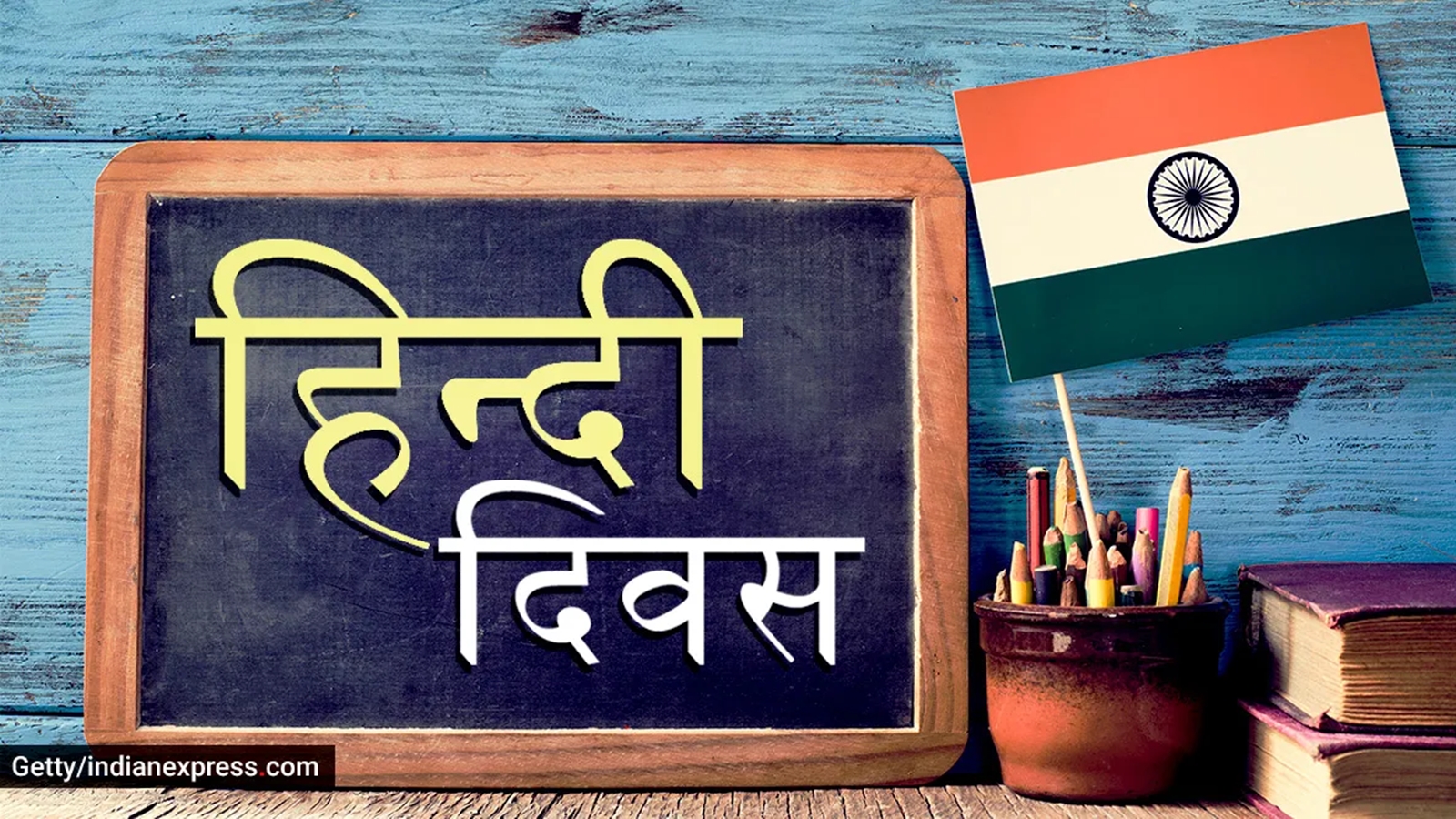
Hindi Diwas is celebrated on September 14 (Source: Getty Images/Thinkstock; designed by Gargi Singh)
Written by: Shagun Gupta
4 min readSep 14, 2026 06:17 AM IST First published on: Sep 14, 2026 at 06:17 AM IST
On Hindi Diwas, we need to ask not merely how Hindi became a modern language, but how we came to imagine what “Hindi” is. Today, Hindi appears to us as a relatively fixed linguistic entity: Standardised Khari Boli written in Devanagari and increasingly associated with a Sanskrit-derived vocabulary. Yet the historical world from which modern Hindi emerged was far more fluid.
In the pre-colonial era, northern India operated with plural linguistic repertoires that shifted naturally by function and social context — whether in the marketplace, the court, the temple, or at home. People did not have a single, exclusive “mother tongue”. Literary texts moved across Devanagari, Kaithi, Gurmukhi, and Perso-Arabic scripts.
This porous linguistic landscape was altered by the colonial state’s obsession to classify, count, and simplify governance. The initial rupture occurred in the 1830s when the East India Company replaced Persian with vernacular languages in the lower courts, setting up a competition between the sister registers of Hindi and Urdu. The 1900 court resolution in the United Provinces, which permitted Devanagari alongside the Persian script, politicised the issue, turning languages into rigid communal markers.
The decisive partition came with the Piggott Commission of 1912–13. When the policy of maintaining a “common language” collapsed, the colonial government prescribed separate standardised supplementary readers for Hindi and Urdu in 1916, delegitimising rich oral traditions and languages like Bhojpuri, Awadhi, and Braj Bhasha.
Early nationalist institutions did not dismantle this British formulation. Organisations like the Nagari Pracharini Sabha and the Hindi Sahitya Sammelan aggressively promoted a highly Sanskritised, Devanagari-based register of Khari Boli as the only “pure” (shuddh) national language. Under the editorship of Mahavir Prasad Dwivedi, the journal Saraswati became an apparatus for language policing, standardising grammar and purging Arabic and Persian loanwords. Common Hindustani words were substituted with tatsama Sanskrit terms. The word for white (safed) was replaced by shvet, angry (naraz) with kruddh, etc.
To legitimise this artificial creation, these authors performed a double move of historical appropriation and modern exclusion. They expanded the definition of “Hindi” when looking at the past — claiming all medieval poetry, from the Apabhramsa of the Prithviraj Raso to the Braj of Surdas and the Awadhi of Tulsidas — even as they restricted its present-day form to one standardised Khari Boli register. The past became plural so that the present could become singular. This created severe internal hierarchies. Braj Bhasha was dismissed as didactic and erotic. Popular folk forms such as nautanki and oral ballads were devalued. Urdu was alienated.
True cultural decolonisation requires us to dismantle these structures of linguistic policing. The linguistic world of North India was built through encounters, borrowings and adaptations. Perhaps the real lesson of Hindi’s history is that its greatest strength has never been purity. It has been absorption.
On this Hindi Diwas, we should remember that languages do not grow through walls. The Hindi of the future will be strongest not when it forgets its Persian, Urdu, Braj, and Awadhi inheritances, but when it embraces them as part of its history. To decolonise Hindi is not to make it purer. It is to make it historically whole, embodying the PM’s vision of Ek Bharat, Shreshtha Bharat, where unity is not sameness, but the harmonious coexistence of our many voices.
The writer is a PhD scholar, Department of History, University of Delhi
KioskNews shows a cleaned-up reading view extracted from the publisher’s page — the original always lives on their site, not ours.