Mexico Well-Read: A review of Sofía Robleda’s ‘The Other Moctezuma Girls’
Anyone who has stood in Mexico City’s Zócalo has felt the weight of history; beneath the cathedral and the crowds lie Tenochtitlán and the blood and bones of conquest. The city has spent the succeeding five centuries deciding which parts of that story to tell. The usual cast is familiar: Moctezuma, Cortés, Cuauhtémoc and a Malinche as contested now as she was in 1519.
Rarely, however, does anyone linger on Tecuichpoch, Moctezuma’s favored daughter, baptized Isabel. She was consort to two Mexica emperors, Cuitláhuac and Cuauhtémoc, bore a daughter to Cortés, and later married three other Spaniards. Her life ran through nearly every famous name of the Conquest, yet she barely registers in the popular telling.
‘A disturbing tapestry’
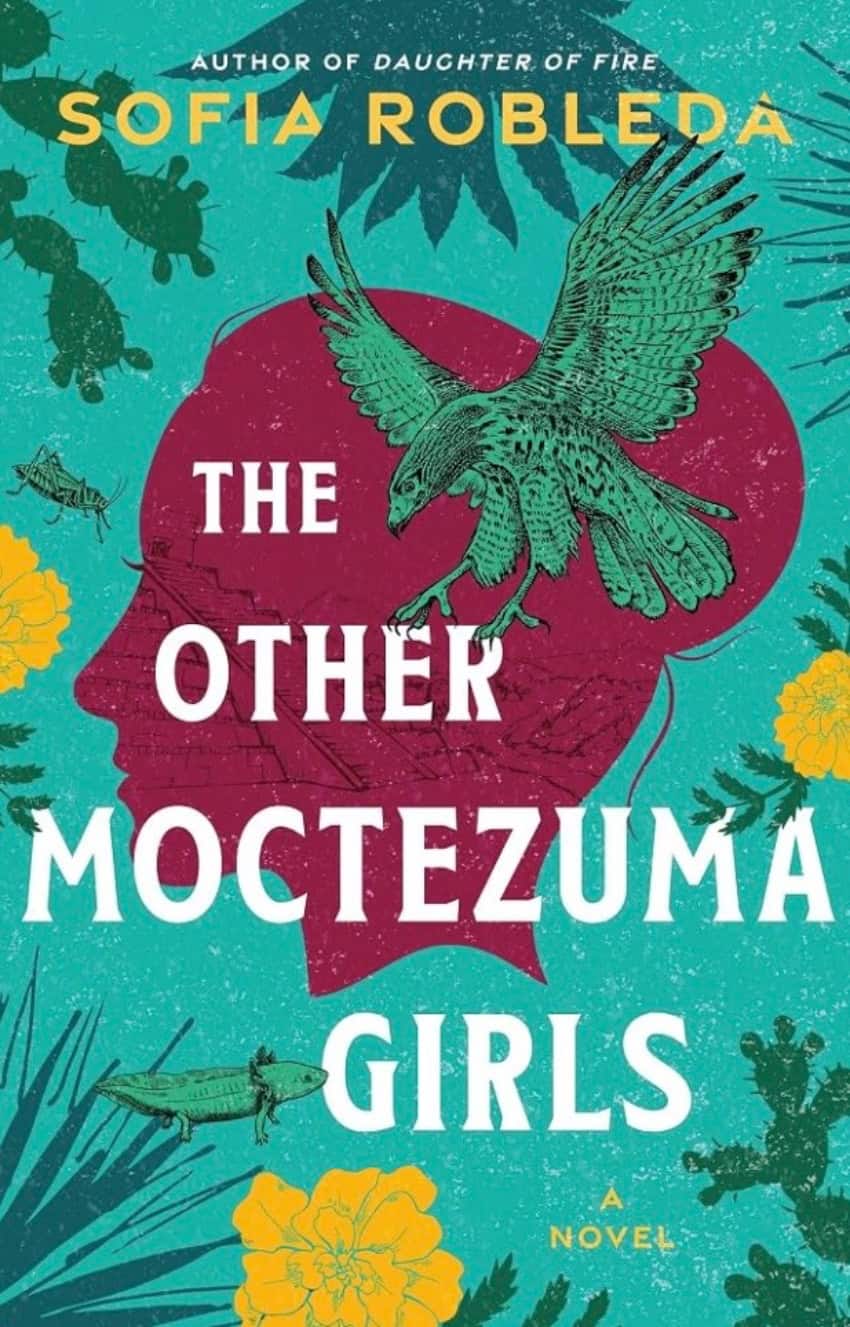
Robleda decided to address that lack in her new novel, “The Other Moctezuma Girls,” an ambitious, often moving romp across history and the fascinating cultural geography of the Valley of Mexico.
The story opens in Tenochtitlán in 1551, 30 years after the Spanish Conquest, as Tecuichpoch’s will is read aloud after her death. Her daughter Isabel suspects that a second account of her mother’s life may be hidden, chapter by chapter. The clues to that inheritance are found in a disturbing tapestry bequeathed to Isabel and her younger sister in the will. Isabel sets out to follow them with her favorite siblings and a handsome young cook.
Alongside Isabel’s journey runs her mother’s own testimony, delivered in the first person by a woman who knows her time is short:
“Moctezuma, Cuauhtemoc, Cortés, Malintzin … they reshaped the order of the entire world. They may be dead, but by God, they are known. Yet no one but you will know me. I may be mentioned in passing as the child, the wife, the mistress … Listen to me, rambling on. Trying to carve out a pinprick of light in the darkness these people have cast over my life. It is very difficult, for I was also taught not to exalt myself, not to seek attention, lest I be judged, or mocked, or worse, publicly shamed. As my mother would say, Tlacoqualli in monequi — moderation is a must.”
Nearing death, Tecuichpoch wants to be known; she declares that she will not die silent. In a line that could serve as the book’s thesis, she observes that “men would leave us nameless, if they could.” That premise gives the novel real moral force.

‘Pure adventure’
Tecuichpoch recalls being married off three times by the age of 12. She was raised, as Nahua women of the age were, to keep her face serene, and she credits that discipline with her survival. The empress describes her father’s love as a weapon that cut both ways: She was Moctezuma’s cherished child, and he still handed her to his enemies. Yet she insists he was neither fool nor coward, and that he read the Spanish correctly, as men rather than gods, and as the vanguard of an innumerable and therefore unstoppable horde. It is a humane portrait, and it lets Moctezuma be a father without excusing him.
The domestic details do much of the work. There is the tank of axolotls that Tecuichpoch kept in her father’s zoo, the pranks she played on her father’s other wives, and the beloved brother who collected obsidian and volcanic stones in a wooden box. Anyone who has wandered the Museo Nacional de Antropología will understand why these touches matter. The Mexica are usually presented as a catalog of gods, glyphs and sacrifices, while here they are real people with siblings, grudges and favorite pets. Tecuichpoch’s prose is formal and lightly ornate, sprinkled with Nahuatl as well as Spanish.
Mexico Well-Read: A review of Reyna Grande’s ‘Migrant Heart’
Her daughter’s half of the book is more conventional but livelier. One of Isabel’s siblings, Catina, lost her hearing after an illness, and the siblings communicate through sign language, a welcome touch that keeps the teens from becoming a mere chorus of clue-solvers. The quest itself is pure adventure. It takes the young people through the viceregal court and then the chinampas of Xochimilco, into tunnels beneath the ancient pyramids of Teotihuacán, and even up the icy slopes of Iztaccíhuatl as nearby Popocatépetl threatens to erupt.
A highly entertaining mix of history and drama
Since Robleda is writing about a woman forced to live in two worlds at once, it is fitting that the book itself straddles these two modes. While guiding us through an exciting adventure — a deadly scavenger hunt — she also provides fascinating historical information about the colonial caste system, constraints on women, slavery and the lasting consequences of conquest. The country’s mestizo identity, after all, began in the negotiations, marriages and coercions that Tecuichpoch lived through.
Robleda assigns a high degree of respect to la Malinche, or Malintzin, from Tecuichpoch, who is said to have admired her spirit, her brilliance, and the long game this noblewoman-turned-slave-turned-noblewoman managed to play:
“(Malintzin), too, had been reshaped. Cortés had married her off to another of his captains, Juan Jaramillo, and she was no longer a slave but a free noblewoman again. This is what she had desired most in the whole world. Freedom for herself and her children—the young son she’d had with Cortés and Jaramillo’s newborn girl in her arms, who were now peers of the New World aristocracy.”
“The Other Moctezuma Girls” is not a scholarly reckoning, and it does not pretend to be. It is a novel of reclamation, intent on sharing the story of this utterly fascinating woman, the last Mexica empress. It is best suited to readers who enjoy their history with a mystery, a map and a pounding pulse. Take it with you on your next visit to Mexico City, and you may find yourself absorbing the history around you more energetically.
Ann Marie Jackson is a book editor and the award-winning author of “The Broken Hummingbird.” She lives in San Miguel de Allende and can be reached through her website: annmariejacksonauthor.com.
KioskNews shows a cleaned-up reading view extracted from the publisher’s page — the original always lives on their site, not ours.