For Noida, Ghaziabad commuters, a new route to South Delhi – and a possible escape from Sarai Kale Khan
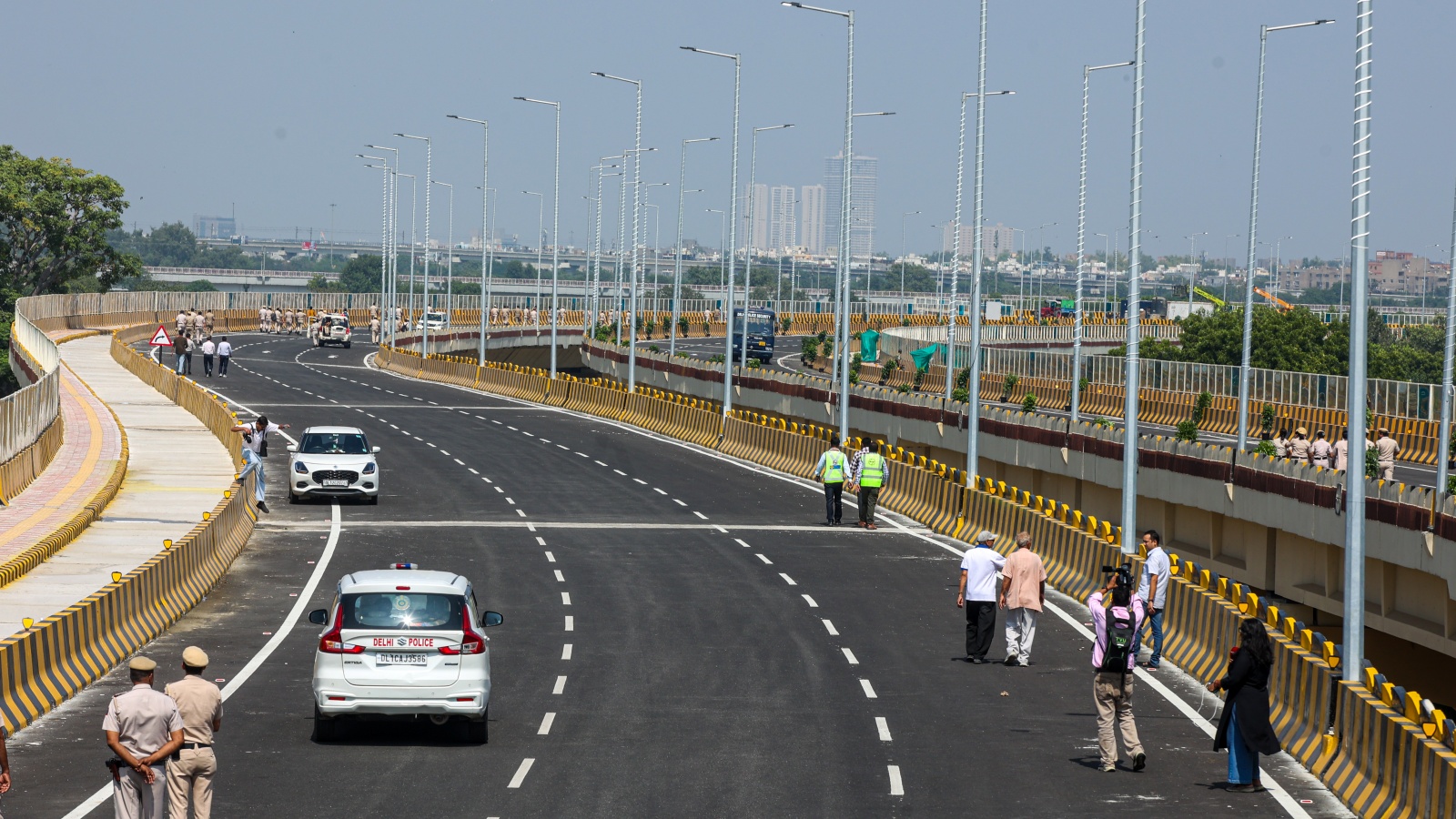
For commuters from Noida and Ghaziabad heading towards South Delhi, the new route could mean avoiding the DND-Ring Road-Sarai Kale Khan stretch. For the Ring Road, the expected benefit is simpler: fewer vehicles feeding into an already heavily loaded corridor.
For thousands of commuters travelling between Noida, Ghaziabad and South Delhi every day, the journey could soon involve one less bottleneck – Sarai Kale Khan.
With the opening of the Barapullah Phase III elevated corridor, vehicles travelling between the eastern side of the Yamuna and South Delhi will have an alternative to the congested Ring Road, particularly the Sarai Kale Khan stretch. Instead of taking the DND and then joining the Ring Road, some commuters can use the new corridor to cross the Yamuna.
Around 11 lakh vehicles from the National Capital Region enter Delhi every day, of which nearly five lakh come from Noida and Ghaziabad. Of these, an estimated 3-4 lakh currently use the eastern corridor, including DND, National Highway 9/National Highway 24 and Akshardham-Ring Road stretch to enter South Delhi. The Barapullah corridor is expected to redistribute some of this traffic.
“The key difference is not merely the addition of another road, but the creation of an alternative route for vehicles that currently converge on the Ring Road. It will be beneficial for the public,” said Additional Commissioner of Police D K Gupta.
“Vehicles travelling from INA towards Mayur Vihar, Noida and Ghaziabad would be able to use the Barapullah corridor to cross the Yamuna instead of coming towards Sarai Kale Khan and the DND Road,” a traffic official said.
The same will work in the opposite direction. Vehicles from Noida, Ghaziabad, Mayur Vihar and Akshardham heading towards INA and South Delhi can use the corridor through the Noida Link Road instead of first joining the Ring Road.
This could take some pressure off the Ring Road, which carries heavy traffic through much of the day. Unlike roads where congestion is mostly limited to morning and evening rush hours, the Ring Road remains busy because several major routes feed into it.
Story continues below this ad
The six-lane DND is one of the main approaches to the Ring Road, which is four lanes around Sarai Kale Khan. Traffic from the Akshardham side also joins the Ring Road network.
The problem, officials said, is not simply the number of lanes available on the DND or Ring Road. It is also where the traffic converges.
At present, a vehicle travelling from Noida towards South or Central Delhi may take the DND before joining the Ring Road. Vehicles from the Akshardham side also enter the same network. Similarly, in the opposite direction, those travelling from South Delhi towards Noida and Ghaziabad use the Ring Road before reaching the DND or other eastern routes.
With Barapullah Phase III, some of these vehicles can avoid the Ring Road altogether. Instead of all the traffic heading towards Sarai Kale Khan, some will have another route to cross the Yamuna.
Story continues below this ad
“The aim is not to eliminate congestion on the corridor, given the enormous volumes of traffic it handles, but to reduce the additional pressure created by vehicles that do not necessarily need to use it. The impact could be particularly visible around Sarai Kale Khan, where traffic from the DND, Ring Road and other approaches comes together,” Gupta said.
Officials said the Barapullah Phase III flyover gives traffic another route instead of trying to add more capacity to an already busy Ring Road.
For commuters from Noida and Ghaziabad heading towards South Delhi, the new route could mean avoiding the DND-Ring Road-Sarai Kale Khan stretch. For the Ring Road, the expected benefit is simpler: fewer vehicles feeding into an already heavily loaded corridor.
© The Indian Express Pvt Ltd

Sakshi Chand is an Assistant Editor at The Indian Express, based in New Delhi. With over a decade of experience in investigative journalism, she is a leading voice on crime, the prison system, and institutional governance in the National Capital. Professional Background Specialization: Her reporting focus includes high-stakes crime, national security, prison reforms, and traffic governance. Key Coverage: She has been on the frontlines of major events such as the 2G spectrum case, the 2020 North-East Delhi riots, and communal clashes across Uttar Pradesh (Kasganj, Aligarh). Earlier Career: Before joining The Indian Express, she was a reporter for The Times of India. Personal Interests: Outside of her career in journalism, Sakshi is a National-level basketball player and coach, bringing a unique sporting discipline to her professional life. Major Recent Coverage (Late 2025) Her reporting in the latter half of 2025 has been dominated by a major terror investigation and administrative accountability: 1. The Red Fort Blast Investigation Throughout November and December 2025, Sakshi led the coverage of a car explosion near Delhi's Red Fort: Forensic Breakthroughs: She reported on the use of TATP and ammonium nitrate in the IED and identified the shops where raw materials were sourced (Nov 14-16, 2025). The "i20 Route": She meticulously tracked the journey of the vehicle used in the blast, tracing it to a Pulwama-based resident who entered Delhi via the Badarpur toll plaza (Nov 12, 2025). Victim Support: She recently reported on the Delhi Police providing a list of damaged vehicle owners to the Finance Ministry to expedite insurance claims for those caught in the blast (Dec 4, 2025). 2. Crime & Police Accountability "Crackdown on Extortion Gangs": In December 2025, she reported on a syndicate that was blackmailing traffic cops. Following five arrests, the Special CP directed officers to report all such attempts (Dec 12, 2025). "Corruption in the Ranks": She covered the arrest of five Delhi Police personnel by the Vigilance branch following a wave of public complaints (May 19, 2025). Cold Cases & International Murders: She has extensively tracked the case of a man who allegedly killed his wife in London and fled to India, reporting on his "Proclaimed Offender" status and the denial of his anticipatory bail (May 2025). 3. Governance & Public Policy "13,000 Homes for 90,000 Cops": A data-driven feature on why the majority of Delhi Police personnel are forced to live on rent despite the city's housing projects (May 4, 2025). Traffic Decongestion: Using her interest in urban logistics, she detailed how the Traffic Police eased congestion on Vikas Marg by switching off signals and creating U-turns (April 2, 2025). Signature Style Sakshi Chand is known for a data-driven and investigative approach. She frequently uses forensic reports, CCTV analysis, and administrative data to go beyond the "official version" of a crime story. Her work in prison reporting is particularly noted for highlighting the legal and humanitarian conditions of foreign detention centers and local jails. ... Read More
Stay updated with the latest - Click here to follow us on Instagram
KioskNews shows a cleaned-up reading view extracted from the publisher’s page — the original always lives on their site, not ours.