All 7 Agents Of S.H.I.EL.D. Seasons, Ranked

Casey Duby is an avid TV writer, watcher, and reviewer. She graduated from Emerson College in 2021 with a focus in Writing for Film and Television, where she wrote several pilots and watched countless more. She's been working in television ever since.
Casey loves thoughtful content that makes her ponder our world and the people in it, and she's learned that any genre can surprise her. With favorites in every genre from horror to politics, family to action, nothing is off limits.
Casey has experience working in TV development and writing scripted shows. Currently working as a Writer/Critic in Los Angeles, with an AMC A-List membership to boot, she is always hunting for the next good story and great theme song.
Sign in to your ScreenRant account
Marvel's longest-running show has had a complicated relationship with the rest of the Marvel Cinematic Universe's television endeavors. Yet even as debate swirled as to whether the show was really a part of the MCU's canon, Marvel's Agents of S.H.I.E.L.D. proved that it could stand on its own for an historic seven seasons that are now, in hindsight, generally well-received.
Agents of S.H.I.E.L.D. went through several distinct chapters throughout its run, and some were certainly better than others. However, fully embracing those chapters is what allowed the show to evolve and maintain its intrigue over the course of seven years. Despite its low points, every season of Agents of S.H.I.E.L.D. offered something new and unexpected, keeping its viewers on their toes.
That said, Coulson's fate posed a consistent problem for the series. The likable agent was at the center of the show despite having been killed off in The Avengers, which preceded S.H.I.E.L.D.'s premiere. After passably sidestepping his demise in the early seasons, the show continued to engage with the circumstances of Coulson's "death" and resurrection in a way that increasingly complicated the character.
Even so, S.H.I.E.L.D. quickly grew into a true ensemble, giving the show a scope that went beyond Coulson alone. Given all the major characters and storylines at play, this is how every season of Agents of S.H.I.E.L.D. holds up.
7 Season 6
Coulson Died & "Sarge" Was Born

Agents of S.H.I.E.L.D. season 6 finally faced the inevitable. After having left S.H.I.E.L.D. at the end of season 5 to live out his few remaining days in Tahiti with May, season 6 saw the organization rebuilding without him. Mack's promotion to director of S.H.I.E.L.D. was a distinct tone shift from Coulson's playfulness and warmth, and the team felt just a bit off-kilter without Coulson in charge.
Even worse, though, was the fact that Clark Gregg didn't exit the show with Coulson. Granted, Gregg was the face of S.H.I.E.L.D., and, when the show started, he was the only familiar face in sight. However, by season 6, the rest of the cast had more than come into their own, and the show would have been strong enough to carry on without its biggest name.
Instead, Gregg returned as "Sarge," an alien antagonist with the disorienting likeness of Coulson. Though the intention was likely to create emotional conflict, having to see Coulson's face as a villain really just rubbed salt into the wound of the beloved character's death. Later attempts to create a redemption arc for Sarge only served to confuse the fleeting and misguided character.
6 Season 5
S.H.I.E.L.D. Took A Big Swing With The End Of The World

Season 5 was a big year for Agents of S.H.I.E.L.D., and the story actually landed pretty well among viewers (it still holds a 100% on Rotten Tomatoes). The season was broken neatly in half, with the first half seeing the team time travel to a future in which the Earth has been destroyed, and the second half following them back to the present as they try to prevent the end of the world.
The season, which included the show's 100th episode, also engaged with the events of Avengers: Infinity War, the show's biggest MCU tie-in yet. All in all, Agents of S.H.I.E.L.D. season 5 succeeded in telling a story that was massive in scope while still being clear and digestible.
However, season 5 veered into melodrama with a heavier hand than any of its preceding seasons. The belief that Daisy is "The Destroyer of Worlds," as in, the cause of the disaster the team saw in the future, led to secrets, martyrdom, and rogue behavior at a time when it would have been much more satisfying to see the gang work together with complete trust and openness.
5 Season 7
Time Travel Gave The Final Season Some Whimsy

Agents of S.H.I.E.L.D. had developed some problems by the time it entered its final season. For one thing, the show had gotten extremely dense and convoluted. Several kinds of aliens and countless deaths and reincarnations had made the story difficult to keep track of for the casual viewer, and that was largely the audience that remained by season 7.
Question 1 of 3
For another thing, the season saw Fitz in a very limited role due to Iain De Caestecker stepping away to pursue other projects. De Caestecker's decision is understandable given that he was the show's strongest performer, but this also meant that his absence was a blow to the show, especially considering that his character was meant to be inseparable from Elizabeth Henstridge's Jemma.
All of that being said, season 7 made some smart decisions. The 13-episode season brought time travel front and center, but rather than making the story more confusing, it created an entry point into the season that allowed it to be enjoyed on its own merits. S.H.I.E.L.D.'s final season can largely be enjoyed as a fun collection of period pieces that brought each character to an emotionally satisfying conclusion.
4 Season 2
Skye's True Identity

After being introduced as Skye, the anonymous hacker, in season 1, Agents of S.H.I.E.L.D. wasted no time in delving into the real reason the character exists. In this season, she met her parents (played by the now even more famous Dichen Lachman and Kyle MacLachlan) and learned the entire complex story of the Inhumans.
Skye's journey of self-discovery was a lengthy, character-driven saga that featured many new characters, all of which marked a very different tone and structure from season 1's episodic focus on the team and their missions. This was a big risk as it jeopardized the format that worked well in season 1, but Skye's evolution into Daisy was an essential and well-executed piece of S.H.I.E.L.D.'s puzzle.
Even as the season leaned into the lesser-known Inhumans plot, that story ultimately tied seamlessly into the team's ongoing conflict with Hydra, offering a more mainstream connection to the MCU and proving that the show's connection to the movies was still going strong.
3 Season 1
A Fun Superhero Procedural

From Skye's true identity to the real significance of Coulson's TAHITI reincarnation, Agents of S.H.I.E.L.D. had many long-term plans that didn't come to fruition until well after season 1. Before diving into any of that, the show was posited as a fun, quaint procedural that was truly at home as a network drama.
Every episode saw Coulson's team, made up of then-unknown characters and actors, investigate a new case that required S.H.I.E.L.D.'s particular expertise. Season 1 maintained intrigue with fun MCU cameos and hints of a bigger, more serialized plot, but it was largely a case-of-the-week show with characters that were new to most viewers.
Even so, S.H.I.E.L.D. season 1 doesn't read like a show waiting to come into its own. Compared to its later seasons, its first outing almost feels like a different show, but one that was entertaining on its own merits just the same. Without taking the time to allow its team to earn the hearts of viewers on an emotional level, Agents of S.H.I.E.L.D. would never have lived to see its historic run.
2 Season 3
Inhumans & The Origin Of Quake

After learning her true identity and abilities in season 2, Agents of S.H.I.E.L.D. season 3 saw Daisy come into her own as a powered agent. Her development from the anonymous and innocuous Skye in season 1 is the real core of the show, and season 3 was a big part of the character blossoming into herself (literally, after using her new earthquake powers to burst out of a cocoon in season 2).
Season 3 was also at the height of the show's efforts to fit in with the rest of the MCU's timeline, a largely thankless endeavor despite the truly unique role S.H.I.E.L.D. has been able to play within the franchise. The season brought new attention to the Inhumans and Secret Warriors, characters and stories that had previously existed mainly in the comics.
At the same time, S.H.I.E.L.D. season 3 continued its Hydra storyline and engaged with the events of Captain America: Civil War, making the season a truly ambitious Marvel hub. Through it all, the season maintained a 100% rating on Rotten Tomatoes.
1 Season 4
Ghost Rider, LMD, & Agents Of Hydra
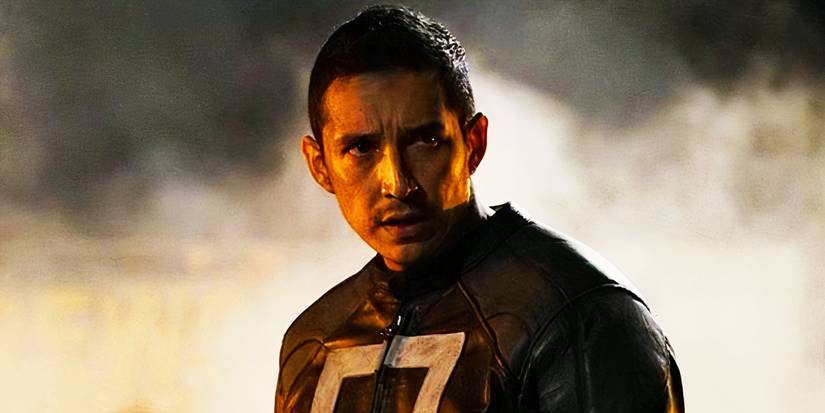
Though it ran the risk of feeling disjointed and choppy, season 4's distinct trilogy approach maintained a brisk pace and introduced several of the show's best elements, with each story actually blending seamlessly into the next. The season's first chapter introduced Gabriel Luna's Robbie Reyes, the MCU's first Ghost Rider.
Though the MCU has since moved in a different direction with the recent announcement of Ryan Gosling stepping into the role of Ghost Rider, Reyes had a compelling backstory, and the character, in Luna's capable hands, had a surprising amount of franchise potential.
From there, the show introduced its LMD (Life Model Decoy) storyline and its rogue robot Aida. The entire arc was highly evocative of artificial intelligence, a topic that has only gotten more relevant today. Aida's development naturally led to the Framework, a virtual reality that allowed Agents of S.H.I.E.L.D. to really be playful with its stories and characters, an area where the show always excelled.
- Release Date
- 2013 - 2020-00-00
- Network
- ABC
- Showrunner
- Jed Whedon
- Directors
- Kevin Tancharoen, Jesse Bochco, Billy Gierhart, Vincent Misiano, Bobby Roth, Nina Lopez-Corrado, Brad Turner, David Solomon, Eric Laneuville, Kate Woods, Kevin Hooks, Milan Cheylov, Ron Underwood, Roxann Dawson, Wendey Stanzler, Clark Gregg, David Straiton, Holly Dale, John Terlesky, Joss Whedon, Stanley M. Brooks, Keith Potter, Dwight H. Little, Elodie Keene
- Writers
- Monica Owusu-Breen, Sharla Oliver, Lauren LeFranc, James C. Oliver, Rafe Judkins, Matt Owens, Mark Leitner, Iden Baghdadchi, Shalisha Francis, Chris Dingess
KioskNews shows a cleaned-up reading view extracted from the publisher’s page — the original always lives on their site, not ours.